Welcome to the Senior Walking Fitness Blog

Welcome to Senior Walking Fitness Blog: Your Complete Guide to Safe, Effective Exercise After 60

Welcome to the Senior Walking Fitness Blog, where we believe that age is just a number when it comes to living your best, most active life. Whether you’re just beginning your fitness journey or looking to enhance your current routine, you’ve found the right place to discover safe, enjoyable, and effective ways to stay strong, balanced, and energized.

Senior fitness doesn't require abandoning activities you enjoy or accepting weak "gentle stretches" as your only option. Your body after 60 handles far more than most fitness programs acknowledge – with the right approach, naturally.

Most exercise advice treats seniors like breakable antiques. That's ridiculous. Research demonstrates that adults over 65 engaging in regular strength training increase muscle mass by 20-30% within 12 weeks. Your bones, muscles, and cardiovascular system adapt and strengthen throughout life, not crumble into frailty.

Age isn't the real challenge – finding exercise programs that work with your body's current reality is. Perhaps you're managing arthritis in your knees, recovering from hip replacement, or haven't exercised consistently in decades. These aren't roadblocks; they're starting points requiring smart modifications rather than complete surrender.

What Makes Senior Fitness Different

Your body processes exercise differently now than at 30. Recovery takes longer – that's biology, not weakness. Balance systems require more attention because inner ear function naturally declines. Joint flexibility demands daily maintenance instead of the weekend warrior approach that worked before.

Consistency beats intensity every single time. A 70-year-old walking 20 minutes daily outperforms someone half their age who hits the gym hard twice monthly then vanishes for weeks. This principle drives every recommendation on this site.

We focus on four core areas research proves make the biggest difference in maintaining independence:

  • Balance training prevents falls (the leading cause of injury-related death in seniors)
  • Strength exercises combat sarcopenia (age-related muscle loss)
  • Cardiovascular conditioning maintains heart health and endurance
  • Flexibility work preserves range of motion and reduces pain

How This Site Works for You

Every exercise routine gets tested with real seniors, not twenty-something fitness models. When we say "chair exercises," we mean workouts that actually challenge muscles while accommodating mobility limitations. Our balance routines progress from simple standing exercises to advanced movements as confidence builds.

Equipment recommendations come from practical experience, not marketing budgets. That $3,000 home gym might look impressive. Resistance bands and a sturdy chair deliver 90% of the same results for under $50. We'll tell you exactly which products work and which ones target retirement savings through hype.

Medical conditions get special attention because generic fitness advice fails when managing arthritis, osteoporosis, or surgical recovery. Each condition-specific section includes modifications, precautions, and alternatives that deliver results without aggravating existing problems.

What You'll Find Here

This isn't another collection of "gentle movements" that barely raise your heart rate. Our 10-minute routines pack genuine fitness benefits into time slots fitting busy schedules. 30-minute programs deliver comprehensive workouts rivaling expensive personal trainers.

Chair-based exercises go way beyond arm circles and ankle pumps. These routines include cardio intervals, strength circuits, and flexibility sequences keeping you engaged while building real fitness. Some members burn more calories during our chair cardio sessions than during daily walks.

Specialized programs address specific goals: golf fitness improves your swing and prevents injuries, water exercises use pool resistance for strength building, and dance workouts make cardio feel like entertainment rather than exercise.

Your Safety Comes First

Every routine includes clear modifications for different ability levels. Beginners start with basic movements and progress gradually. Those with more experience can jump to intermediate or advanced variations. Honest self-assessment matters more than ego-driven decisions leading to injury.

We emphasize proper form over repetition count because poor technique causes more problems than it solves. A correctly performed exercise at 70% intensity beats sloppy movement at maximum effort every time. This approach builds strength while protecting joints from unnecessary wear.

Medical clearance recommendations appear throughout the site, but common sense applies: if something hurts, stop. Pain serves as your body's warning system, not something to push through pursuing fitness goals. Discomfort during challenge is normal; sharp or persistent pain signals problems requiring professional evaluation.

Start with routines matching your current fitness level, not where you think you should be. Progress happens through consistency, not heroic efforts leaving you sidelined with injuries or burnout.

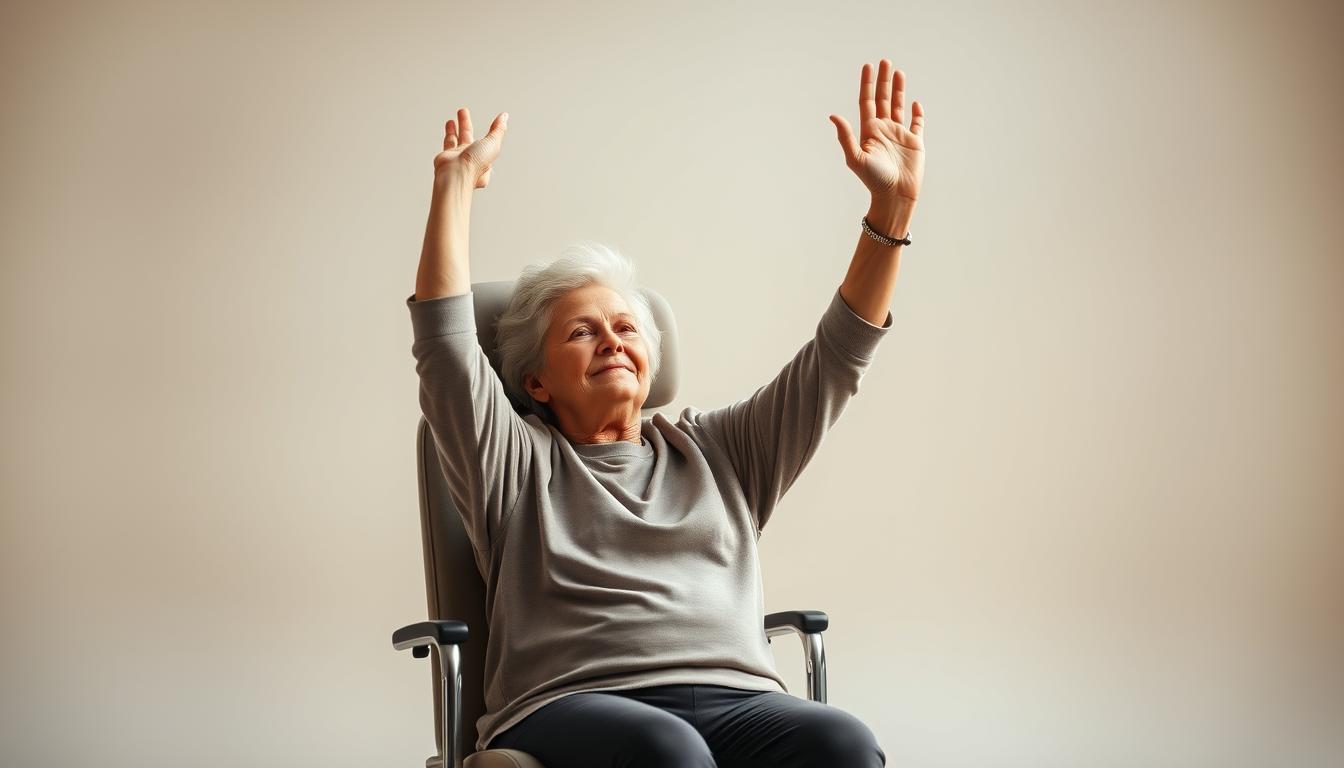
Chair exercises provide the most accessible entry point into senior fitness, building strength and improving cardiovascular health without balance or mobility concerns. These aren't wimpy arm waves from typical senior programs – we're talking legitimate workouts that elevate your heart rate above 120 beats per minute while seated.

The misconception that chair exercises are "easier" drives me up the wall. Try our 30-minute chair cardio routine and you'll discover why participants sweat more than during morning walks. Your upper body handles the heavy lifting while your core stabilizes movements, creating a full-body challenge that builds functional strength.

Chair Exercises: Full-Body Fitness While Seated

Chair-based routines eliminate the biggest barrier to senior fitness: fear of falling. Balance becomes irrelevant when you're seated, allowing complete focus on movement quality and intensity. This security enables many seniors to push harder than during standing exercises.

Our chair programs break into specific categories based on primary goals:

Exercise Type Duration Primary Benefits Equipment Needed
Chair Cardio 15-30 minutes Heart health, calorie burn Sturdy chair
Seated Strength 20-25 minutes Muscle building, bone density Light weights or bands
Chair Yoga 10-15 minutes Flexibility, stress relief Chair, optional props
Chair Pilates 15-20 minutes Core strength, posture Chair with back support

Resistance comes from controlled movements, not heavy weights. Chair boxing sequences work shoulders and arms while engaging your core for stability. Seated leg lifts target hip flexors and quadriceps without stressing knees. These movements translate directly to daily activities like exiting cars or climbing stairs.

That's the beauty of functional fitness – it makes real life easier. Popular chair workout options include:

Balance Training: Your Insurance Policy Against Falls

Balance exercises prevent accidents that rob seniors of independence faster than any disease. One fall triggers a cascade of problems: broken bones, surgery, extended recovery, muscle loss from inactivity, then more falls. This cycle breaks many seniors' confidence permanently.

The statistics are sobering but preventable. Falls cause 95% of hip fractures in people over 65. Emergency rooms treat a fall-related injury every 11 seconds. Balance training can reduce fall risk by 45% within 12 weeks of consistent practice – those are odds worth betting on.

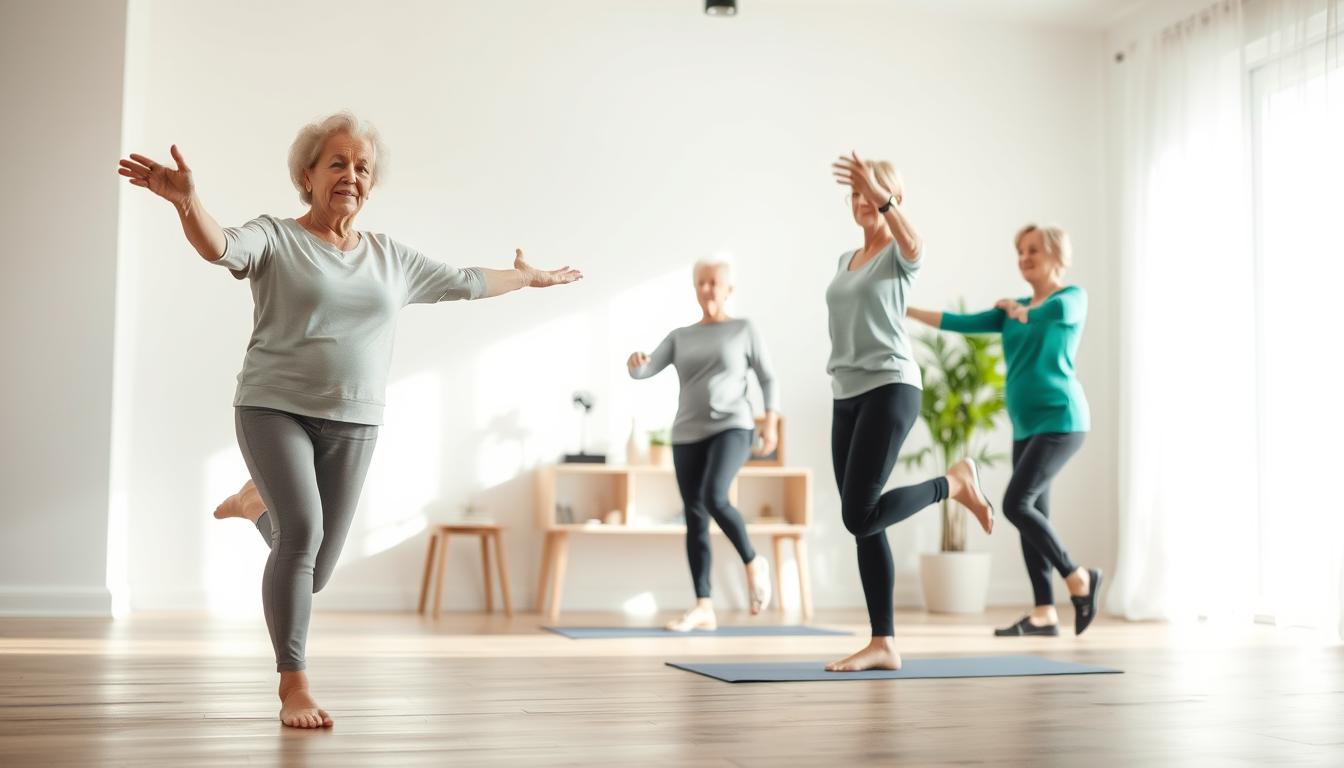
Balance work doesn't mean standing on one foot until you wobble. Modern balance training uses progressive challenges improving your body's automatic responses to unexpected movements. Standing with feet together for 30 seconds builds foundational stability. Walking heel-to-toe down a hallway challenges dynamic balance. Stability ball exercises force stabilizing muscles to work harder.

Progressive Balance Training Protocol

Your balance system improves through specific challenges that gradually increase difficulty:

  • Week 1-2: Static holds with eyes open (stand on one foot, 10 seconds each side)
  • Week 3-4: Static holds with eyes closed (removes visual cues, forces proprioception reliance)
  • Week 5-6: Dynamic movements (walking patterns, direction changes)
  • Week 7-8: Unstable surfaces (foam pads, balance boards)

Progression matters because your nervous system adapts to specific challenges. Master one level before advancing to prevent frustration and maintain confidence. Most seniors see measurable stability improvement within three weeks of daily practice – that's faster than most medications take to work.

Our comprehensive balance training resources include:

Strength Training: Preserving Your Independence

Strength exercises combat sarcopenia, age-related muscle loss that steals 3-8% of muscle mass each decade after 30. This isn't cosmetic – muscle loss directly impacts your ability to carry groceries, climb stairs, or rise from chairs without assistance.

Resistance training reverses this process at any age. A 75-year-old beginner can gain muscle mass and strength comparable to someone 30 years younger within six months of consistent training. The secret isn't lifting heavy weights; it's providing progressive resistance challenging muscles beyond their current capacity. Think of it as giving your muscles a reason to stick around.

Your muscle-building toolkit includes resistance bands, light dumbbells, and bodyweight exercises. Resistance bands provide variable tension matching your strength curve – harder at movement peaks, easier during transition phases. This reduces joint stress while maximizing muscle activation.

Upper body strength exercises focus on functional movements: overhead presses for reaching high shelves, rows for better posture, chest presses for pushing doors or shopping carts. Lower body work emphasizes squats, lunges, and step-ups mirroring daily activities like chair exits or stair climbing.

Essential Strength Training Components

Muscle Group Primary Exercises Weekly Frequency Rest Between Sets
Chest/Arms Push-ups, chest press, tricep dips 2-3 times 60-90 seconds
Back/Shoulders Rows, reverse flies, shoulder press 2-3 times 60-90 seconds
Legs/Glutes Squats, lunges, calf raises 2-3 times 90-120 seconds
Core Planks, seated twists, leg lifts 3-4 times 45-60 seconds

Recovery becomes more critical as you age. Your muscles require 48-72 hours between strength sessions to repair and grow stronger. This doesn't mean sitting idle – active recovery with walking or stretching actually speeds healing by increasing blood flow to worked muscles.

Our strength training library covers every major muscle group:

Walking Workouts: Low-Impact Cardio That Delivers Results

Walking remains the most underrated exercise for seniors, mainly because people do it wrong. Casual strolling burns minimal calories and provides little cardiovascular benefit. Structured walking workouts with interval training, incline changes, or specific pace targets transform this simple activity into serious fitness training.

Interval walking alternates between moderate and vigorous intensity periods. Walk normally for two minutes, then increase pace for 30 seconds until you're slightly breathless. This pattern elevates heart rate, improves cardiovascular efficiency, and burns significantly more calories than steady-state walking. It's like turning your walk into a conversation with your cardiovascular system.

Water walking multiplies benefits by adding resistance from every direction. Water supports your body weight while providing constant resistance against every movement. A 30-minute water walking session burns 200-300 calories while being gentler on joints than any land-based exercise.

Indoor walking eliminates weather excuses and safety concerns about uneven surfaces or traffic. Mall walking programs provide climate-controlled environments with measured distances. Treadmill walking offers precise speed and incline control making progressive training possible regardless of outdoor conditions.

Treat walking as exercise, not just transportation. Set specific goals: walk 20 minutes without stopping, increase average speed by 0.2 mph each week, or complete a measured mile in under 20 minutes. These targets provide motivation and measurable progress keeping you engaged long-term.

Essential walking resources include:

Specialized Health Conditions: Exercise Solutions for Common Senior Health Concerns

Exercise modifications for specific health conditions enable seniors to maintain active lifestyles while managing chronic conditions affecting millions over 60. The cookie-cutter approach to senior fitness crashes and burns when you're dealing with arthritis pain, osteoporosis restrictions, or recovering from back surgery.

Most fitness programs ignore the harsh reality that 80% of seniors have at least one chronic condition, and 68% juggle two or more. This isn't about finding excuses to skip workouts – it's about smart adaptations that work with your body's current reality instead of pretending limitations don't exist. Common sense beats wishful thinking every time.

Arthritis-Friendly Workouts: Moving Without Pain

Arthritis hammers 54 million Americans, with rates skyrocketing to 50% among people over 65. The outdated advice to "rest your joints" has been thoroughly debunked by modern research. Movement lubricates joints, reduces stiffness, and strengthens muscles supporting arthritic areas. The secret sauce is choosing exercises that deliver benefits without triggering inflammatory flare-ups.

Water exercises dominate arthritis management because buoyancy reduces joint loading by up to 90% while providing gentle resistance. Pool workouts allow movements that would be torture on dry land. A simple arm circle in chest-deep water provides the same muscle activation as lifting a 2-pound weight, minus the joint punishment. That's what I call working smarter, not harder.

Range-of-motion exercises prevent joint stiffness that makes arthritis progressively worse over time. Neck and shoulder exercises target areas where arthritis commonly wreaks the most havoc. Five minutes of gentle stretching each morning can prevent that "rusty gate" feeling making simple tasks like checking blind spots while driving become painful ordeals.

Chair exercises eliminate balance challenges that make standing workouts risky when joint pain affects stability. Your knees might throw a tantrum during standing exercises, but seated versions of identical movements provide muscle strengthening without aggravating inflamed joints. This isn't surrender – it's strategic intelligence about maintaining fitness despite physical challenges.

Osteoporosis Prevention: Building Bone Density Safely

Osteoporosis transforms bones into brittle structures, affecting 54 million Americans and causing 2 million fractures annually. The conventional wisdom about avoiding all impact activities does more damage than good. Bones require stress to maintain density, but the type and amount of stress matters tremendously.

Weight-bearing exercises stimulate bone formation better than any prescription medication. Walking, dancing, and stair climbing all qualify as weight-bearing activities because they force bones to work against gravity's pull. The impact signals your body to deposit more calcium and strengthen bone architecture. It's like sending your skeleton a memo to toughen up.

Resistance training delivers targeted stress that builds bone density in specific trouble spots. Squats strengthen hip bones where fractures cause devastating problems. Rowing exercises target the spine where compression fractures commonly occur. The resistance doesn't need to be crushing – consistency trumps intensity every single time.

Bone-Building Exercise Priorities

Bone Area Primary Exercises Weekly Frequency Special Considerations
Spine Rows, wall push-ups 3-4 times Avoid forward flexion
Hips Squats, lunges, step-ups 3-4 times Progress slowly
Wrists Weight-bearing on hands 2-3 times Start with wall push-ups
Overall Walking, dancing Daily Vary surfaces and directions

Spine strengthening exercises demand special attention because compression fractures in vertebrae cause that hunched posture associated with severe osteoporosis. Extension exercises that arch your back counteract forward flexion putting vertebrae at risk. Think Superman poses, not sit-ups – your spine will thank you later.

Exercises you avoid matter as much as ones you perform religiously. Forward bending movements like toe touches place dangerous stress on osteoporotic vertebrae. Twisting motions under load can trigger spiral fractures. Low-impact alternatives provide bone-building benefits without fracture risks.

Understanding which exercises increase bone density in the spine versus those merely maintaining current levels helps prioritize workout time. Progressive resistance training beats walking for bone building, but walking beats couch sitting every single time.

Back Pain and Sciatica Relief: Targeted Exercise Solutions

Lower back pain strikes 80% of adults at some point, with seniors experiencing chronic issues more frequently due to decades of wear and accumulated injuries. The instinct to rest and avoid movement usually backfires spectacularly, leading to weaker muscles and increased pain sensitivity.

Sciatica exercises target nerve compression causing shooting pain down your legs. The sciatic nerve runs from your lower back through your buttocks and down each leg. When surrounding muscles tighten or spinal discs bulge, they compress this nerve and create that unmistakable burning sensation. It's like having a live wire running through your leg.

Movement patterns that decompress the spine provide immediate relief for many people dealing with this condition. Gentle extension exercises that arch your back slightly can create space around compressed nerves. Walking itself helps because alternating hip motion gently mobilizes lower back segments that often become stiff and painful.

Back strengthening exercises focus on deep stabilizing muscles supporting your spine during daily activities. These muscles atrophy quickly during inactivity periods, creating a vicious cycle where weakness leads to pain, pain leads to rest, and rest leads to more weakness.

Progression matters tremendously with back exercises – you can't rush the process. Start with gentle movements that feel good and gradually increase range of motion as pain decreases. Pushing through severe pain typically makes problems worse, while avoiding all movement leads to chronic weakness and disability.

Scoliosis Support: Managing Spinal Curvature

Adult scoliosis affects 38% of people over 60, often developing or worsening as disc degeneration changes spinal alignment. Curves that were barely noticeable in youth can become painful and restrictive as supporting structures weaken with age.

Schroth exercises represent the gold standard for scoliosis management worldwide. This German-developed method uses specific breathing techniques combined with postural corrections to reduce curve progression and improve function. The three-dimensional approach addresses rotation and side-bending components making scoliosis more complex than simple lateral curves. It's like teaching your spine to behave properly again.

Strengthening exercises for scoliosis target muscles on the lengthened side of curves while stretching the shortened side. This asymmetrical approach helps balance forces acting on your spine. Generic exercises working both sides equally often reinforce existing imbalances – not exactly what you're going for.

Breathing becomes crucial with scoliosis because rib cage rotation restricts lung expansion on one side. The Schroth method teaches corrective breathing patterns that can improve lung capacity while helping to de-rotate spinal segments. This isn't just about posture – it's about maintaining respiratory function keeping you active and independent.

Stretching exercises for scoliosis address muscle imbalances developing around curved spines. The concave side typically becomes tight and shortened, while the convex side becomes weak and overstretched. Ten minutes of targeted stretching daily can prevent progressive stiffness making scoliosis increasingly painful over time.

Exercise Modifications by Condition

Smart modifications allow fitness routine maintenance regardless of current health challenges. The table below shows how common exercises adapt to different conditions:

Base Exercise Arthritis Modification Osteoporosis Modification Back Pain Modification
Squats Chair-supported partial squats Wall squats with back support Seated leg extensions
Push-ups Wall push-ups Incline push-ups Chest press with resistance bands
Lunges Stationary mini-lunges Step-ups on low platform Standing marching in place
Planks Wall planks Modified knee planks Seated core breathing
Rows Seated cable rows Standing rows with resistance bands Gentle arm pulls while seated

These modifications aren't compromises – they're strategic adaptations keeping you moving safely while your body heals and strengthens. Many seniors discover they can progress back to standard exercises as their condition improves through consistent modified training. Recovery gets built into the process, not tacked on as an afterthought.

Recovery periods become more critical when managing chronic conditions requiring extra attention. Inflammation from arthritis demands longer rest periods between intense sessions. Osteoporotic bones need adequate recovery time to rebuild after weight-bearing stress. Back pain often improves with daily gentle movement rather than intense workouts followed by complete rest days.

Complete workout programs eliminate guesswork from senior fitness by providing structured routines that progress logically from beginner to advanced levels. Most seniors waste months jumping between random exercises without seeing real improvements because they lack systematic programming that builds strength and endurance methodically.

The difference between scattered exercises and proper programming resembles the gap between randomly hitting piano keys and playing actual music. Structure creates results that isolated movements never achieve. These programs bundle complementary exercises into time-efficient routines that deliver maximum benefit from your exercise investment – no more spinning your wheels with haphazard workouts.

Quick 10-15 Minute Routines: Maximum Results in Minimum Time

Short workouts demolish the biggest excuse for skipping exercise: lack of time. Research demonstrates that three 10-minute exercise sessions provide identical cardiovascular benefits as one 30-minute workout, but feel more manageable to most people. The secret sauce is intensity, not duration.

Ten-minute strength workouts pack compound movements into rapid-fire circuits working multiple muscle groups simultaneously. Squats target legs, glutes, and core while elevating heart rate. Push-ups engage chest, shoulders, triceps, and stabilizing muscles throughout your torso. This efficiency lets you hit every major muscle group in the time required to watch one TV commercial break.

Quick balance routines focus on the most critical movements for fall prevention without beating around the bush. Single-leg stands, heel-to-toe walks, and weight shifts train automatic responses keeping you upright when you stumble. Ten minutes daily reduces fall risk more than hour-long sessions performed sporadically.

The psychology of short workouts matters as much as the physiology behind them. Committing to 10 minutes feels achievable even on hectic days. Once you start moving, momentum often carries you beyond the minimum time requirement. This "minimum effective dose" approach builds consistent habits lasting for years rather than months.

Sample 10-Minute Circuit Structure

Exercise Duration Rest Target Areas
Chair squats 45 seconds 15 seconds Legs, glutes, core
Wall push-ups 45 seconds 15 seconds Chest, arms, shoulders
Marching in place 45 seconds 15 seconds Cardio, coordination
Seated rows (bands) 45 seconds 15 seconds Back, biceps, posture
Standing balance 45 seconds 15 seconds Balance, stability

The circuit repeats twice for the full 10-minute session. Forty-five-second work periods challenge muscles and cardiovascular system, while 15-second rests prevent excessive fatigue. This work-to-rest ratio keeps heart rate elevated throughout the entire workout – no coasting allowed.

Chair-Based Programs: Full-Body Workouts Without Standing

Chair programs accommodate mobility limitations without sacrificing workout quality one bit. The notion that seated exercises are "lesser" workouts is complete hogwash – your muscles don't know whether you're standing or sitting when they're working against resistance.

Comprehensive chair routines can burn more calories than moderate walking because they engage upper body continuously. Arms, shoulders, and core work harder during seated exercises than during most standing activities. This increased muscle involvement elevates metabolic rate both during and after workouts – talk about bang for your buck.

Chair cardio sessions use rapid arm movements, boxing patterns, and seated "running" motions to elevate heart rate significantly. The secret is maintaining continuous movement with enough intensity to make you slightly breathless. This proves cardiovascular conditioning doesn't require fancy equipment or perfect mobility.

Upper body strength becomes more critical as mobility decreases over time. Seated strength exercises maintain muscle mass needed for transferring from bed to wheelchair, reaching overhead items, and performing personal care tasks. Independence often hinges on upper body strength when lower body function becomes compromised.

Chair program progression mirrors standing workouts: start with basic movements, add resistance gradually, and increase duration as fitness improves. Seated knee strengthening can improve walking ability even when performed entirely from chairs. This proves targeted muscle work translates to functional improvements regardless of exercise position.

Dance & Fun Fitness: Entertainment That Burns Calories

Dance workouts trick your brain into exercising by disguising physical activity as entertainment. Music creates rhythm making movement feel natural, while choreography provides mental stimulation keeping boredom at bay. This combination makes dance one of the most sustainable forms of senior exercise – you might actually look forward to it.

Chair Zumba adapts Latin dance moves to seated positions, creating high-energy workouts that feel more like parties than exercise sessions. Arm movements work shoulders and core while seated positions eliminate balance concerns. Participants often forget they're exercising until they notice elevated heart rate and increased breathing – that's when you know it's working.

Dance workouts incorporating familiar music from your younger years tap into emotional connections making exercise enjoyable rather than obligatory. Dancing to songs from the 1960s or 1970s creates positive associations making you anticipate workout time instead of dreading it.

Cognitive benefits of dance match physical benefits pound for pound. Learning new movement patterns challenges your brain, improves coordination, and may reduce dementia risk. The combination of physical activity, music processing, and pattern learning provides comprehensive brain training that isolated exercises cannot match.

Barre workouts bring ballet-inspired movements to seniors without requiring previous dance experience. Focus on posture, grace, and controlled movements appeals to many people who find traditional strength training boring or intimidating. Chair-based barre work maintains elegance while accommodating mobility limitations.

High-Intensity Options: Modified HIIT and CrossFit for Seniors

High-intensity training provides superior results in shorter time periods, but requires careful modification for senior bodies needing longer recovery between intense efforts. The principle remains unchanged – alternate between challenging work periods and recovery phases – but intensity levels and rest periods adjust to match aging physiology.

HIIT workouts for seniors use 30-second work, 60-second rest patterns instead of traditional 30:30 ratios used with younger populations. Extended recovery allows heart rate to return closer to baseline between exercises, preventing excessive cardiovascular stress while maintaining metabolic benefits of interval training. It's about working smart, not just hard.

Exercises themselves focus on functional movements rather than athletic performance goals. Modified jumping jacks become arm circles with marching in place. Burpees transform into chair squats followed by overhead reaches. These adaptations maintain intensity while respecting joint limitations and balance concerns – no need to be a hero.

CrossFit modifications emphasize technique over weight or speed achievements. Compound movements making CrossFit effective – squats, presses, pulls – translate perfectly to senior fitness when performed with appropriate resistance and proper form. A bodyweight squat performed correctly provides identical movement patterns as loaded barbell squats.

High-intensity workouts become sustainable through smart programming including adequate rest days and progressive loading. Intensity comes from working at your current maximum effort level, not from trying to match output of someone decades younger.

Progressive HIIT Structure for Seniors

Week Work Interval Rest Interval Total Rounds Frequency
1-2 20 seconds 60 seconds 6 rounds 2x per week
3-4 25 seconds 50 seconds 7 rounds 2x per week
5-6 30 seconds 45 seconds 8 rounds 3x per week
7-8 35 seconds 40 seconds 8 rounds 3x per week

Progression builds work capacity gradually while maintaining recovery periods preventing overuse injuries. Most seniors reach optimal intensity levels by week 6 and can maintain that level indefinitely with proper exercise selection and recovery management.

Specialized Equipment Programs

Equipment-based programs provide targeted training that bodyweight exercises cannot match effectively. The right tools amplify efforts while reducing injury risk through controlled movement patterns and adjustable resistance levels.

Dumbbell workouts translate directly to daily activities because they train muscles to work against external loads. Lifting groceries becomes easier after weeks of performing chest presses and rows with progressively heavier weights. Strength transfers because movement patterns closely match real-world tasks – it's that simple.

Total Gym routines use body weight as resistance while providing support and guidance through proper movement patterns. Inclined platforms reduce effective weight you're lifting, making exercises scalable from beginner to advanced levels. This versatility makes one machine suitable for multiple fitness levels within the same household.

Exercise bike programs split between recumbent and upright models, each offering distinct advantages worth considering. Recumbent bikes provide back support and reduce balance demands, making them ideal for people with lower back problems or stability issues. Upright bikes engage core muscles more actively and provide natural cycling positions for those without mobility limitations.

Equipment selection should prioritize versatility, safety features, and space requirements above all else. Adjustable dumbbells provide more exercise options than most single-purpose machines while occupying minimal storage space. Resistance bands offer similar versatility with even greater portability and storage efficiency.

Classic and Timeless Programs

Proven programs helping millions maintain fitness over decades offer reliability that trendy workouts cannot match. These time-tested approaches focus on fundamental movement patterns remaining effective regardless of changing fitness fads – they're tried and true for good reason.

Jane Fonda workouts pioneered home fitness for previous generations and remain effective today because they emphasize proper form, progressive difficulty, and comprehensive muscle group targeting. Aerobic routines dominating the 1980s translate well to senior fitness when performed at appropriate intensities.

HASfit programs provide professional instruction through online videos guiding you through proper form and progression. Trainer-led approaches ensure you're performing exercises correctly while providing motivation that solo workouts often lack – it's like having a personal trainer in your living room.

Elliptical workouts offer joint-friendly cardiovascular training mimicking natural walking and running patterns. Low-impact nature protects arthritic joints while upper body involvement increases calorie burn compared to stationary cycling or walking.

These established programs succeed because they address fundamental requirements of senior fitness: safety, progression, variety, and sustainability. Flashy new workout trends come and go, but programs built on solid exercise science principles continue delivering results year after year.

Equipment & Reviews: The Best Fitness Gear for Safe Senior Workouts

Most fitness equipment marketed to seniors falls into two ridiculous camps: treating you like porcelain or assuming you've got a mansion and unlimited cash. The best gear for older adults prioritizes safety and versatility without the bells and whistles that jack up prices but don't improve results.

Smart equipment choices amplify workout effectiveness while cutting injury risk through proper biomechanics and adjustable resistance. Poor choices drain your wallet and create the kind of frustration that derails fitness goals faster than a bad knee flare-up. After putting dozens of products through their paces with real seniors, clear winners emerge in every category.

Exercise Bikes: Recumbent vs Upright Comparison

Cardiovascular training gets a major boost from exercise bikes because they deliver excellent heart-pumping benefits with minimal joint pounding. The choice between recumbent and upright models depends entirely on your physical limitations and what you're trying to accomplish. Marketing claims about one style being universally "better" for seniors? Pure marketing nonsense.

Recumbent bikes shine for people dealing with lower back problems, hip replacements, or balance issues. The chair-like seat provides full back support and eliminates that wobbling-while-pedaling challenge. Your spine experiences less pressure in the reclined position, making it comfortable to read or binge-watch Netflix during longer sessions.

The trade-off comes down to muscle activation. Recumbent positioning engages fewer stabilizing muscles and burns roughly 15% fewer calories than upright cycling at identical resistance levels. This isn't necessarily a deal-breaker – it just means you'll need slightly longer sessions to achieve the same cardiovascular benefits.

Traditional upright bikes force your core muscles to work harder because you must maintain your own postural stability. Think of it this way: no back support means your abs and lower back stay engaged throughout the workout. The upright position mimics outdoor cycling more closely, making transitions between indoor and outdoor riding feel natural. Your arms and shoulders also contribute more through upper body stabilization work.

Exercise Bike Comparison

Feature Recumbent Bike Upright Bike
Back support Full lumbar support Minimal support
Balance required None Moderate
Core engagement Low High
Joint stress Minimal Low to moderate
Calorie burn rate Good Better
Space required More floor space Compact footprint
Entry/exit ease Very easy Moderate

The decision often boils down to your primary limitation. Bad knees? Either option works fine. Chronic back pain points toward recumbent models every time. Balance problems make recumbent bikes the clear winner, no contest. No significant limitations? Upright bikes provide more comprehensive muscle engagement and higher calorie burn.

Resistance Bands and Dumbbells: Portable vs Traditional Strength Training

Strength training equipment divides into two distinct camps: portable resistance tools and traditional free weights. Resistance bands offer convenience and safety advantages that make them perfect for seniors who travel frequently or live in cramped spaces.

Quality resistance bands provide variable tension that matches your strength curve better than fixed weights. The resistance increases throughout the range of motion, delivering maximum challenge at your strongest point while reducing stress on joints during weaker positions. This biomechanical advantage makes bands easier on arthritic joints than traditional weights – a real game-changer for people dealing with joint inflammation.

Dumbbells deliver more precise resistance control and allow heavier loading as you progress. Fixed weight forces your stabilizing muscles to work harder because you must control the weight in three dimensions. This increased stability challenge translates better to real-world activities like carrying groceries or lifting grandchildren.

Progression differs significantly between these two options. Bands rely on changing stretch length or using multiple bands simultaneously to increase resistance. This system works well for beginners but becomes cumbersome at higher resistance levels – imagine trying to manage four bands at once during a chest press. Dumbbells allow precise weight increases in small increments, making long-term progression more systematic and straightforward.

Resistance Training Equipment Comparison

Aspect Resistance Bands Dumbbells
Storage space Minimal Requires dedicated area
Portability Excellent Poor
Resistance precision Variable Exact
Joint friendliness Superior Good with proper form
Progression options Limited at high levels Unlimited
Safety Very safe Requires spotting for some exercises
Cost Under $50 complete set $200-500 for adequate range

Budget-conscious seniors often start with resistance bands and add dumbbells as their strength and commitment increase. This staged approach prevents large upfront investments while ensuring you have equipment that matches your current fitness level and available space – smart money management meets practical fitness planning.

Vibration Plates and Home Gym Systems

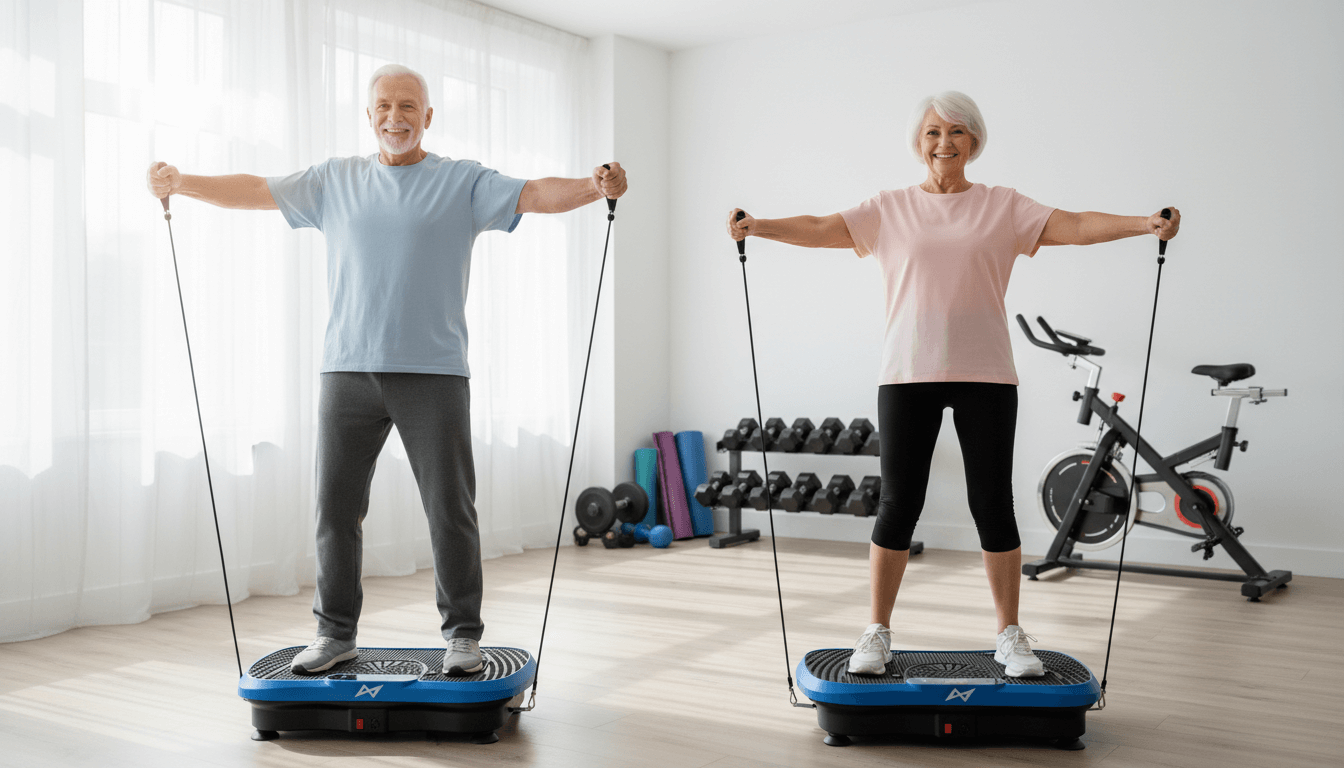
Whole-body vibration training represents one of the most overhyped categories in senior fitness equipment. Yet quality vibration plates can provide legitimate benefits for specific populations, despite the snake oil marketing surrounding them.

Vibration forces your muscles to contract rapidly to maintain stability, creating strength gains with minimal conscious effort. Research supporting vibration training shows modest improvements in bone density, balance, and muscle strength when used consistently over 6-12 months. These gains pale compared to traditional resistance training, but vibration platforms work well for people who find conventional exercise too challenging or painful to perform consistently.

Most vibration plates target the wrong audience with unrealistic promises about effortless weight loss and dramatic strength gains. The reality is more modest: 10-15 minutes of vibration training provides benefits roughly equivalent to a brisk 10-minute walk. That's useful for severely deconditioned individuals but hardly revolutionary for active seniors who can handle more demanding exercise.

Complete home gym systems make more sense for seniors with dedicated space and higher budgets. Multi-station systems provide exercise variety that maintains long-term interest while offering safety features like weight stacks instead of loose plates. Guided motion paths reduce injury risk compared to free weights that can be dropped or cause form breakdowns.

Space requirements become the limiting factor for most seniors. A complete home gym requires at least 8×10 feet of dedicated floor space plus adequate ceiling height for overhead movements. Storage considerations matter because most seniors prefer multipurpose spaces over dedicated exercise rooms – and rightfully so.

Specialized Equipment for Specific Conditions

Certain conditions benefit from specialized equipment designed to address particular limitations or training requirements. Balance-challenged seniors find stability tools invaluable, while those with arthritis need joint-friendly options that provide resistance without aggravating inflammation.

Balance boards and stability balls create unstable surfaces that force your nervous system to activate stabilizing muscles rapidly. This neuromuscular training improves automatic responses to unexpected balance challenges – those split-second reactions that prevent falls when you trip on uneven surfaces or step on unexpected objects like a cat toy in the hallway.

Progression with stability equipment starts with stable surfaces and advances to increasingly unstable challenges. Standing on a foam pad provides mild instability that most seniors can handle safely. Balance boards add rotational challenges that improve ankle stability and proprioception – fancy terms for knowing where your body is in space. Stability balls create full-body instability that engages multiple muscle groups simultaneously.

Arthritis-friendly equipment emphasizes smooth motion paths and adjustable resistance that accommodates joint limitations. Elliptical machines provide natural movement patterns with minimal joint stress. Cable systems allow resistance training through pain-free ranges of motion while avoiding positions that aggravate inflamed joints – a blessing for people whose knees sound like Rice Krispies.

Condition-Specific Equipment Recommendations

Condition Primary Equipment Secondary Options Avoid
Arthritis Pool equipment, cables Recumbent bike, bands High-impact machines
Osteoporosis Free weights, step platforms Vibration plate Forward flexion machines
Balance issues Stability balls, balance boards Wall-mounted pull-up bars Single-leg equipment
Back problems Recumbent bike, inversion table Lumbar support cushions Sit-up benches

The equipment selection process should involve testing whenever possible. Most physical therapy clinics and senior centers have various equipment types available for trial use. This hands-on experience prevents expensive purchases that end up gathering dust in closets alongside that bread maker from 1995.

Workout DVDs and Digital Programs

Home workout programs eliminate transportation barriers and scheduling conflicts that prevent many seniors from maintaining consistent exercise routines. Quality workout DVDs provide professional instruction at a fraction of personal training session costs.

Recorded programs offer advantages over live classes that extend beyond convenience. You can replay difficult segments, pause for water breaks, and progress at your own pace without feeling pressured to keep up with more advanced participants. This self-paced approach builds confidence while ensuring proper form development – crucial for preventing injuries that can derail progress for weeks.

Digital streaming programs offer more variety than physical DVDs but require reliable internet connections and comfort with technology. Many seniors prefer the simplicity of inserting a DVD and pressing play over navigating streaming platforms and dealing with connectivity issues mid-workout. There's something to be said for old-school reliability.

Instruction quality varies dramatically between programs. Look for certified trainers who demonstrate modifications for different fitness levels and clearly explain proper form. Programs featuring actual seniors as participants rather than 25-year-old fitness models provide more realistic expectations and better movement demonstrations – because watching someone with gray hair and reading glasses perform exercises feels more achievable.

Production values matter more than you might expect. Poor audio makes it difficult to hear instructions during exercise, while bad lighting obscures form demonstrations. Professional productions invest in multiple camera angles, clear audio, and appropriate pacing that matches senior needs rather than rushing through exercises like a fitness drill sergeant.

Budget-Friendly Equipment Solutions

Effective senior fitness equipment doesn't require massive investments or dedicated exercise rooms. Smart purchases focus on versatility, durability, and safety features that justify costs through years of regular use.

A complete home gym can be assembled for under $200 using resistance bands, adjustable dumbbells, a stability ball, and a sturdy chair. This combination provides enough exercise variety to target every muscle group while accommodating different fitness levels and physical limitations – not bad for the price of a few months at a fancy gym.

The false economy of cheap equipment becomes apparent quickly when resistance bands snap during use or dumbbells develop loose handles that create safety hazards. Mid-range equipment typically offers the best value by providing adequate quality without premium pricing for features that don't improve workout effectiveness. Sometimes paying a little more upfront saves money and frustration down the road.

Used equipment markets provide significant savings on higher-end items, but buyer beware applies strongly to exercise equipment. Mechanical wear on moving parts, stretched resistance bands, and safety issues with weight equipment make careful inspection essential before purchasing second-hand fitness gear. That "barely used" elliptical might have 500 hours on it.

Multipurpose items maximize value by serving several functions within limited storage space. A stability ball works for strength training, balance challenges, and flexibility exercises while occupying minimal storage space when deflated. Resistance bands with door attachments create dozens of exercise options without requiring permanent installation or dedicated floor space.

The best equipment purchases solve specific problems in your current exercise routine. Balance concerns preventing standing exercises? A sturdy chair becomes invaluable. Joint pain limiting activity options? Pool noodles and water weights expand exercise possibilities significantly. Match equipment purchases to actual limitations rather than buying generic "senior fitness" products that may not address your specific situation.

Sports & Recreation: Stay Active with Senior-Friendly Activities

Senior-friendly sports and recreational activities maintain competitive spirit and social connections while accommodating the physical changes that come with aging. The myth that sports end at retirement? Complete nonsense when you consider thousands of seniors competing in tennis tournaments, swim meets, and golf championships well into their 80s and beyond.

Adaptation becomes the name of the game rather than abandonment. Modified rules, different equipment, and adjusted playing surfaces allow continued participation in activities that provided decades of enjoyment – it's about working smarter, not harder. The benefits extend far beyond physical fitness to include social interaction, mental stimulation, and skill development satisfaction that pure exercise routines simply can't match.

Golf Fitness: Improve Your Swing and Prevent Injuries

Golf presents unique physical demands that require specific conditioning to prevent the back injuries, shoulder problems, and hip issues that plague recreational golfers. The rotational forces generated during a golf swing stress your spine in ways that normal daily activities never approach. Targeted preparation becomes essential for injury-free play, not just a nice-to-have extra.

Golf swing exercises focus on flexibility, strength, and coordination required for consistent ball striking. Hip rotation flexibility determines how far you can turn during your backswing without compensating through your lower back – think of your hips as the engine of your swing. Shoulder mobility affects your ability to reach the top position without straining neck muscles or creating that chicken-wing elbow position.

The modern golf swing demands more athleticism than swings used by previous generations. Increased clubhead speeds generate more distance but also create higher injury risks when your body lacks strength and flexibility to handle these forces. This reality makes fitness training essential rather than optional for serious golfers over 60 – your body will thank you later.

Core strength provides the foundation for power generation and injury prevention. Your abdominal and back muscles transfer energy from legs to arms during the downswing while protecting your spine from rotational stresses that cause disc problems. Weak core muscles force other areas to compensate, leading to overuse injuries in shoulders, elbows, and wrists – a domino effect nobody wants.

Golf-Specific Fitness Program Structure

Training Component Weekly Frequency Primary Benefits Sample Exercises
Flexibility/Mobility Daily Swing range, injury prevention Hip circles, shoulder stretches
Core Strengthening 3-4 times Power transfer, spine protection Planks, rotational twists
Balance Training 3-4 times Swing stability, weight transfer Single-leg stands, balance boards
Cardiovascular 2-3 times Endurance for 18 holes Walking, cycling

Targeted exercises for senior golfers address specific muscle imbalances that develop from years of one-sided swing repetition. Right-handed golfers typically develop stronger left-side muscles and tighter right-side muscles due to the asymmetrical nature of the golf swing. Corrective exercises help restore balance and prevent overuse injuries – because nobody should be walking like they're permanently stuck in address position.

Timing of golf fitness training matters tremendously. Pre-round warm-up routines prepare muscles for play demands while post-round stretching prevents stiffness that accumulates during four hours of walking and swinging. Off-season conditioning maintains flexibility and strength during reduced play periods – your January self will appreciate what your October self did.

Comprehensive golf fitness programs integrate strength, flexibility, and skill-specific drills that directly translate to improved course performance. The connection between fitness level and golf performance becomes more apparent with age as declining physical capabilities directly impact swing mechanics and endurance.

Equipment modifications complement fitness training by reducing physical demands while maintaining game enjoyment. Senior-flex shafts require less strength to generate clubhead speed. Lightweight clubs reduce fatigue during long rounds – because nobody should feel like they're swinging a telephone pole by the 16th hole. Larger grips accommodate arthritic hands while providing better control.

Pool Exercises: Water Workouts That Feel Like Play

Water exercise provides the ideal environment for seniors because buoyancy reduces joint loading by up to 90% while water resistance creates strength-building challenges in every direction. The therapeutic properties of warm water improve circulation, reduce muscle tension, and provide pain relief that makes exercise possible for people with severe arthritis or mobility limitations.

Swimming pool exercises encompass far more than traditional lap swimming. Water walking, aqua aerobics, resistance training with foam equipment, and flexibility routines create comprehensive workout options that never feel repetitive or boring – it's like having a gym that doubles as a spa.

The social aspect of pool exercise programs provides motivation that solo workouts often lack. Group water aerobics classes create friendly competition and accountability that keeps participants coming back week after week. The shared challenge of mastering new movements and immediate instructor feedback accelerate skill development and confidence building.

Water walking offers particular benefits for arthritis sufferers because warm water temperature increases joint flexibility while buoyancy eliminates weight-bearing stress that triggers pain during land-based activities. Many participants report significant pain reduction lasting hours after pool sessions end – better than any prescription bottle can promise.

Pool-based strength training uses water resistance to build muscle without joint stress associated with traditional weight lifting. Pushing and pulling movements against water resistance provide variable resistance that automatically adjusts to your effort level. This self-regulating system prevents overexertion while ensuring adequate muscle challenge – water never lies about how hard you're working.

Water Exercise Intensity Levels

Depth Level Water Height Resistance Level Suitable Activities
Shallow end Waist to chest Moderate Water walking, standing exercises
Mid-depth Chest to shoulders High Jogging, jumping movements
Deep water Full submersion Maximum Swimming, floating exercises

Temperature considerations matter more in water exercise than land-based activities. Pool temperatures between 83-88°F provide therapeutic benefits without causing overheating during vigorous exercise. Cooler water increases calorie burn but may be uncomfortable for people with circulation problems or arthritis – finding that sweet spot is worth the effort.

Safety protocols become critical in aquatic environments. Non-slip pool shoes prevent falls on wet surfaces that can turn into emergency room visits. Flotation devices provide security for non-swimmers during deep-water exercises. Pool-side equipment placement ensures easy access to supports when entering or exiting water – because grace under pressure shouldn't apply to getting out of a pool.

Low-Impact Recreational Activities

Traditional recreational activities adapt remarkably well to senior physical capabilities through modified rules, equipment changes, and alternative playing formats. The competitive spirit that made these activities enjoyable doesn't diminish with age – it just requires different expressions and maybe a little more creativity.

Tennis transforms through platform tennis, doubles play emphasis, and shorter court formats that reduce running demands while maintaining strategic elements that make the sport engaging. Pickleball has exploded in popularity among seniors because it combines tennis-like strategy with a smaller court and underhand serving that's easier on shoulders – it's like tennis's friendlier cousin.

Bowling leagues provide regular social interaction and gentle physical activity that improves hand-eye coordination and balance. The rolling motion engages core muscles while approach steps provide cardiovascular benefit. Modern bowling centers offer lightweight balls and bumper options that accommodate various physical limitations – no shame in keeping it in the lane.

Dancing encompasses everything from ballroom classes to line dancing groups that provide cardiovascular exercise disguised as social entertainment. The mental challenge of learning choreography provides cognitive stimulation while music creates positive emotional associations with physical activity. You're not exercising; you're expressing yourself to a beat.

Cycling adapts through recumbent bikes, electric-assist models, and tricycles that provide stability for riders with balance concerns. Group cycling clubs often accommodate different fitness levels through multiple route options and rest stops that allow slower riders to rejoin the group – nobody gets left behind on a good ride.

Competitive Opportunities for Active Seniors

Senior sports competitions exist at local, national, and international levels for almost every imaginable activity. The National Senior Games occur every two years with competition in 20 sports ranging from archery to volleyball – proving that competitive spirit doesn't expire with age, it just finds new expressions and maybe better sportsmanship.

Local senior centers and recreational departments typically sponsor leagues and tournaments in popular activities like tennis, golf, bowling, and swimming. These grassroots competitions provide entry points for seniors who want to test skills against peers without the pressure of elite-level competition. It's competition with a smile and maybe some friendly trash talk.

Age-group structure in senior sports creates fair competition by matching participants with others of similar age and ability. Five-year age brackets from 50+ to 95+ ensure competitors face opponents with comparable physical capabilities. This leveling effect allows strategy, skill, and experience to determine outcomes rather than pure physical dominance – wisdom finally gets its due.

Training for competition provides motivation and structure that recreational exercise often lacks. Specific performance goals create focus for workout sessions while upcoming competitions provide deadlines that encourage consistent preparation. The combination of individual training and team camaraderie creates a balanced approach to senior fitness – accountability with friendship attached.

Sport Physical Demands Skill Requirements Social Component
Tennis Moderate cardio, agility Hand-eye coordination Doubles partnerships
Golf Walking endurance, flexibility Precision, consistency Foursome interaction
Swimming High cardio, full-body Technique, pacing Team/relay events
Bowling Low impact, balance Accuracy, consistency League teammates
Cycling Leg strength, endurance Balance, strategy Group riding

Preparation for senior sports competition differs from training for general fitness. Sport-specific skills require regular practice while physical conditioning supports performance and injury prevention. The balance between skill development and fitness training depends on competitive goals and current ability level – be honest about both.

Equipment modifications make competition accessible to participants with various physical limitations. Lighter tennis rackets reduce shoulder stress without sacrificing control. Softball leagues use softer balls that are easier to catch and hit – nobody needs a bruised palm to prove they're tough. Swimming competitions include events for various stroke limitations and distances.

Medal ceremonies and recognition events at senior competitions provide psychological benefits that extend far beyond physical aspects of sport participation. Achievement recognition, peer respect, and personal accomplishment create positive feedback loops that encourage continued participation and training – sometimes a ribbon means more than a trophy ever could.

Age becomes an asset rather than limitation in many senior sports because experience, strategy, and mental toughness can overcome pure physical ability. The wisdom gained through decades of participation often translates into better decision-making and more efficient movement patterns that younger competitors haven't developed – finally, experience pays dividends beyond just good stories.

Quick Start Guides: Begin Your Fitness Today

Quick start guides provide immediate action steps for seniors who want to begin exercising but feel overwhelmed by countless options and conflicting advice found online. Most fitness information assumes you already know the basics, leaving beginners to figure out fundamental questions like "How hard should I exercise?" and "What if something hurts?" through trial and error – not exactly a confidence builder.

The paralysis by analysis that affects many seniors stems from information overload rather than lack of motivation. When every article recommends different approaches and warnings about potential dangers seem to outnumber actual exercise instructions, doing nothing feels safer than making the wrong choice. These guides cut through the noise with specific, actionable steps that get you moving safely today – no PhD in exercise science required.

First Time Exercising After 60: Your Starting Point

Beginning exercise after years of inactivity requires a completely different approach than resuming activity after a brief break. Your cardiovascular system has adapted to minimal demands, muscles have shortened from disuse, and balance reflexes have dulled from lack of challenge. Pretending otherwise leads to injury, discouragement, or both – trust me on this one.

The biggest mistake new exercisers make is trying to recapture their younger fitness level immediately. Your 60-year-old body can't handle the workout intensity you managed at 40, no matter how motivated you feel. This isn't permanent weakness – it's simply the starting point for your current fitness development, and there's no shame in starting where you are.

Week one should feel almost ridiculously easy. Five minutes of walking at a pace that allows normal conversation. Ten arm circles and ten leg lifts from a chair. Stretches that feel gentle rather than challenging – think Sunday afternoon stretching, not contortionist audition.

Progression happens gradually over months, not weeks. Your cardiovascular system improves fastest, often showing noticeable gains within two weeks of consistent activity. Muscle strength takes longer, typically requiring 6-8 weeks of regular resistance exercise before significant improvements become apparent. Balance and flexibility require the most patience, often needing 3-6 months of daily practice to show meaningful progress – slow and steady wins this race.

First Month Exercise Progression

Week Duration Intensity Level Primary Focus
1 5-10 minutes Very light Movement familiarity
2 10-15 minutes Light Consistency building
3 15-20 minutes Light to moderate Form development
4 20-25 minutes Moderate Confidence building

Physical sensations during early exercise often cause unnecessary worry. Mild muscle soreness 24-48 hours after exercise indicates normal adaptation, not damage – your body is just saying hello to movement again. Slightly elevated breathing during activity shows your cardiovascular system responding appropriately. Joint stiffness that improves with gentle movement suggests normal age-related changes rather than serious problems.

Warning signs that require immediate attention include chest pain, severe shortness of breath, dizziness, or sharp joint pain that worsens with movement. These symptoms warrant medical evaluation before continuing any exercise program. The vast majority of exercise-related discomfort falls into the normal adaptation category, but erring on the side of caution protects against serious complications – better safe than sorry isn't just a cliché here.

How to Choose the Right Workout for Your Fitness Level

Fitness level assessment determines your appropriate starting point more accurately than chronological age or perceived abilities. A sedentary 70-year-old might need chair exercises, while an active 80-year-old could handle intermediate-level routines. Honest self-evaluation prevents both under-challenging workouts that provide minimal benefit and over-ambitious programs that lead to injury.

The three-component assessment examines cardiovascular endurance, muscular strength, and balance stability through simple tests you can perform at home. Walking up a flight of stairs reveals cardiovascular capacity – you should reach the top slightly breathless but able to hold a conversation, not gasping like a fish out of water. Standing from a chair without using your hands indicates adequate leg strength for most activities. Standing on one foot for 10 seconds suggests sufficient balance for standing exercises.

Results guide exercise selection through a straightforward matching process. Poor performance in all three areas points toward chair-based routines and very gentle activities. Weakness in one area while others test normally suggests focusing on the deficient component while maintaining other areas. Good performance across all tests indicates readiness for standard senior exercise programs – you're ahead of the game.

Medical conditions modify assessment results regardless of your physical performance. Heart disease requires medical clearance before beginning any exercise program, even if your stair-climbing ability seems adequate. Diabetes affects exercise timing and intensity recommendations – blood sugar doesn't care how motivated you feel. Osteoporosis limits certain movement patterns regardless of your current strength level.

Exercise Selection Based on Fitness Assessment

Assessment Result Recommended Starting Point Progression Timeline Special Considerations
Beginner (0-1 areas good) Chair exercises, 5-10 minutes 8-12 weeks to intermediate Medical clearance recommended
Intermediate (2 areas good) Mixed seated/standing, 15-20 minutes 4-8 weeks to advanced Focus on weak area
Advanced (3 areas good) Standard routines, 20-30 minutes Immediate variety introduction Prevent overconfidence

Fitness level changes over time, requiring periodic reassessment to ensure your exercise program continues matching your capabilities. Monthly testing provides feedback on improvement while identifying areas that need additional attention. This ongoing evaluation prevents the common problem of outgrowing your routine without realizing it – kind of like wearing the same prescription glasses for ten years.

Exercise preferences matter as much as physical capabilities in program selection. Forcing yourself through activities you hate guarantees poor adherence regardless of their fitness benefits. The best exercise program is the one you'll actually perform consistently, not the theoretically optimal routine you'll abandon after two weeks – we've all been there.

Essential Safety Tips for Senior Exercise

Safety considerations for senior exercise extend beyond avoiding obvious dangers like lifting too much weight or exercising in extreme temperatures. Age-related changes in medication effects, recovery time, and injury healing create unique risks that younger exercisers never face – the rules of the game have changed, and that's perfectly normal.

Medication interactions with exercise affect nearly 80% of seniors who take multiple prescriptions. Blood pressure medications can prevent your heart rate from rising appropriately during exercise, making standard intensity guidelines unreliable. Diabetes medications may require timing adjustments to prevent hypoglycemic episodes during longer workout sessions. Water pills (diuretics) increase dehydration risk during exercise, especially in warm environments – your body's thermostat isn't what it used to be.

The medication review should happen with your physician before beginning any new exercise program. Bring a complete list of prescription and over-the-counter medications, including supplements and herbal preparations. Timing considerations matter as much as drug interactions – some medications work better when taken before exercise, while others should be delayed until after your workout.

Recovery time increases significantly with age, making rest days more important than the exercise days themselves. Your muscles repair and strengthen during rest periods, not during the actual workout. Inadequate recovery leads to chronic fatigue, decreased performance, and increased injury risk that can derail months of progress – think of rest as part of your training, not a break from it.

Age-Specific Safety Guidelines

Age Group Maximum Exercise Days Per Week Minimum Rest Between Hard Sessions Recovery Signs to Monitor
60-69 5-6 days 48 hours Energy levels, sleep quality
70-79 4-5 days 48-72 hours Joint stiffness, motivation
80+ 3-4 days 72 hours Balance, coordination

Hydration requirements increase during exercise but many seniors have diminished thirst sensation that prevents adequate fluid intake. Pre-exercise hydration should begin several hours before your workout, not when you feel thirsty during activity – by then you're already behind the eight ball. Post-exercise fluid replacement continues for several hours after exercise ends.

Environmental conditions that seemed manageable in your younger years may now pose serious risks. Heat tolerance decreases with age, making summer outdoor exercise potentially dangerous even at temperatures that previously felt comfortable. Cold weather exercise requires additional layers and longer warm-up periods to prevent muscle strains – your body needs more time to get with the program.

Emergency procedures should be planned before problems occur. Exercise partners provide immediate assistance if needed while cell phones ensure communication access during solo workouts. Medical identification jewelry or cards alert emergency responders to conditions and medications that affect treatment decisions – hope for the best, but plan for the unexpected.

Beginner Exercise Routines and Progressions

Structured beginner routines eliminate guesswork while providing systematic progression that builds fitness safely. Random exercise selection often creates muscle imbalances or ignores important components like balance training that become critical for senior independence – you wouldn't build a house without blueprints, so why build fitness without a plan?

The foundation routine addresses all major muscle groups and movement patterns through simple exercises that require minimal equipment. Chair squats target leg strength for daily activities like rising from beds or toilet seats. Wall push-ups build upper body strength for lifting and carrying tasks. Standing on one foot challenges balance systems that prevent falls – basic stuff that pays big dividends.

Progression happens through multiple variables: exercise duration, repetition count, resistance level, and movement complexity. Beginners typically increase duration first because it's the safest progression method. Adding five minutes to your routine creates fitness gains without increasing injury risk. Repetition increases come next, followed by resistance changes, and finally movement complexity additions.

Weekly structure balances exercise stress with recovery time through alternating activity types. Strength training days alternate with cardiovascular exercise days. Balance training happens daily because it's low-stress and provides maximum benefit through frequent practice – think of it as your daily insurance policy against falls. Flexibility work occurs after every session while muscles are warm and receptive to stretching.

Sample Beginner Weekly Schedule

Day Primary Activity Duration Secondary Components
Monday Chair strength 15 minutes 5 minutes stretching
Tuesday Walking 10 minutes 5 minutes balance
Wednesday Chair strength 15 minutes 5 minutes stretching
Thursday Walking 12 minutes 5 minutes balance
Friday Chair strength 15 minutes 5 minutes stretching
Saturday Longer walk 15 minutes 10 minutes stretching
Sunday Gentle stretching 20 minutes Rest day activities

Routine modifications accommodate common limitations without compromising effectiveness. Knee problems don't prevent upper body strengthening. Balance issues don't eliminate seated cardiovascular exercise. Shoulder restrictions don't affect leg strengthening routines. Creative adaptations keep everyone moving regardless of current limitations – where there's a will, there's usually a way.

Progress tracking provides motivation through concrete evidence of improvement. Simple measurements like "walked five more minutes this week" or "completed ten squats without stopping" create positive reinforcement that encourages continued effort. The tracking doesn't need to be complicated – a basic calendar with checkmarks works as well as sophisticated fitness apps, and it won't crash or need updates.

Success indicators extend beyond physical performance measures to include functional improvements in daily activities. Climbing stairs without stopping, carrying groceries without fatigue, or getting up from chairs without assistance represent meaningful progress that matters more than abstract fitness statistics – this is where the rubber meets the road.

Graduation to intermediate routines happens gradually as basic exercises become comfortable and automatic. Most beginners transition after 6-12 weeks of consistent practice, though the timeline varies based on starting fitness level and exercise frequency. The key is feeling confident with current routines before adding complexity or intensity – master the basics before getting fancy.

Important Health Information

Disclaimer and Safety Notice

The information provided on Senior Walking Fitness Blog is for educational purposes and general guidance only. Always consult with your healthcare provider before beginning any new exercise program, especially if you have existing health conditions, take medications, or have concerns about your physical capabilities.

Listen to your body, start slowly, and progress gradually. If you experience chest pain, severe shortness of breath, dizziness, or any unusual symptoms during exercise, stop immediately and seek medical attention.

Contact Us

Have a question about senior fitness? Want to share your success story? We’d love to hear from you.

Email: admin@seniorwalkingfitnessblog.com

Your journey to better health and increased vitality starts with a single step. Whether that step is a gentle walk around the block, your first resistance band exercise, or simply deciding that today is the day you prioritize your health – we’re here to support you every step of the way. Welcome to a community that believes your best days are still ahead of you.