Want to strengthen your bones without leaving home? You don’t need a gym—just your living room floor and a few minutes a day. Let me tell you, those Netflix marathons just got a side hustle.
Take foot stomps. Sounds silly, right? But stomping your feet 20-30 times sends literal vibrations through your skeleton, telling your body, “Hey, we’re open for business!” Squats? Perfect for hips. Bicep curls with soup cans? Yes, even that counts. Honestly, your bones are begging for this.
Here’s the science: Every time you challenge your muscles, your bones respond by building density. Think of it like a bank account—deposit stress, withdraw strength. The National Osteoporosis Foundation recommends at least 30 minutes daily. But who has time? Start with 10-minute bursts. Your future self will high-five you.
Safety first: Avoid twisting moves if you’re fragile. Use a chair for balance. And no, you don’t need fancy gear—water bottles work as dumbbells. Pro tip: Pair these moves with your favorite podcast. Suddenly, bone health feels less like a chore and more like a secret power-up.
Curious how to turn your couch into a bone-building HQ? Keep reading. We’re diving into moves even your goldfish would approve of.
Weight Bearing Exercises for Osteoporosis at Home
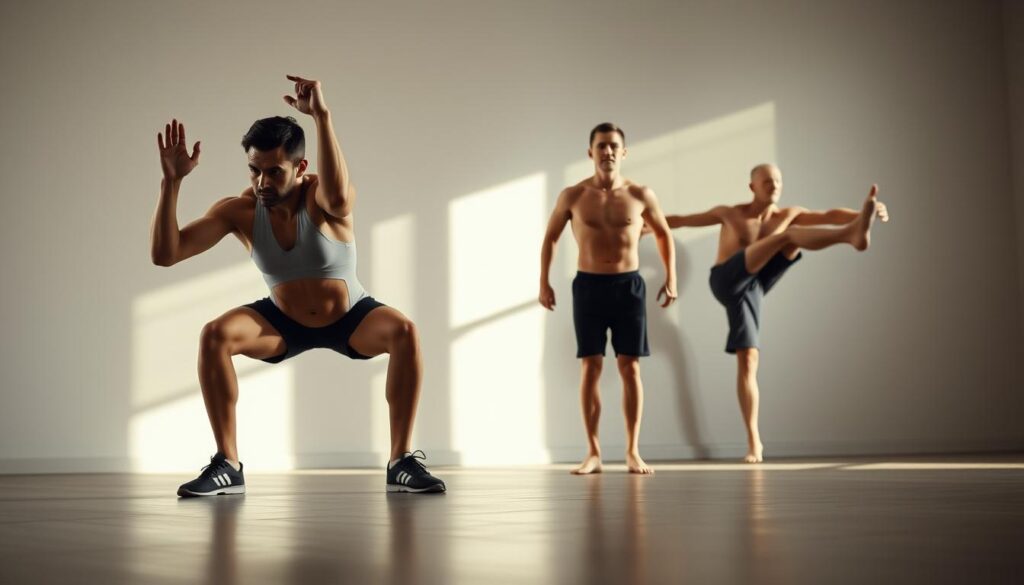
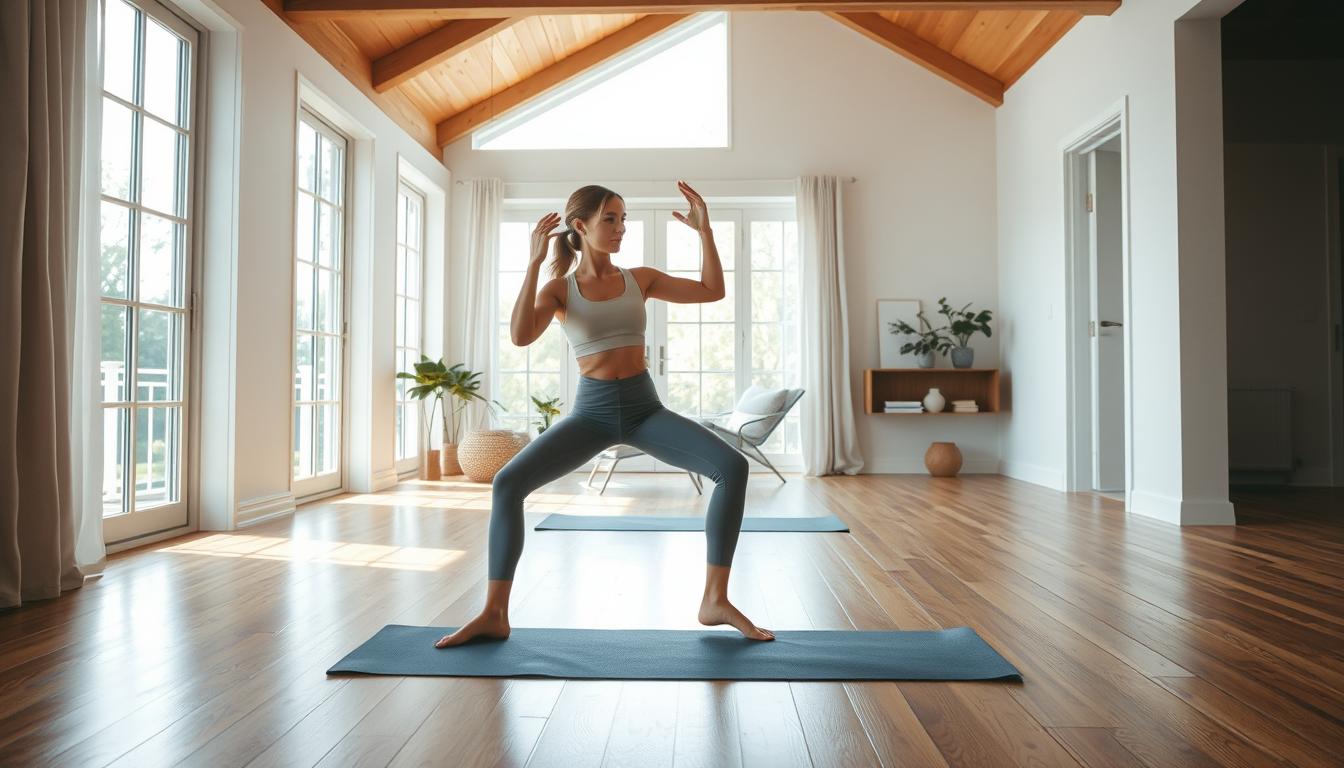
Let’s get real—your living room isn’t just for binge-watching; it’s a bone-building powerhouse waiting to happen. You’ve got everything you need: gravity, floor space, and that body of yours. Time to put ’em to work.
Breaking down exercise categories
Not all moves are created equal. High-impact stuff like dancing or jogging? Think of them as your bones’ espresso shot—quick, energizing jolts. Too intense? No sweat. Marching in place or stair climbs are like a slow drip coffee: steady and effective. Both types tell your skeleton, “Hey, let’s bulk up!”
Here’s the kicker: even lifting your own weight during pushups counts. Your arms? They’re not just for waving hello—they’re resistance tools. Start with 8-10 reps against the kitchen counter. Feel that burn? That’s your muscles whispering sweet nothings to your bones.
Why body weight matters when strengthening bones
Your frame isn’t just carrying you around—it’s the ultimate gym equipment. When you squat or do step-ups, you’re forcing bones to handle load. Like a savings account, more deposits (stress) mean bigger gains (density). Pro tip: Add a 2-second pause at the bottom of each squat. Suddenly, your thighs become bone-building ninjas.
Balance is critical too. Try standing on one leg while brushing your teeth. Wobbled? Perfect. Those micro-adjustments fire up tiny muscles around your hips and spine—critical for fracture prevention. Use a sturdy chair for support if needed. No judgment here—just smart strategy.
Remember: consistency beats intensity. Three 10-minute sessions daily? Way better than one marathon workout. Your bones thrive on routine, not heroics. Now go turn that carpet into your personal bone-strengthening dojo.
Understanding Bone Health and Impact of Gravity
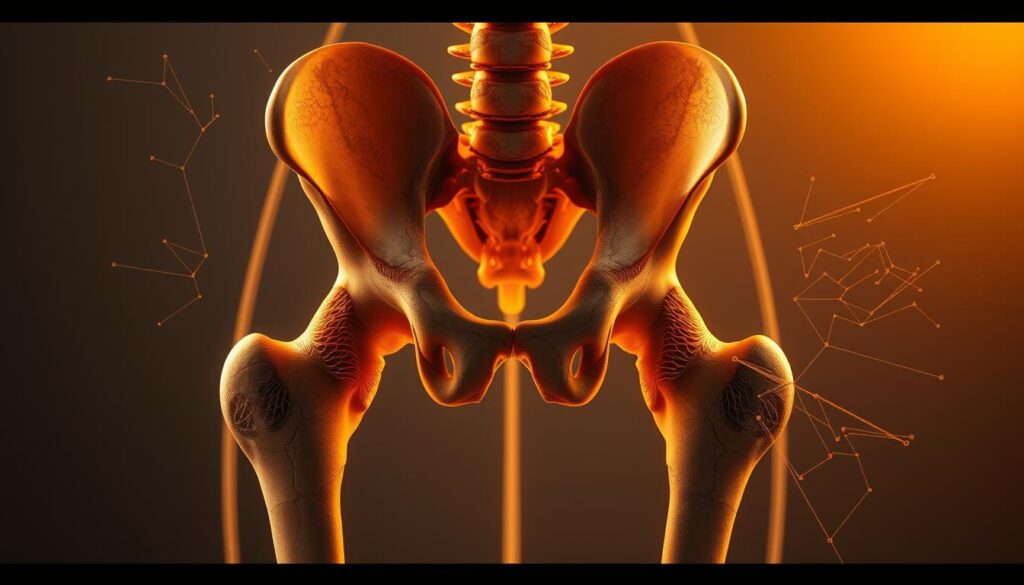
Gravity’s not just keeping you grounded—it’s your skeleton’s personal trainer. Every step you take, every can of beans you lift, your bones are having a silent conversation with physics. Here’s the wild part: your body’s literally reconstructing itself based on these daily chats.
How bones respond to weight stress
Picture this: when you carry groceries upstairs, your bones send out tiny SOS signals. Specialized cells called osteoblasts rush in like construction crews, laying down fresh bone tissue. Meanwhile, lazy osteoclasts (the demolition team) get put on notice. It’s a constant renovation project—and you’re the foreman.
Research from Johns Hopkins reveals something cool: just 12 weeks of regular resistance exercise can boost spinal bone density by up to 2.3%. That’s not gym-bro science—it’s your vertebrae getting thicker while you’re binge-watching The Great British Bake Off.
Here’s why it works:
- Standing washes dishes? Your hips are banking density deposits
- Lifting a grandkid? That’s free-weight training for your wrists
- Walking to get mail? Your shinbones are throwing a density party
Gravity isn’t some abstract force—it’s your workout partner. Even modest stress triggers what scientists call the mechanostat theory: bones adapt to handle whatever you throw at them. No heavy weights? No problem. Your own mass against Earth’s pull is enough to spark changes.
Let’s get real: your body’s smarter than any gym machine. It knows exactly where to reinforce based on how you move. That’s why home workouts work—they’re not generic, they’re you-specific. Now go have a conversation with gravity. Your bones are all ears.
Step-by-Step Guide to Safe Home Workouts
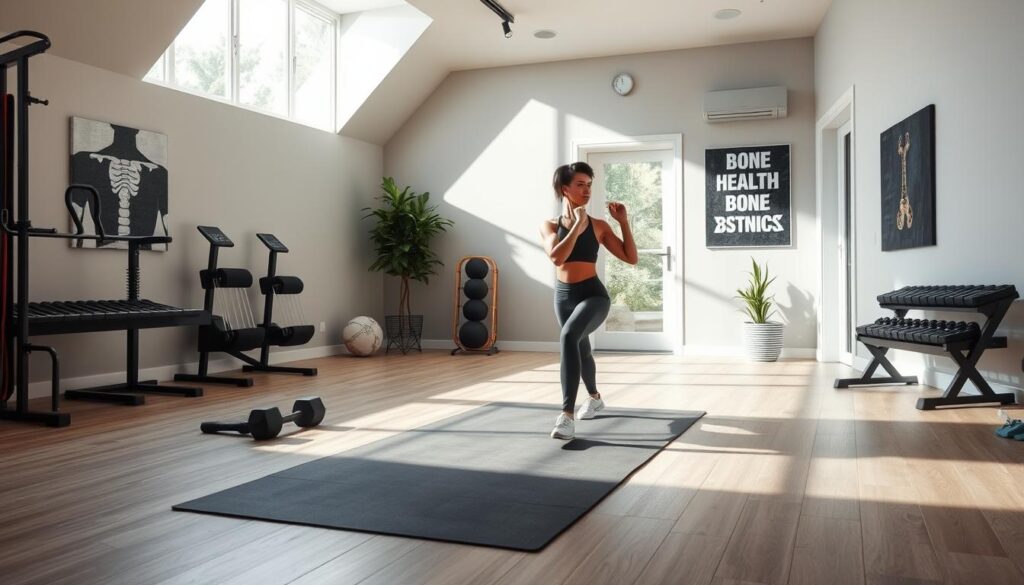
Let’s map out your living room workout routine—no guesswork needed. Think of this as IKEA instructions for bone health: straightforward, practical, and impossible to mess up. Ready? Let’s turn that carpet into a fracture-proof zone.
Establishing a routine without overdoing it
Start with 3 days a week. Your bones crave consistency, not heroics. Here’s your blueprint:
- Foot stomps (12 reps): Stand tall, grip a chairback. Stomp like you’re crushing autumn leaves. Feel that buzz in your shins? That’s your tibia saying “Thanks for the wake-up call!”
- Countertop squats (8 reps): Face your kitchen counter, hands on surface. Lower like you’re sitting into an invisible chair—knees over ankles. Bonus: Hum the Mission: Impossible theme while rising.
- Single-leg stands (30 sec/side): Brush teeth? Perfect time. Lift one foot, hover. Wobble = progress. (Pro tip: Keep the toilet seat down first.)
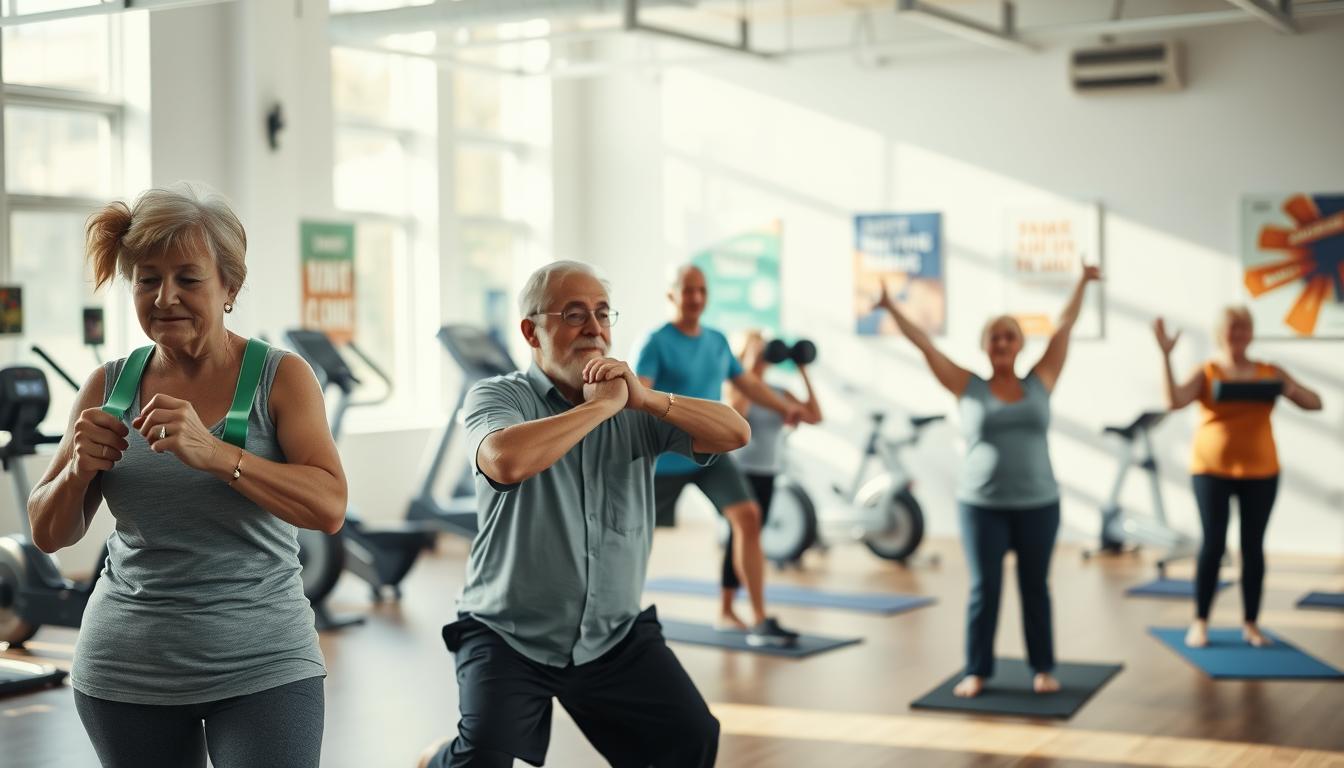
Rest 60 seconds between sets. Too easy? Add soup cans to squats. Too hard? Reduce reps. Your exercise program should challenge, not cripple.
Personal tweaks for better stability
Not everyone’s balance is Olympian-ready. Try these smart swaps:
- Lunges feeling risky? Take smaller steps. Pretend you’re squashing grapes under your heels, not stomping roaches.
- Feet sliding during moves? Workout socks off. Bare feet or grippy soles only—your seated chair exercises can wait.
- Hips protesting? Place pillows under knees for floor work. Your joints deserve a throne.
Remember: Slow is sexy here. Rushing through repetitions is like chugging fine wine—you’ll miss the benefits and end up dizzy. Clock your pace: 3 seconds down, 1 second up. Your bones can’t be rushed.
Techniques for Balance, Resistance, and Stability
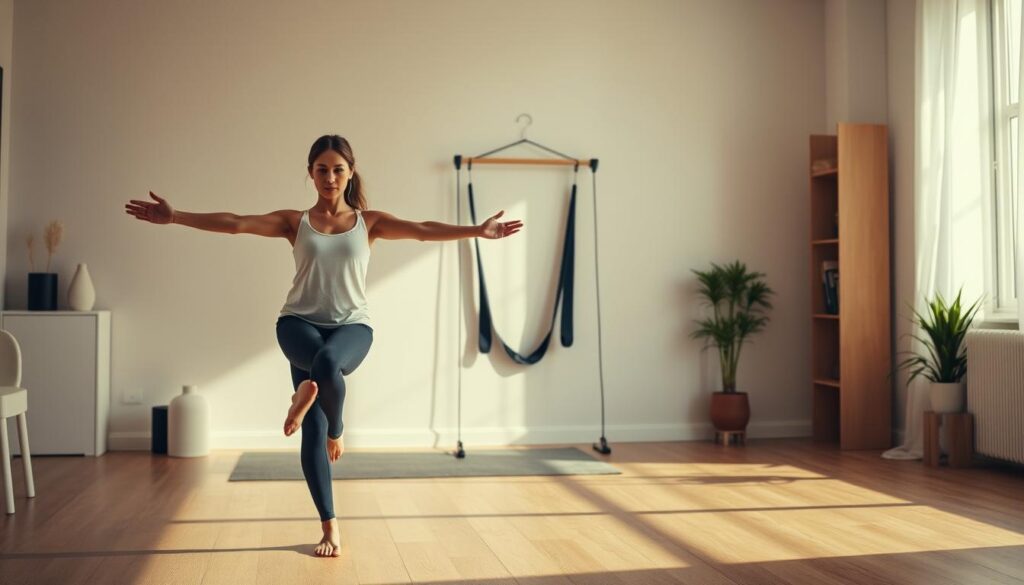
Your house is full of unsung workout gear—you’re just not seeing it yet. That coffee table? Prime real estate for stability drills. Dining chair? A trusty spotter for resistance moves. Let’s turn your decor into fitness equipment.
Everyday items, extraordinary results
Try this: Stand behind your sofa, hands lightly gripping the backrest. Lift one leg sideways like you’re drawing a rainbow with your foot. Do 10 reps per side. Feel that burn in your hips? That’s your glutes giving your bones a standing ovation.
Here’s the magic combo:
Resistance + balance = bone-building gold. Grab two water bottles for “farmer’s walks” around your kitchen island. Palms facing in, shoulders back. Your arms become living weights while your core fights wobbles. Bonus points for pretending you’re dodging lava tiles.
For back engagement, try chair-assisted heel drops:
- Stand facing seat, hands on chairback
- Rise onto toes, then lower heels halfway
- Pause 2 seconds (whisper “nope” to gravity)
- Repeat 12 times
Hand placement matters more than you think. When leaning on surfaces, keep fingers spread wide—like you’re petting a giant cat. This distributes weight evenly, protecting wrists while challenging your upper body. No coffee table? No problem. A wall works wonders for wall pushups that fire up those arms.
Remember: Your hips are the CEO of balance. Activate them by imagining you’re squeezing a beach ball between your knees during leg lifts. Start with 8 reps, build to 15. Suddenly, mundane activities like folding laundry become stealth training sessions.
Ready to level up? Let’s talk about turning stair railings into your personal balance beam…
Customizing Your Home Exercise Program
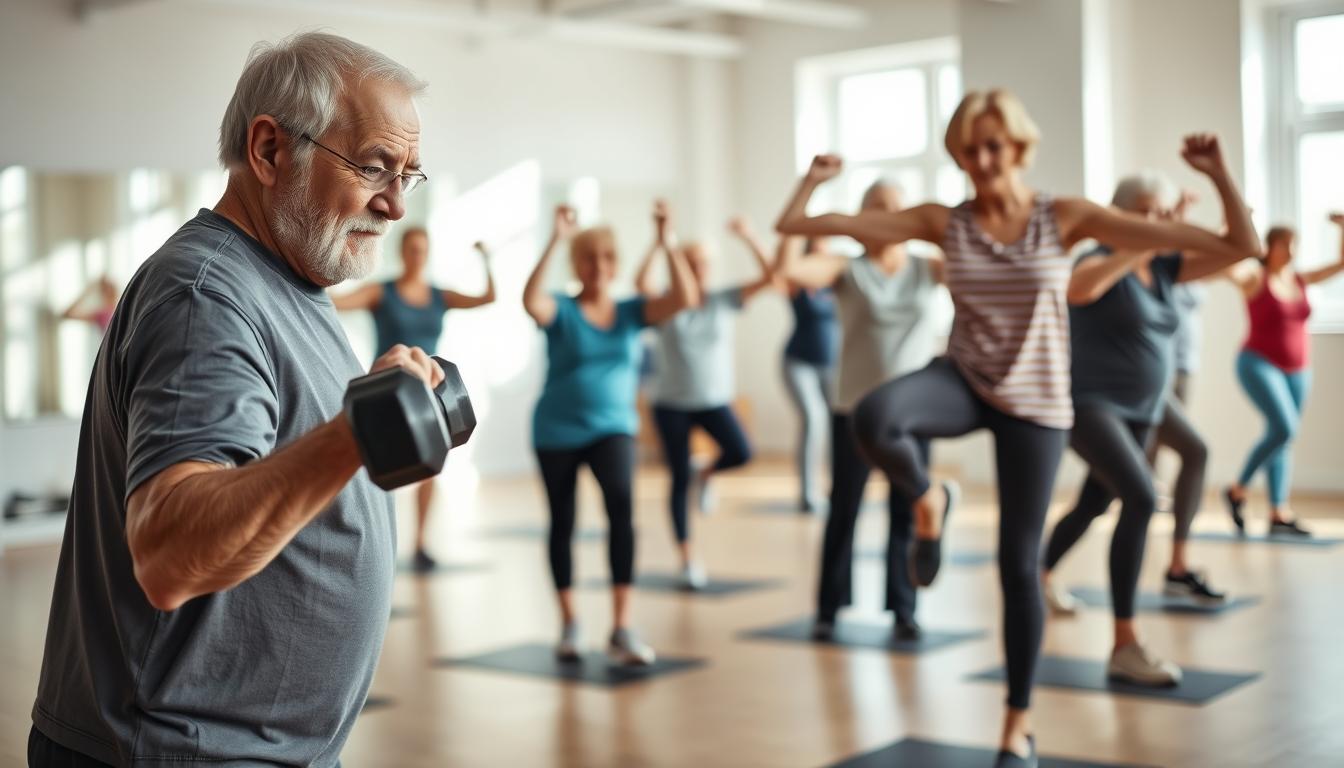
Your workout program should fit like your favorite jeans—snug where it matters, flexible where you need it. Let’s talk about mixing tools to keep your bones guessing (in a good way).
When to Swap Bands for Dumbbells
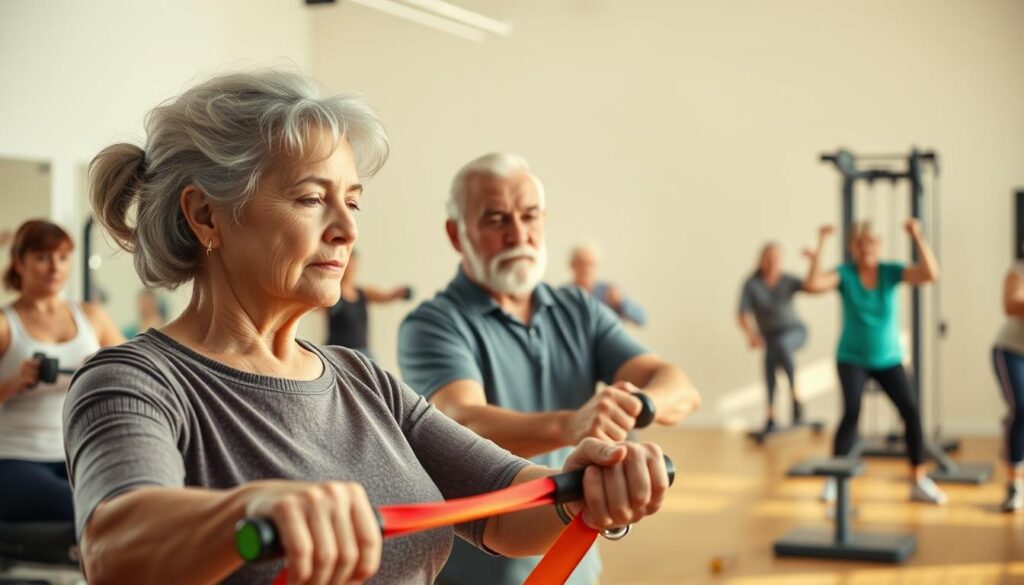
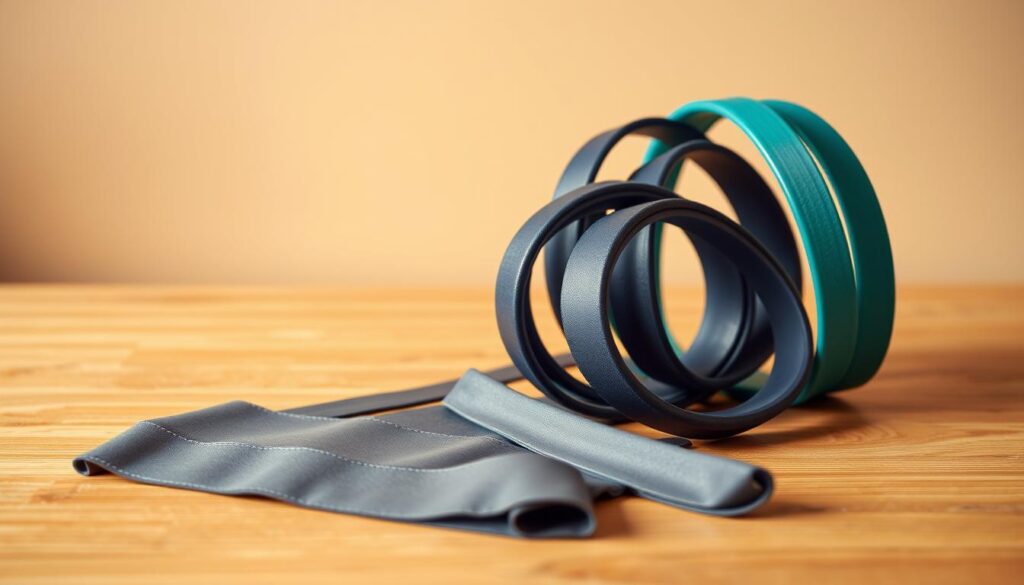
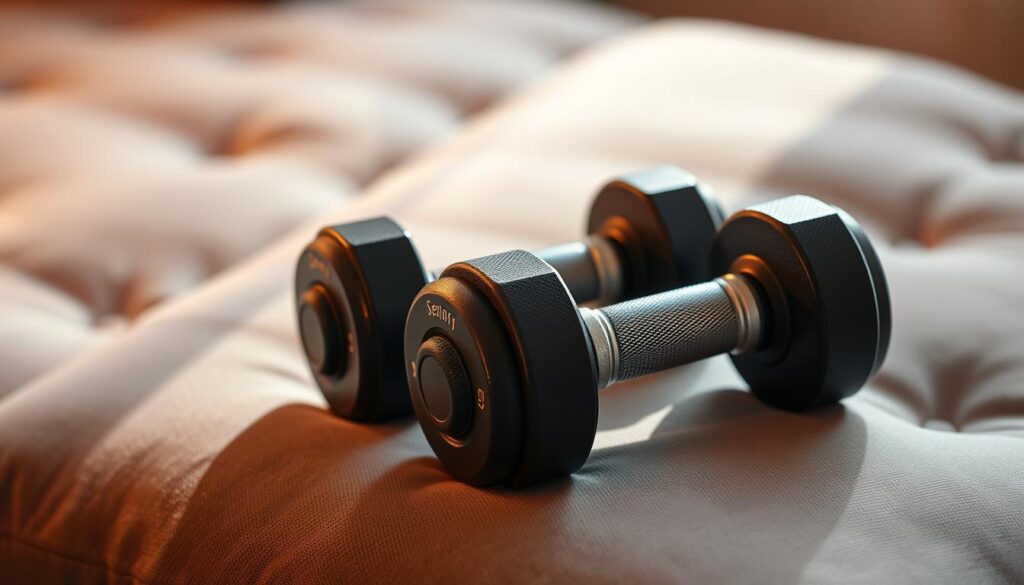
Here’s the deal: resistance bands build tension through constant pull, while dumbbells rely on gravity. Alternate them weekly to shock muscles into growth. My neighbor Linda swears by this combo—she’s 68 and leg-presses her granddog like he’s a feather.
| Equipment | Best For | Reps | Pro Tip |
|---|---|---|---|
| Bands | Arms & shoulders | 12-15 | Anchor under feet for bicep curls |
| Dumbbells | Legs & back | 8-10 | Use during step-ups for hip power |
Stuck in a rut? Try this split:
- Mondays: Bands for arm circles (3 sets of 15)
- Wednesdays: Dumbbells for lunges (2 sets of 10/side)
- Fridays: Mix both—band rows + weight squats
Notice your golf swing improving? You might’ve unlocked secret gains from targeted leg work. That’s the beauty of tweaking your program—it sneaks benefits into daily life.
Remember: Your gear isn’t married to you. Swap tools like you’d change TV channels. Did 8 reps with cans feel easy? Grab a band next time. Your bones thrive on variety, not monotony.
Avoiding High-Risk Movements and Injury
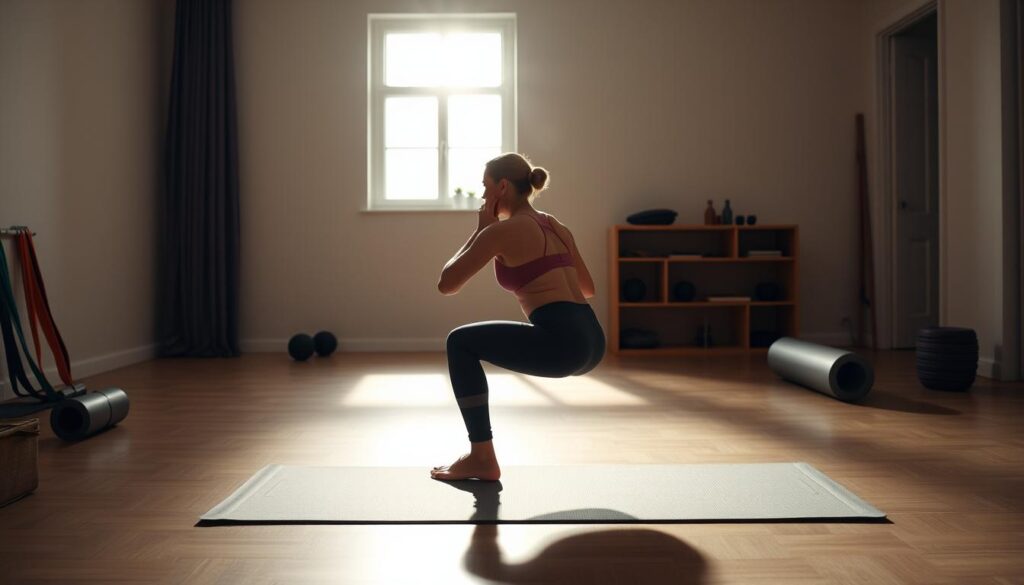
Your bones aren’t crash test dummies—treat ’em right. Some moves that look harmless could invite trouble. Let’s talk about what not to do before you start shadowboxing with your coffee table.
Spotting trouble before it spots you
Abrupt twists? Your spine isn’t a rotisserie chicken. Sudden rotations strain vertebrae, especially if you’ve already got fragile areas. Deep forward bends? Skip ’em. They compress spinal discs like a soda can crusher.
High-impact jumps? Big nope. That “just five minutes” of jump rope could rattle fragile hips like loose change in a dryer. Even reaching sideways for heavy objects—hello, laundry basket!—can tweak your back if your foot placement’s off.
Smart swaps for safer sessions
Instead of twisting lunges, try stepping forward like you’re testing bathwater. Keep knees aligned over ankles—no wobbling inward. Can’t resist reaching? Pivot your whole body, not just your torso. Your hips will thank you later.
Table: Risky vs. Rewarding Moves
| Skip This | Try This | Why It Works |
|---|---|---|
| Toe touches | Wall slides | Protects lower back |
| Full sit-ups | Pelvic tilts | Engages core without spine strain |
| Deep squats | Chair-assisted stands | Guards knee joints |
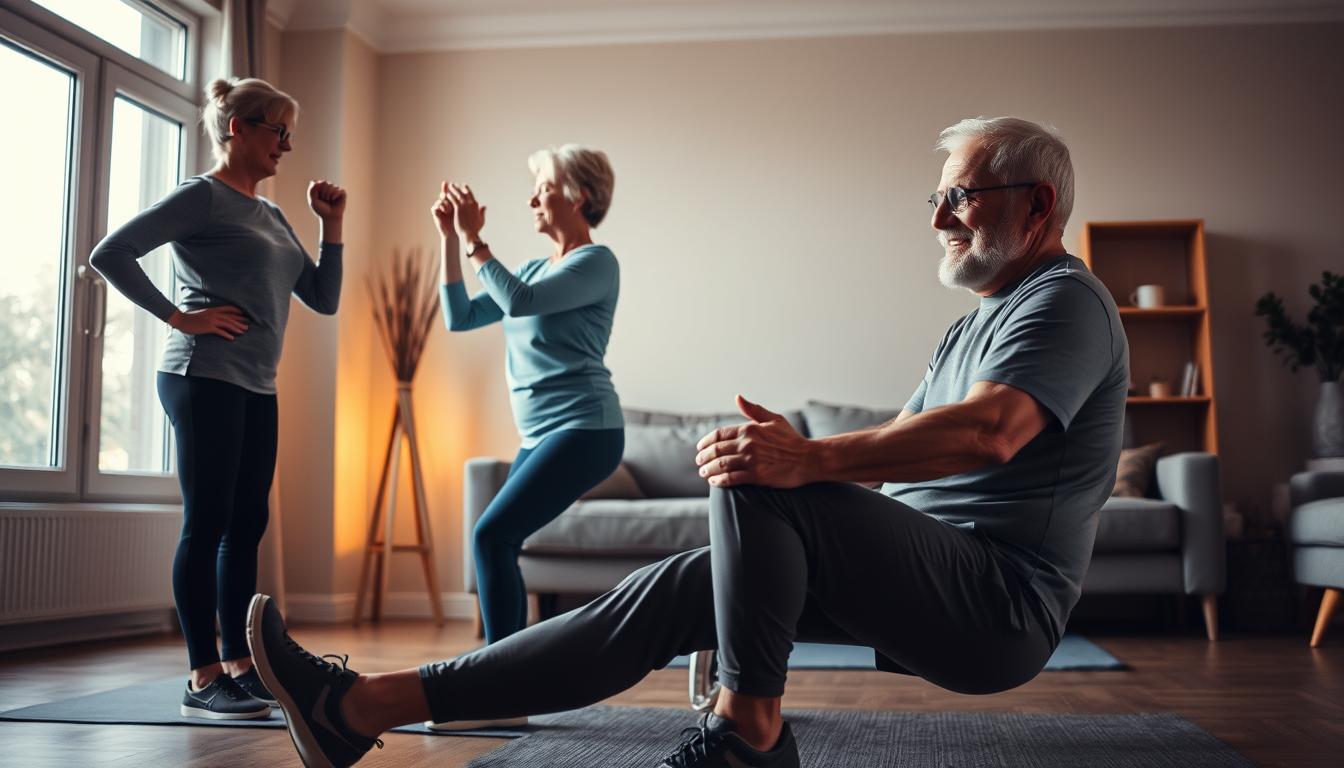
Foot placement matters more than you think. Standing too narrow? That’s a fracture waiting to happen. Widen your stance like you’re straddling a yoga ball. Suddenly, your base becomes fortress-worthy.
Scientific Tips to Enhance Bone Density
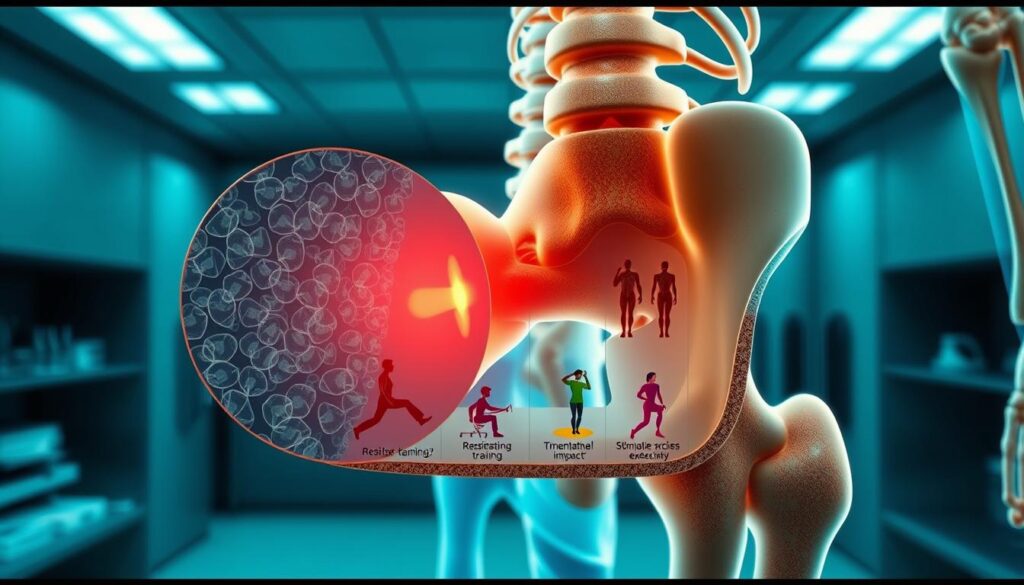
Science just handed us the ultimate cheat code for stronger bones—and no, it’s not kale smoothies. Let’s talk lab-approved strategies that turn your living room into a bone-density lab. Spoiler: Your soup cans are about to become scientific instruments.
Research-Based Exercise Durations and Impacts
University of Michigan studies show 12-15 repetitions per set work best for bone remodeling. Here’s your cheat sheet:
| Move | Duration | Frequency | Bone Benefit |
|---|---|---|---|
| Heel Raises | 30 sec holds | Daily | +1.8% ankle density* |
| Wall Pushups | 8 reps x 3 sets | 3x/week | Wrist strength ↑22% |
| Step-Ups | 10/side | Alternate days | Hip density boost |
*Based on 2023 Mayo Clinic trial. Pro tip: Time sets with microwave beeps—science doesn’t care about fancy timers.
Progressive Resistance: Your Muscles’ Growth Hack
Here’s the magic: Add one extra soup can every two weeks. Your muscles adapt by whispering “Hey bones, we need backup!” Suddenly, lifting becomes a team sport. Try this progression:
- Week 1: Canned corn (14 oz)
- Week 3: Tomato paste (28 oz)
- Week 5: Bean chili (42 oz)
Clinical guidelines reveal 2.5% density gains in 6 months with this method. Bonus: You’ll never look at pantry staples the same way.
Balance Training: Where Wobbles Win
Stand on one leg while reciting state capitals. Wobbled at “Montpelier”? Perfect. Northwestern University found 30-second daily balances reduce fall risk by 37%. Try these real-world drills:
| Activity | Duration | Muscles Engaged |
|---|---|---|
| Toothbrushing | 60 sec/side | Ankles, hips, core |
| Waiting for Coffee | 45 sec alternating | Quadriceps, glutes |
Remember: Shaky legs mean working legs. Your bones are basically throwing a renovation party—and you’re the DJ.
Wrapping Up Your Home Bone-Strengthening Routine
Let’s cut to the chase—your bones aren’t getting younger, but your routine can. Seven exercise sessions weekly? Non-negotiable. Five-to-ten reps per move? Non-negotiable. Controlled movements that make your hips whisper “thank you”? You guessed it.
Every balance drill and resistance session deposits strength into your body’s bone bank. Those 30-second one-legged stands while microwaving leftovers? They’re not just for laughs—they’re armor against spills and tumbles. And those soup-can curls? Your arms just became scaffolding for your skeleton.
Real talk: Skip a component, and you’re leaving gains on the table. Mix floor work with chair-assisted moves to hit every angle. Knees need love too—slow squats beat rushed ones every time. Research shows consistent effort trumps occasional heroics. No magic pill here—just smart, daily action.
Your program’s secret sauce? Seconds matter. Hold heel raises a beat longer. Pause at the bottom of step-ups. These micro-stresses tell your bones, “Time to level up.” And hey—if you’re not slightly annoyed by rep eight, you’re not trying hard enough.
Final thought: Your bones are listening—what’s next?