Balance exercises for seniors at home don't need fancy equipment, a gym membership, or a personal trainer standing over your shoulder — just a sturdy chair and about fifteen minutes. The best picks here are the Single-Leg Stance (great for almost everyone), the Sit-to-Stand (perfect if you're brand new to this), Weight Shifts (ideal if you've had a recent fall or use a walker), and the Flamingo Stand for folks who are already steady on their feet and want more of a challenge. Whether you're recovering from an injury, worried about a fall, or just want to stay sharp on your feet into your 80s, there's something on this list built for you.
The Best Balance Exercises for Seniors at Home, At a Glance
Here's the quick version, for anyone who doesn't want to scroll through the whole thing (no judgment).
Rank
Exercise
Best For
Difficulty
1
Single-Leg Stance
Best overall — the gold standard
Beginner to intermediate
2
Sit-to-Stand
Absolute beginners, nervous first-timers
Beginner
3
Weight Shifts
Walker users, recent falls
Beginner
4
Standing Marches
Building confidence back up
Beginner
5
Heel-to-Toe Walk
Coordination nerds
Intermediate
6
Heel Raises
Ankle stability
Beginner
7
Side Leg Raises
Hip strength
Beginner to intermediate
8
Clock Reach
Dynamic, reactive balance
Intermediate
9
Rock the Boat
Fall prevention, specifically
Intermediate
10
Flamingo Stand
Advanced folks who want a real test
Advanced
Top Balance Exercises for Seniors at Home — At a Glance
The table above gives you the ranking. This gives you the cheat sheet — same info, quicker to scan.
Best Overall Balance Exercise for Seniors at Home: Single-Leg Stance
Best for Absolute Beginners: Sit-to-Stand (Chair Rise) — start here, no shame in it
Best Low-Impact Option: Weight Shifts
Best for Building Confidence: Standing Marches
Best for Coordination: Heel-to-Toe Walk (not for day one)
Best for Ankle Stability: Heel Raises
Best for Hip Strength: Side Leg Raises — the one everybody skips
Best for Dynamic/Reaching Balance: Clock Reach
Best for Fall Prevention: Rock the Boat
Best Advanced Progression: Flamingo Stand — last stop, not the first
Benefits of Balance Exercises for Seniors
Balance exercises for seniors matter because falls are the leading cause of injury for people over 65 — period. Not maybe. Not sometimes. It's the top one.
Here's what these moves are actually doing for you, beyond just "balance" in some vague sense:
Physical stuff:
Cuts fall risk — stronger stabilizer muscles catch you before you hit the floor
Keeps you independent — stairs, showers, grocery bags, all of it gets easier
Fixes posture — that shuffle-walk a lot of us develop? Balance work pushes back on it
Builds bone density too, which nobody talks about enough
Speeds up reaction time — your body learns to catch itself, fast
Mental stuff, which honestly might matter more:
Less fear of falling (which, ironically, is its own fall risk — funny how that works)
Better focus and coordination, tied to brain health
More confidence getting out of the house. Seeing friends. Living your life.
Benefit Type
What You Actually Get
Physical
Fewer falls, better posture, stronger legs
Functional
Stairs and standing up get less scary
Mental
Less fear, more confidence, better mood honestly
Long-term
Independence, fewer hospital trips
How to Do Balance Exercises for Seniors Safely at Home
Safety first, always — but that doesn't mean this has to be complicated.
Shoes: flat, non-slip, or just go barefoot on non-slip flooring
Space: clear about 3×3 feet. Move the rug. Seriously, move it.
Support: a chair or countertop, always within reach for the first few weeks
Stop immediately if you feel dizzy, short of breath, or get sharp pain — this isn't the time to push through
Don't hold your breath during holds (people do this more than you'd think)
Factor
What Works
Frequency
3-5 times a week
Length
10-15 minutes, no need to go longer
Timing
Morning tends to work best — more energy, less fatigue
Support needed
Chair or wall, for basically everything at first
1. Single-Leg Stance — Best Overall Balance Exercise for Seniors at Home
The Single-Leg Stance earns the top spot on this list because it does more with less than almost anything else you could do at home, working your ankle, hip, and core all at once while directly training the exact kind of stability failure that leads to most falls in the first place, and because it scales so easily from "barely lifting your foot an inch" all the way up to "eyes closed, no hands, thirty seconds" that it can grow with you for years.
Builds core stability — ankle, hip, and core working together
Trains the exact reflex that stops a stumble from becoming a fall
Scalable. Easy at first. Hard later. Your call.
Muscle groups targeted:
Glutes (gluteus medius) — keeps your hip from dropping
Ankle stabilizers — constant tiny corrections
Core (obliques, deep abdominals) — keeps you from tipping
Quads — knee support throughout
How to Do It
Stand behind a sturdy chair. Hands on the back, lightly.
Shift your weight onto one leg. Lift the other foot a few inches.
Hold for 10-30 seconds.
Switch legs. Do 3 rounds each side.
Who It's Best For
Anyone with mild to moderate balance concerns who can already stand on their own for a bit. This is your starting point, honestly — most people should begin here.
Why It Ranks #1
Because it's the most researched, most flexible, cheapest (as in: free) balance move out there, and it directly targets the number one reason seniors fall — losing stability on one leg, whether that's stepping over a curb or reaching for something on a shelf. Nothing else on this list does that job quite as well.
Progression table:
Level
What Changes
Beginner
Two hands on chair, hold 5-10 seconds
Intermediate
One hand, hold 15-20 seconds
Advanced
No hands. Eyes closed. 30 seconds. Good luck.
2. Sit-to-Stand — Best for Absolute Beginners
If you've never done a balance exercise in your life, or you're coming back after an injury, or standing for more than a minute makes you nervous, Sit-to-Stand is where you start, because it begins and ends in a seated position, which means the actual "fall risk" moment is basically zero, while still building the exact leg strength you use every single day getting off the couch, out of the car, or up from the toilet.
Benefits:
Builds real leg strength — the kind you use constantly, not gym-strength
Improves balance specifically during the sit-to-stand transition (a big fall moment)
Low risk. You're never far from sitting back down.
Muscle groups targeted:
Quads — does most of the work
Glutes — powers the hip extension
Hamstrings — controls the lowering
Core — keeps your torso from pitching forward
How to Do It
Sit at the edge of a sturdy chair, feet flat, shoulder-width apart.
Lean slightly forward, press through your heels, stand up.
Lower back down slow. Don't just plop.
8-12 reps.
Who It's Best For
New folks. Anyone recovering from injury. Anyone who gets tired standing for long stretches.
Why It Ranks #2
Safest possible entry point, and it builds the leg strength that basically every other exercise on this list leans on. Skip this one and you're building on sand.
3. Weight Shifts — Best Low-Impact Starting Point
Weight Shifts are the gentlest weight-bearing move on this entire list, which makes them the go-to if you've had a recent fall, use a walker, or just have significant balance trouble — this one teaches your body how to transfer weight from one leg to the other in a slow, controlled way, without ever asking you to actually lift a foot off the ground, so the risk stays about as low as it gets while you rebuild trust in your own body.
Benefits:
Teaches weight transfer control — the foundation under every walking step
Easy on the joints. Good if arthritis is part of your life.
Builds body awareness (proprioception, if you want the fancy word)
Muscle groups targeted:
Hip abductors/adductors — control the side-to-side shift
Ankle stabilizers — fine-tune as weight moves
Core — keeps you upright through it
How to Do It
Stand feet hip-width apart, near a counter.
Shift weight to your right foot. Hold 5 seconds.
Shift left. Hold 5 seconds.
10 reps each side.
Who It's Best For
Seniors with significant balance concerns, recent falls, or walker users. This is a "start here and don't rush" exercise.
Lowest-risk weight-bearing move on the list. Nothing else gets you moving safely quite like this one does.
4. Standing Marches — Best for Building Confidence
Standing Marches work because they simulate the actual mechanics of walking while you're still holding onto something for support, which makes this the exercise a lot of people reach for after a fall or after months of being more sedentary than they'd like, since it rebuilds hip strength and rhythm without asking you to take any real risk.
Benefits:
Mimics walking mechanics in a safe, supported setup
Builds hip flexor strength — helps you avoid trips
Builds rhythm and coordination back up
Muscle groups targeted:
Hip flexors — lift the knee
Glutes and quads — stabilize the standing leg
Core — controls trunk sway
How to Do It
Stand tall, hold a counter or chair.
Lift one knee to hip height. Lower it.
Alternate legs like you're marching.
Keep going for 30-60 seconds.
Who It's Best For
Anyone rebuilding confidence after a fall, surgery, or just a long stretch of not moving much.
Why It Ranks #4
It's the bridge. Static holds on one side, actual walking on the other — Marches sit right in the middle.
5. Heel-to-Toe Walk (Tandem Walk) — Best for Coordination
The Heel-to-Toe Walk narrows your base of support down to almost nothing, which sounds scary but is exactly why it works — it forces your body to handle the kind of instability you'd get from walking on a sidewalk crack or an uneven patch of grass, and it's one of the more functional balance exercises for seniors at home because it mirrors real walking so closely.
Benefits:
Narrows your base of support — trains real-world instability
Improves gait and step confidence
Sharpens coordination between your eyes, feet, and hands
Muscle groups targeted:
Ankle stabilizers — working overtime here
Hip stabilizers (gluteus medius) — stops hip drop
Core — keeps the line straight
How to Do It
Stand near a wall, just in case.
Place one foot directly in front of the other, heel to toe.
Take 10-15 slow steps in a line.
Turn around. Do it again.
Who It's Best For
Seniors who already have decent baseline balance and want to push their gait stability further.
Why It Ranks #5
Closest thing on this list to actual walking. That's what makes it so useful — and also why it's not a beginner move.
6. Heel Raises — Best for Ankle Stability
Heel Raises isolate a muscle group that most of the bigger balance moves barely touch, and that matters more than people think, because weak ankles are behind a huge chunk of the "I just rolled my ankle stepping off the curb" incidents that lead to bigger falls down the line.
Strengthens calves and ankles — critical for push-off
Improves balance on uneven ground specifically
Simple enough to do while holding the kitchen counter
Muscle groups targeted:
Gastrocnemius and soleus (calves) — main movers
Tibialis posterior — arch and ankle support
Small foot muscles — improve ground feedback
How to Do It
Stand, holding a counter, feet hip-width apart.
Rise onto your toes. Hold 2-3 seconds.
Lower slow.
10-15 reps.
Who It's Best For
Anyone with known ankle weakness, or honestly anyone who's had ankle issues in the past.
Why It Ranks #6
Small muscle, big job. The bigger moves on this list just don't isolate it the way this one does.
7. Side Leg Raises — Best for Hip Strength
Side Leg Raises target your hip abductors directly, and that's a big deal because sideways falls — the kind that lead to hip fractures — are some of the most dangerous falls a senior can have, so strengthening this specific muscle group is one of the more overlooked but genuinely important things you can do at home.
Benefits:
Strengthens hip abductors — key stabilizers, often neglected
Cuts down sideways fall risk specifically
Builds tolerance for standing on one leg longer
Muscle groups targeted:
Gluteus medius and minimus — the stars here
Obliques — stabilize against sway
Standing-leg ankle stabilizers — supporting cast
How to Do It
Stand behind a chair, hands on the back.
Lift one leg straight out to the side. Torso stays upright.
Lower slow.
10-15 reps per side.
Who It's Best For
Anyone with hip weakness or a history of falling sideways (not everyone thinks about which direction they fall — but it matters).
Why It Ranks #7
Most routines skip this muscle group entirely. That's exactly why it's here.
8. Clock Reach — Best for Dynamic Balance
The Clock Reach moves you off the beginner list and into something more advanced, because now you're not just holding still — you're reaching in different directions while balancing on one leg, which trains reactive balance, the actual skill you need when you're reaching for a can on a high shelf or leaning to grab something off the floor.
Benefits:
Trains reactive balance — recovering from being off-center
Builds trunk and hip control under real movement
Builds confidence reaching for things — shelves, dropped keys, whatever
Core and obliques — control lean in every direction
Hip stabilizers — manage the shifting center of gravity
How to Do It
Stand on one leg near a chair. Picture a clock face on the floor.
Reach your free foot to 12. Back to center.
Reach to 3, then 6. Back to center each time.
Switch legs.
Who It's Best For
Seniors who already have solid single-leg balance and want a real test.
Why It Ranks #8
More advanced. More directions. Closer to what your body actually needs to recover from a real stumble.
9. Rock the Boat — Best for Fall Prevention
Rock the Boat earns its "fall prevention" title because it directly rehearses the exact moment that precedes most real falls — that split second where your weight shifts too far and your body has to decide, fast, whether to catch itself, and training that specific reflex is honestly more valuable than almost anything else on this list.
Benefits:
Trains automatic balance recovery — the reflex itself
Strengthens ankles, knees, hips, all together
Builds stability for unpredictable surfaces
Muscle groups targeted:
Ankle stabilizers — absorb and correct
Quads and hamstrings — knee control
Gluteus medius — hip stability on the loaded leg
How to Do It
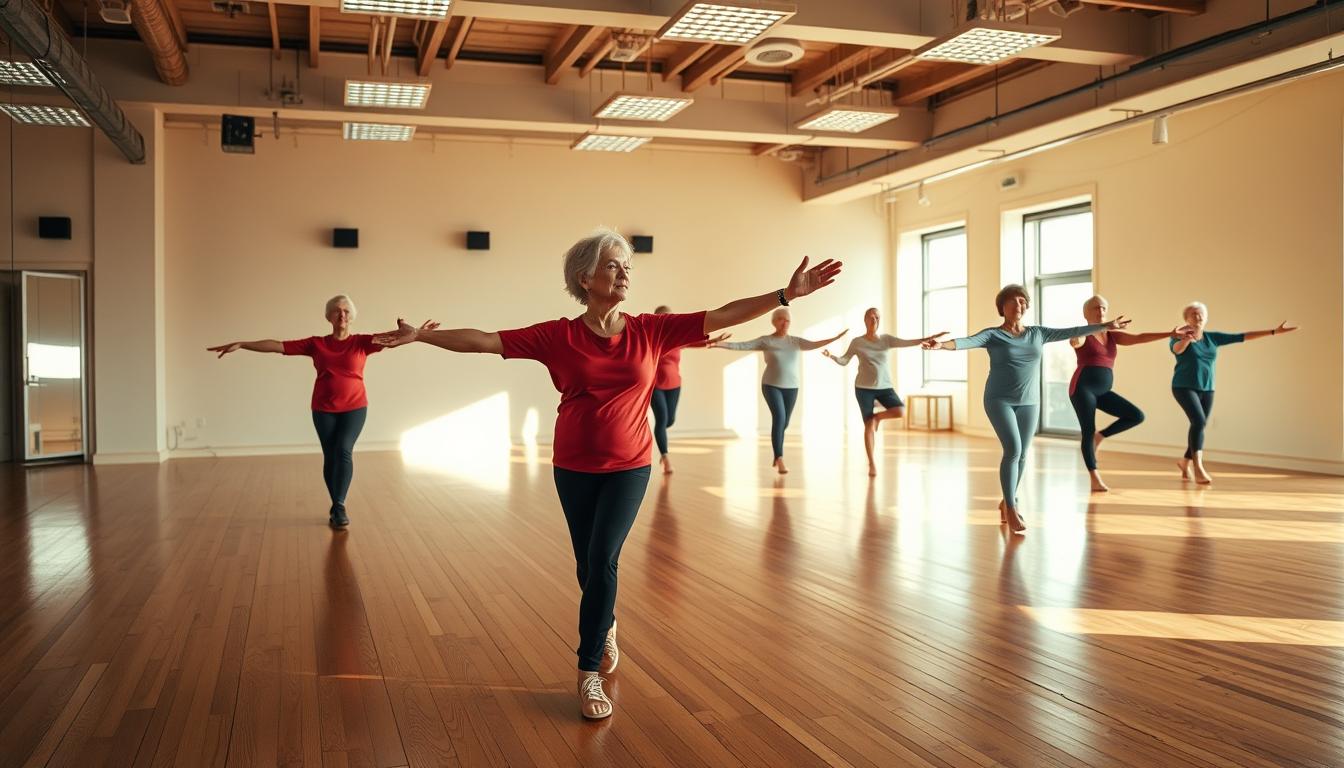
Stand feet hip-width apart, arms out.
Shift weight fully onto your right foot, left foot lifts slightly.
Hold 3-5 seconds. Rock to the left.
10 reps, alternating.
Who It's Best For
Seniors focused specifically on fall prevention, especially after a near-fall or an actual fall.
Why It Ranks #9
It's the closest simulation on this list to the real thing. That's not nothing.
10. Flamingo Stand — Best Advanced Balance Exercise
The Flamingo Stand is where this list ends, and for good reason — it's genuinely hard, it removes hand support entirely, and it's not where anyone should start, but for seniors who've already built up strength through the earlier exercises, it's the move that prepares you for real, unsupported daily life: getting dressed standing up, stepping over something on the floor, all of it.
Benefits:
Maximizes single-leg strength — no support, no shortcuts
Builds real balance endurance
Prepares you for unsupported daily tasks
Muscle groups targeted:
Gluteus medius and minimus — heavily loaded, keeping hips level
Deep core stabilizers — holding posture with zero support
Ankle and foot stabilizers — working the whole hold
How to Do It
Stand tall, no support (fingertip touch only if you need it).
Lift one foot behind you. Hold it like a flamingo.
Hold 20-30 seconds.
Switch legs. 2-3 rounds each.
Who It's Best For
Seniors who've already mastered the Single-Leg Stance and want the next real challenge.
Why It Ranks #10
Hardest one here. Lowest margin for error if you're not ready for it. That's exactly why it's last, not first.
How to Build a Weekly Balance Exercise Routine
A weekly balance routine works best when you rotate what you're training instead of doing the same three moves every day — here's a sample week to steal.
Day
Focus
Exercises
Monday
Foundations
Sit-to-Stand, Weight Shifts
Tuesday
Rest or a walk
—
Wednesday
Static balance
Single-Leg Stance, Heel Raises
Thursday
Rest or a walk
—
Friday
Dynamic balance
Standing Marches, Heel-to-Toe Walk
Saturday
Strength + balance
Side Leg Raises, Rock the Boat
Sunday
Advanced (if ready)
Clock Reach, Flamingo Stand
Some general rules:
Start at 2-3 sessions a week. Build up to 4-5 once it feels easy.
Rotate focus — ankles one day, hips the next, core after that
Give yourself 48 hours between the harder sessions
Track it. Hold times, reps, whether you still need the chair. Small notes, big payoff over a few months.
Signs you're ready to move up a level:
You're holding static positions without any strain
You don't need your hand on the chair anymore for beginner moves
Stairs and uneven sidewalks don't rattle you like they used to
Modifications for Different Fitness and Mobility Levels
Not everyone should be doing the same version of these exercises — here's how to adjust based on where you're actually starting from.
If you have limited mobility or use a walker:
Stick to seated or fully supported versions — Weight Shifts and Sit-to-Stand, both hands on support
Smaller range of motion. Shorter holds. No rush.
Always stay near something stable
If you're recovering from a fall or injury:
Start with just Weight Shifts and Sit-to-Stand until your confidence comes back
Two hands on support for everything, at first
Add one new exercise every week or two — not all ten at once
If you're active and already fairly mobile:
Wean off support gradually — two hands, then one hand, then none
Push hold times and reps up over time
Bring in Clock Reach and Flamingo Stand sooner rather than later