Fifteen minute chair exercises for seniors are a complete routine you can do sitting in a sturdy chair, no gym required, that builds strength, boosts energy, and improves mobility in just fifteen minutes flat. That's the promise, and this article delivers on it — a full, ready-to-follow sequence of 15 minute chair exercises for seniors, ranked by benefit (weight loss, belly fat, balance, strength, flexibility, circulation, posture, relaxation), broken down move by move so you know exactly what to do.
Let's get into it.
Quick Answer: The Best 15 Minute Chair Exercises for Seniors at a Glance
The best 15 minute chair exercises for seniors routine includes a warm-up, strength work, core training, balance drills, and a cool-down — all done from the same chair, back to back, in about fifteen minutes total. Here's the fastest overview: ten exercises, each tagged with its superlative and approximate time, so you can see the whole thing at a glance before you even start.
#
Exercise
Superlative Tag
Time
1
Seated Marching
Best for Warming Up
~1.5 min
2
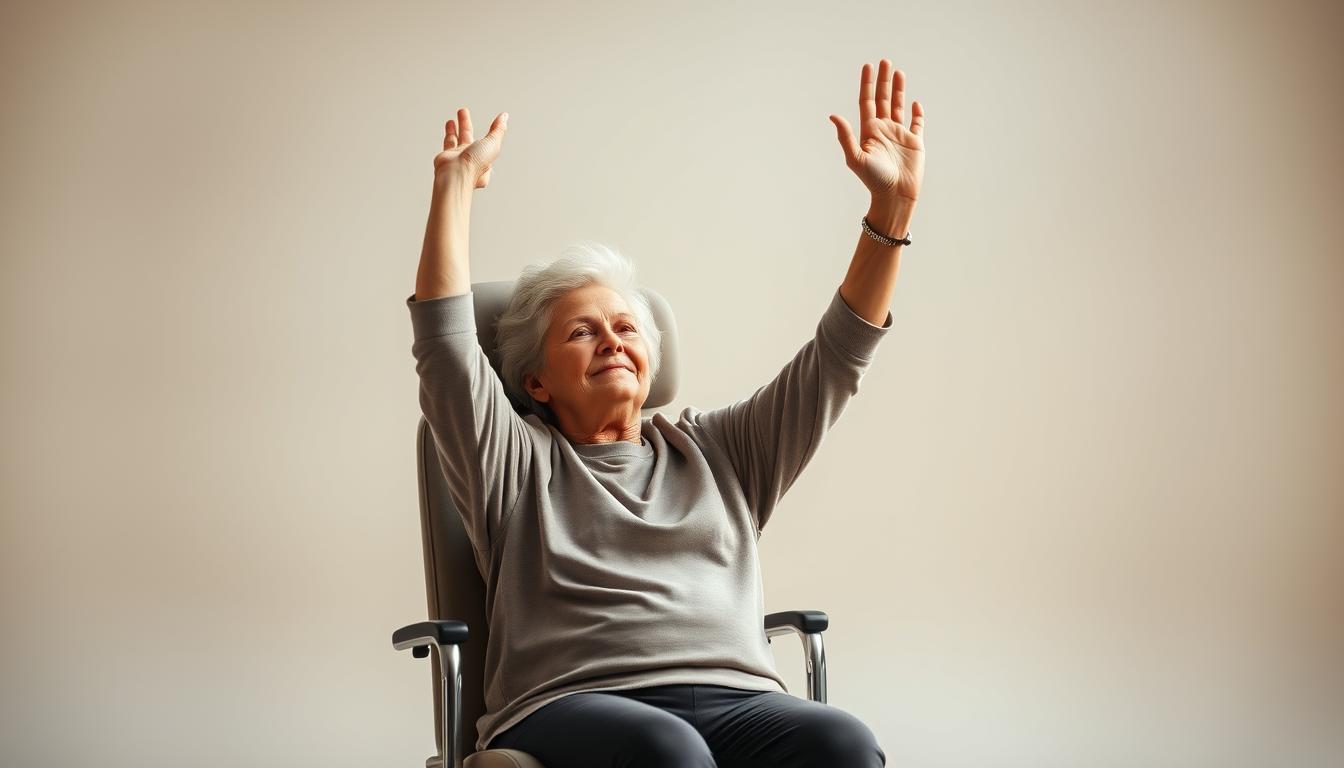
Seated Overhead Arm Raises
Best for Upper Body Strength
~1.5 min
3
Seated Leg Extensions
Best for Leg Strength
~1.5 min
4
Seated Torso Twists
Best for Core and Abs
~1.5 min
5
Seated Side Bends
Best for Waist and Belly Fat Toning
~1.5 min
6
Seated Bicep Curls
Best for Arm Toning
~1.5 min
7
Seated Knee-to-Chest Stretch
Best for Hip Flexibility
~1.5 min
8
Seated Ankle Circles and Pumps
Best for Circulation and Swelling Reduction
~1.5 min
9
Sit-to-Stand Chair Squats
Best for Balance and Fall Prevention
~1.5 min
10
Seated Deep Breathing and Shoulder Rolls
Best for Relaxation and Stress Relief
~1.5 min
Equipment needed: a sturdy armless chair — non-wheeled, stable on the floor. Comfortable footwear — flat, non-slip soles. A water bottle for hydration breaks between sets. That's genuinely it.
Who this routine is for: seniors with limited mobility, those recovering from injury or surgery, beginners to exercise, and anyone seeking a low-impact way to stay active. If that's you — keep reading.
What Makes This a Great 15 Minute Chair Exercises for Seniors Routine
What makes this a great 15 minute chair exercises for seniors routine is simple — it's joint-friendly, it fits in a real day, and it covers the whole body without asking you to get on the floor. Not complicated. Doesn't need to be.
Low-impact design. Every movement is joint-friendly and avoids high-impact strain on knees, hips, and the lower back.
Time efficiency. The full session fits into a 15 minute window — making it realistic for daily consistency.
Full-body coverage. Arms, legs, core, cardiovascular health, all touched in one sitting-based sequence.
Adaptability. Scale it up or down depending on fitness level, balance ability, and any existing health conditions.
Safety first. Every exercise is performed with back support and controlled breathing to minimize dizziness or overexertion.
Honestly, that last one matters more than people give it credit for.
Health Benefits of a 15 Minute Chair Exercises for Seniors Session
A 15 minute chair exercises for seniors session delivers real, measurable health benefits — better circulation, stronger muscles, sharper balance — and it does it in less time than a sitcom rerun. Here's what you're actually getting:
Improved circulation. Seated movement encourages blood flow to the legs and reduces swelling from prolonged sitting.
Better joint mobility. Gentle range-of-motion work keeps shoulders, hips, and knees from stiffening.
Increased muscle strength. Resistance-style seated movements help preserve lean muscle mass, which naturally declines with age.
Enhanced balance and coordination. Controlled seated-to-standing transitions build the stability needed to prevent falls.
Mood and energy boost. Rhythmic breathing and movement release endorphins, reducing fatigue and low mood.
Cardiovascular support. Light aerobic seated movement raises heart rate safely without joint impact.
Cognitive engagement. Coordinating breath with movement supports focus and body awareness.
Seven benefits. Fifteen minutes. Do the math.
How to Prepare for Your 15 Minute Chair Exercises for Seniors Session
Preparing for your 15 minute chair exercises for seniors session comes down to five quick checks — chair, space, posture, expectations, and (if needed) a doctor's okay — and none of them take more than a minute.
Choose the right chair. Stability matters most — pick a chair without wheels or armrests that could restrict movement.
Clear the space. Room to move — ensure there is space in front of and beside the chair for leg extensions and arm reaches.
Check posture setup. Sitting position: feet flat on the floor, knees at a 90-degree angle, back supported but not slouched.
Warm up expectations. Gradual start — the first two minutes of the routine are intentionally gentle to prepare the joints.
Consult a doctor if needed. Medical clearance is recommended for seniors with cardiovascular conditions, recent surgery, or severe balance issues.
Safety Tips Before You Begin Your 15 Minute Chair Exercises for Seniors
Safety before your 15 minute chair exercises for seniors session isn't optional — it's the difference between a routine that helps you and one that lands you in urgent care.
Warm up gradually. Never skip the first two minutes — starting cold increases the risk of muscle strain, so let Seated Marching properly raise circulation first.
Listen to your body. Mild fatigue vs. sharp pain — mild muscle tiredness is expected, but sharp, stabbing, or radiating pain means stop immediately and rest.
Keep the chair stable. No wheels, no recline — place the chair against a wall or on a non-slip surface so it cannot shift during movement.
Watch for dizziness. Slow transitions — rise from Sit-to-Stand Squats slowly, since standing up too quickly can cause a temporary drop in blood pressure.
Stay hydrated. Water within reach — sip water before and after the session, especially in warm rooms or during longer routines.
Monitor heart rate and breathing. Breathlessness check — you should be able to hold a light conversation throughout; if you can't, slow down or pause.
Avoid holding your breath. Consistent breathing pattern — follow the inhale/exhale cues for every movement, since breath-holding can spike blood pressure.
Use support when needed. Hands on the chair — keep one or both hands on the seat during balance-focused moves like Sit-to-Stand Squats if steadiness is a concern.
Know your limits with equipment. Light weights only — 1–3 lb weights are sufficient for seated arm exercises; heavier loads increase joint strain without added benefit.
Check with a healthcare provider first. Pre-existing conditions — seniors with heart disease, recent surgery, severe arthritis, or balance disorders should get medical clearance before starting.
Stop and rest between exercises if needed. No rush required — pausing for a few extra breaths between movements is always acceptable and does not reduce the routine's benefits.
Eleven tips. Read them once. Keep them in mind every session after that.
The Complete 15 Minute Chair Exercises for Seniors Routine (Exercise-by-Exercise Breakdown)
This is the routine itself — ten seated exercises, each ranked, each tagged with a superlative, each broken down with who it's best for, why it ranks where it does, the benefits and muscles it targets, and step-by-step instructions with breathing built in.
#1 Seated Marching – Best for Warming Up and Circulation
Why It Ranks #1: It safely raises the heart rate and warms up the hip flexors before any strength work begins, making it the natural starting point for any 15 minute chair exercises for seniors routine.
Best Suited For: Complete beginners, seniors easing back into movement after inactivity, and anyone needing a gentle circulation boost first thing in the morning.
Benefits and Muscles Targeted:
Improves walking stride over time: hip flexors are engaged with each knee lift.
Keeps the torso upright and balanced: core stabilizers activate throughout the marching motion.
Supports lower-leg circulation: calves and ankles are lightly worked through the pumping foot motion.
Prepares the body for the rest of the routine: the cardiovascular system experiences a mild, safe elevation in heart rate.
Step-by-Step Instructions:
Sit tall with feet flat on the floor and hands resting on the sides of the chair — exhale as you settle into position.
Inhale for 2 seconds while lifting the right knee toward the chest.
Exhale for 2 seconds while lowering the right foot back to the floor.
Repeat the same breathing pattern on the left leg.
Continue alternating legs for 90 seconds, keeping breathing steady and rhythmic throughout.
#2 Seated Overhead Arm Raises – Best for Upper Body Strength
Why It Ranks #2: After the warm-up, this movement immediately builds shoulder and arm strength, which is essential for daily tasks like reaching and lifting.
Best Suited For: Seniors wanting to maintain independence with overhead reaching tasks, such as retrieving items from shelves.
Benefits and Muscles Targeted:
Improves shoulder mobility: deltoids are strengthened through the overhead lifting motion.
Stabilizes the shoulder blades: the trapezius engages to support proper posture during the raise.
Builds arm endurance: triceps are lightly activated at the top of the movement.
Supports long-term shoulder joint health: rotator cuff muscles are gently conditioned with each repetition.
Step-by-Step Instructions:
Sit tall, arms relaxed at the sides — exhale fully to start.
Inhale for 3 seconds while raising both arms overhead, palms facing inward.
Hold briefly at the top while continuing a slow, controlled breath.
Exhale for 3 seconds while lowering the arms back down.
Repeat for 10–12 controlled repetitions, keeping shoulders away from the ears.
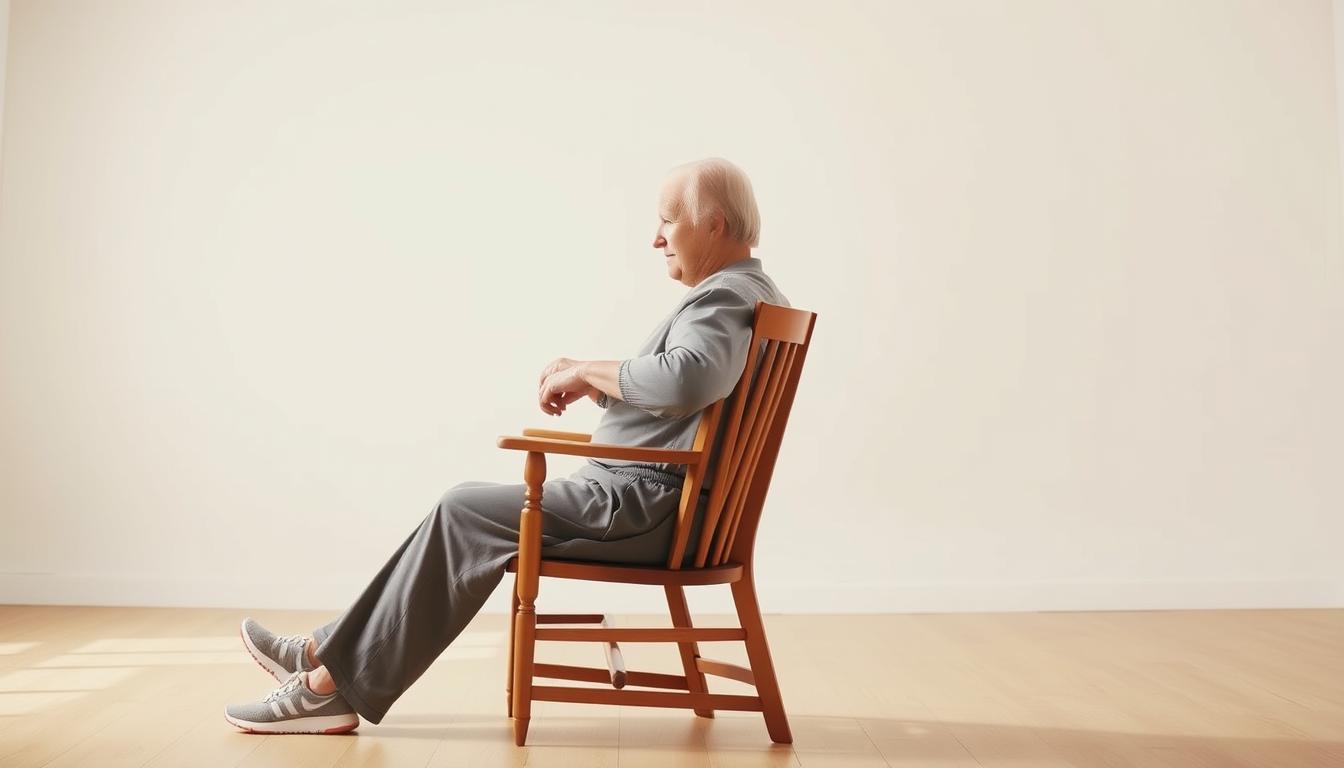
#3 Seated Leg Extensions – Best for Leg Strength
Why It Ranks #3: Leg strength is directly linked to fall prevention, making this movement a core pillar of the 15 minute chair exercises for seniors routine.
Best Suited For: Seniors focused on rebuilding leg strength after inactivity, surgery recovery, or those wanting sturdier knees for standing up from chairs.
Benefits and Muscles Targeted:
Supports knee stability: quadriceps are directly targeted through the straightening motion.
Builds controlled leg strength: hamstrings engage eccentrically while lowering the leg.
Assists with leg lifting power: hip flexors help raise the leg off the ground.
Keeps the torso stable and upright: core muscles activate throughout the movement.
Sit with back supported and hands gripping the sides of the chair — exhale to prepare.
Inhale for 2 seconds while straightening the right leg out in front until parallel with the floor.
Hold for 1–2 seconds while breathing steadily.
Exhale for 2 seconds while lowering the foot back down.
Alternate legs for 10 repetitions each, maintaining a slow and controlled tempo.
#4 Seated Torso Twists – Best for Core and Abs
Why It Ranks #4: This rotational movement isolates the obliques and deep core muscles, making it the top choice among 15 minute chair exercises for seniors focused on abdominal engagement.
Best Suited For: Seniors wanting to improve core stability for everyday twisting motions, like reaching for a seatbelt or turning to look behind them.
Benefits and Muscles Targeted:
Improves rotational strength: obliques are directly engaged through the twisting motion.
Stabilizes the spine during rotation: the rectus abdominis is lightly activated with each twist.
Supports overall spinal health: lower back muscles are gently strengthened.
Keeps the lower body anchored: hip stabilizers assist in maintaining a steady base during the twist.
Step-by-Step Instructions:
Sit tall with arms crossed over the chest or hands lightly touching shoulders — exhale to settle.
Inhale for 2 seconds while preparing to rotate.
Exhale for 3 seconds while slowly twisting the torso to the right, keeping hips facing forward.
Inhale for 2 seconds while returning to center.
Repeat on the left side, alternating for 10 total twists per side with smooth, unhurried breathing.
#5 Seated Side Bends – Best for Waist and Belly Fat Toning
Why It Ranks #5: Lateral flexion engages the oblique muscles along the waistline, making this the standout pick among 15 minute chair exercises for seniors aimed at trimming the midsection.
Best Suited For: Seniors focused on waistline toning and improving lateral spine flexibility.
Benefits and Muscles Targeted:
Tones the waistline: external and internal obliques are directly targeted through the side-bending motion.
Supports lateral spinal movement: the quadratus lumborum engages with each bend.
Improves rib cage mobility: intercostal muscles are gently stretched during the movement.
Protects the lower back: core stabilizers activate throughout the exercise.
Step-by-Step Instructions:
Sit tall with one hand resting on the thigh and the other reaching toward the ceiling — exhale to begin.
Inhale for 2 seconds while lengthening the raised arm upward.
Exhale for 3 seconds while bending gently to the opposite side, feeling a stretch along the waist.
Inhale for 2 seconds while returning upright.
Repeat 8–10 times per side, switching arm positions between sides.
#6 Seated Bicep Curls with Light Weights – Best for Arm Toning
Why It Ranks #6: Adding light resistance elevates this movement above bodyweight-only options, making it ideal for seniors ready to progress their 15 minute chair exercises for seniors routine.
Best Suited For: Seniors comfortable with light hand weights (1–3 lbs) or household items like water bottles, seeking visible arm toning.
Builds visible arm tone: biceps brachii are the primary muscle worked through the curling motion.
Stabilizes wrist strength: forearm flexors engage to keep a firm grip on the weight.
Supports shoulder stability: shoulders are lightly activated as stabilizers throughout the movement.
Prevents swaying or leaning: core muscles engage to keep the body steady during the curl.
Step-by-Step Instructions:
Sit tall holding a light weight in each hand, arms relaxed at the sides — exhale to start.
Inhale for 2 seconds while curling the weights up toward the shoulders.
Exhale for 2 seconds while slowly lowering the weights back down.
Keep elbows tucked close to the body throughout the motion.
Complete 10–12 repetitions with steady, unrushed breathing.
#7 Seated Knee-to-Chest Stretch – Best for Hip Flexibility
Why It Ranks #7: Hip flexibility directly affects walking gait and comfort, making this a key flexibility-focused entry among 15 minute chair exercises for seniors.
Best Suited For: Seniors with tight hips from prolonged sitting, or those wanting to improve stride length while walking.
Benefits and Muscles Targeted:
Increases hip flexibility: hip flexors are gently lengthened through the stretch.
Supports hip joint comfort: glutes are mildly stretched with each repetition.
Releases lower back tension: lower back muscles loosen as the knee draws inward.
Maintains balance during the stretch: core muscles engage lightly throughout.
Step-by-Step Instructions:
Sit tall with both feet on the floor — exhale to prepare.
Inhale for 2 seconds while lifting the right knee slightly.
Exhale for 4 seconds while gently pulling the knee toward the chest using both hands.
Hold the stretch for 2–3 breath cycles, breathing slowly and evenly.
Inhale while releasing the leg back down; repeat on the left side.
#8 Seated Ankle Circles and Pumps – Best for Circulation and Swelling Reduction
Why It Ranks #8: This low-effort movement specifically targets fluid buildup in the lower legs, making it the top pick among 15 minute chair exercises for seniors for circulation-related concerns.
Best Suited For: Seniors with swelling in the feet or ankles, those with diabetes-related circulation concerns, or anyone who sits for long periods.
Benefits and Muscles Targeted:
Improves flexion strength: the tibialis anterior activates during the flexing portion of the pump.
Promotes venous blood return: calf muscles engage during the pointing motion.
Strengthens ankle stability: ankle stabilizers are worked through the circular motion.
Reduces swelling and boosts circulation: the circulatory system is stimulated through repeated muscle contraction in the lower leg.
Step-by-Step Instructions:
Extend one leg slightly off the floor — exhale to settle into position.
Inhale for 3 seconds while rotating the ankle in a slow circle, five times clockwise.
Exhale for 3 seconds while reversing the circle, five times counterclockwise.
Follow with ankle pumps: inhale while flexing the foot upward, exhale while pointing the toes downward.
Repeat the full sequence on the opposite ankle.
#9 Sit-to-Stand Chair Squats – Best for Balance and Fall Prevention
Why It Ranks #9: This functional movement mimics the real-world action of standing up from a chair, making it the most practical balance-building exercise in the entire 15 minute chair exercises for seniors routine.
Best Suited For: Seniors focused on fall prevention and maintaining the ability to stand independently from seated positions.
Benefits and Muscles Targeted:
Powers the standing motion: quadriceps and glutes are heavily engaged with each rise.
Maintains balance during the transition: core muscles activate to keep the body steady.
Builds controlled lowering strength: hamstrings work eccentrically while returning to the chair.
Strengthens fall-prevention stability: ankle and knee stabilizers are reinforced with each repetition.
Step-by-Step Instructions:
Sit toward the front edge of the chair with feet flat, shoulder-width apart — exhale to prepare.
Inhale for 2 seconds while leaning slightly forward, shifting weight into the feet.
Exhale for 3 seconds while pressing through the heels to stand fully upright.
Inhale for 2 seconds while slowly lowering back down into the chair with control.
Repeat for 8–10 repetitions, using the chair or a wall for support if needed.
#10 Seated Deep Breathing and Shoulder Rolls – Best for Relaxation and Stress Relief
Why It Ranks #10: As the closing movement, this cool-down lowers heart rate and releases tension, making it the ideal finishing point for any 15 minute chair exercises for seniors session.
Best Suited For: Seniors prone to stress, tension headaches, or shallow breathing patterns, and anyone needing a calming close to the routine.
Benefits and Muscles Targeted:
Strengthens breathing capacity: the diaphragm is conditioned through deep, controlled breathing.
Reduces neck and shoulder tension: trapezius and neck muscles release through the rolling motion.
Improves posture: chest muscles gently open after the seated session.
Calms the body and mind: the nervous system relaxes through slow, extended exhalations that activate relaxation responses.
Step-by-Step Instructions:
Sit tall with hands resting gently on the knees — exhale completely to begin.
Inhale slowly for 4 seconds through the nose, allowing the belly to expand.
Exhale slowly for 6 seconds through the mouth, letting the shoulders drop.
While breathing, roll the shoulders backward in a slow circle for 5 repetitions, then forward for 5 repetitions.
Finish with 3 more full breath cycles, inhaling for 4 seconds and exhaling for 6 seconds, before ending the session.
That's all ten. Warm up, build, twist, bend, stretch, breathe. Fifteen minutes, start to finish.
Sample 15 Minute Chair Exercises for Seniors Timing Breakdown
The full 15 minute chair exercises for seniors timing breakdown splits into five phases — warm-up, strength, core, flexibility and balance, and cool-down — each running about three minutes.
Minutes 0–2: Warm-up phase — Seated Marching to raise circulation and prepare the joints.
Minutes 2–6: Strength phase — Overhead Arm Raises, Leg Extensions, and Bicep Curls to build muscle.
Minutes 6–9: Core phase — Torso Twists and Side Bends to target the midsection.
Minutes 9–12: Flexibility and balance phase — Knee-to-Chest Stretch, Ankle Circles, and Sit-to-Stand Squats.
Minutes 12–15: Cool-down phase — Deep Breathing and Shoulder Rolls to lower heart rate and finish relaxed.
That's the arc. Every minute accounted for.
Modifications and Progressions for 15 Minute Chair Exercises for Seniors
Modifications and progressions for 15 minute chair exercises for seniors let you match the routine to exactly where you are right now — not where you were, not where you hope to be.
For limited mobility: reduced range — shorten the movement range on leg extensions and torso twists while keeping the same breathing pattern.
For added challenge: light resistance — introduce hand weights or resistance bands to arm and leg movements once bodyweight feels easy.
For balance concerns: extra support — keep both hands on the chair during Sit-to-Stand Squats instead of standing hands-free.
For wheelchair users: seated-only adaptation — omit the Sit-to-Stand Squats and replace with additional seated marching or leg extensions.
For those wanting more cardio: increased pace — slightly quicken the tempo of Seated Marching and Ankle Pumps while keeping breathing controlled.
Common Mistakes to Avoid During 15 Minute Chair Exercises for Seniors
Common mistakes during 15 minute chair exercises for seniors almost always come down to rushing, ignoring the body's signals, or cutting corners on equipment — every one of them avoidable.
Holding the breath: breathing interruptions reduce oxygen flow and increase dizziness risk; always pair movement with the inhale/exhale cues.
Using an unstable chair: wheeled or reclining chairs increase fall risk and should be avoided entirely.
Rushing repetitions: speed over control reduces muscle engagement and increases injury risk; slow and steady is more effective.
Skipping the warm-up: jumping straight into strength moves raises the chance of muscle strain, especially in cold or stiff joints.
Ignoring pain signals: pushing through discomfort should always be avoided; mild muscle fatigue is normal, sharp pain is not.
Five mistakes. Avoid all five, and you're most of the way to doing this right.
How Often Should Seniors Do 15 Minute Chair Exercises
How often seniors should do 15 minute chair exercises depends on fitness level, but most people land somewhere between two and five sessions a week, with the gentlest moves fine daily.
Beginner frequency: 2–3 sessions per week — allows the body to adapt without overexertion.
Intermediate frequency: 4–5 sessions per week — suitable once the routine feels comfortable and recovery is quick.
Daily practice: every day — appropriate for the gentle mobility and breathing-focused exercises like Ankle Circles and Deep Breathing.
Rest day guidance: 1–2 rest days weekly — recommended when incorporating resistance-based progressions like weighted Bicep Curls.
Signs to scale back: increased fatigue or joint pain — signal that frequency or intensity should be reduced temporarily.