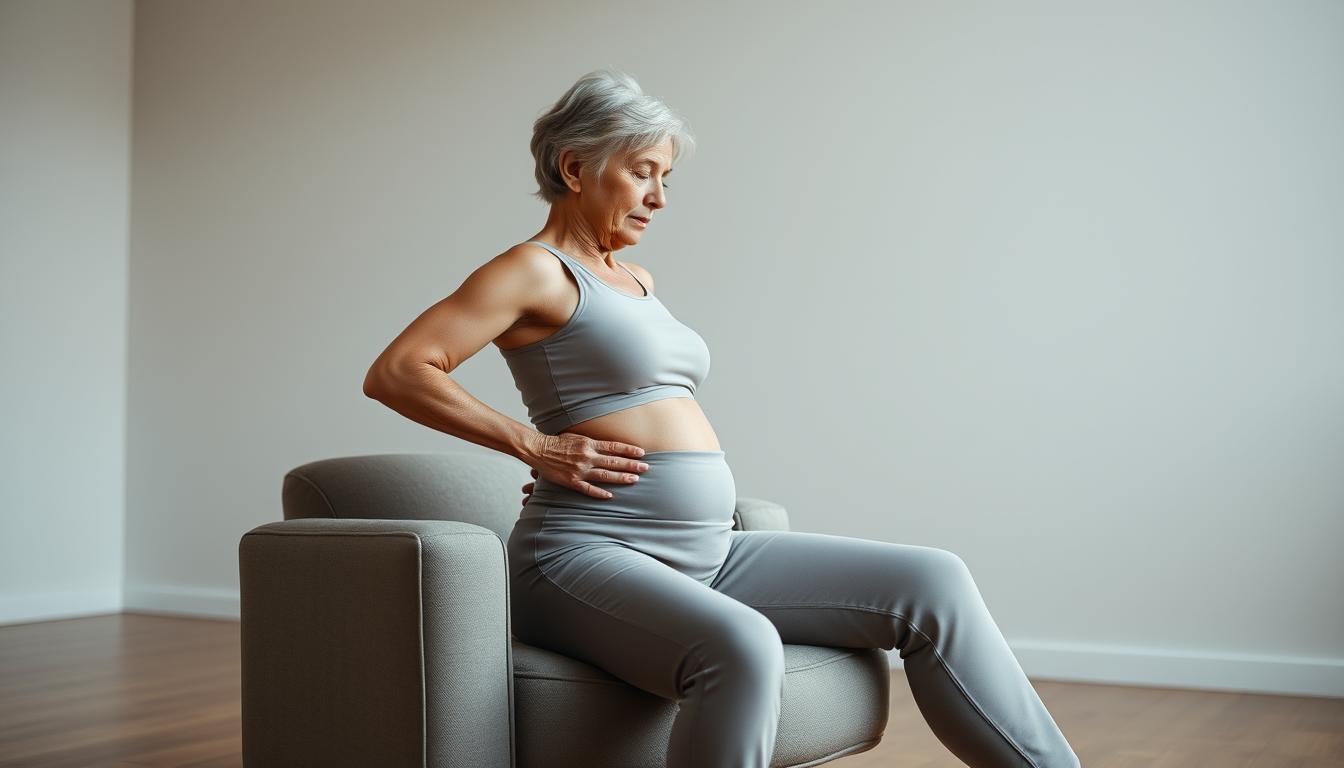
Who says you need a gym to stay strong? Grab a chair—yes, that one you’re sitting on—and let’s fire up your core without standing up. French author Jules Renard once quipped, “It’s not how old you are, but how you are old.” Let’s make that quote work overtime.
I’ve seen people in their 70s out-lift millennials at the park bench. No kidding. Your kitchen chair? It’s now a portable powerhouse for building stability and fighting back pain. Forget fancy reformers or yoga mats—this is about working smarter, not harder.
Here’s the kicker: these movements aren’t just “easy alternatives.” They’re precision tools to rebuild muscle memory and balance. One person told me her creaky joints felt smoother than her grandkid’s playground swing after two weeks. Another ditched her cane during grocery runs.
You’ll spend just 10-15 minutes daily. No floor work, no awkward transitions. Just you, that trusty seat, and a fresh way to own your body’s potential. Ready to turn “I can’t” into “Watch this”? Let’s do it, baby.
Understanding Chair Pilates for Seniors
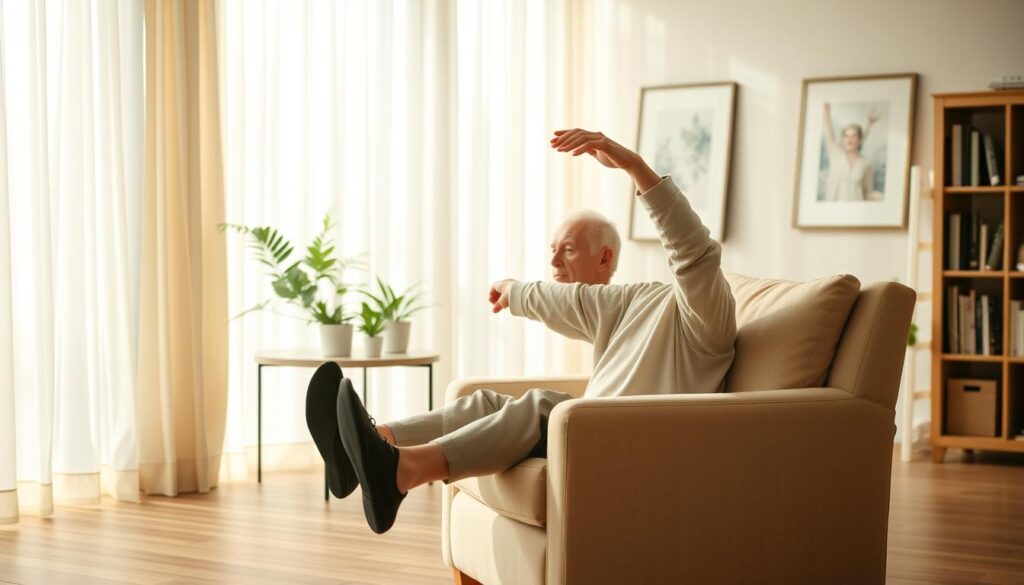
That sturdy dining chair? It’s secretly the best fitness tool you already own. You can turn coffee breaks into strength-building sessions using nothing but their kitchen seats. No fancy gear, no complicated routines—just smart movements meeting real life.
Your Living Room, Your Studio
Here’s the beauty: your space becomes the classroom. You can do your routine during Jeopardy commercials. Whether you’re at a desk or watching grandkids play, these exercises adapt to your day.
Expected Results
If you thought your tennis days were over, just try three weeks of seated twists and leg lifts and you will be back volleying with your grandson. Or if you swap your afternoon nap for 10-minute mobility drills you will feel like oiling rusty hinges.
What makes this stick? You control the level. Start with gentle reaches, progress to resistance bands. Even stiff joints can regain range motion safely. And yes—stress melts when you’re breathing through movements, not worrying about gym stares.
Benefits: Core Strength, Balance, and Improved Mobility

Ever noticed how a tree sways but stays rooted? That’s your core talking—and these movements make yours unshakeable. Your newfound stability will feel like swapping roller skates for hiking boots. You’ll catch yourself reaching for top shelves without wobbling or bending smoother than a jazz saxophonist.
From Slouch to Steel Beam
Here’s the magic: controlled pilates movements rebuild your body’s scaffolding. I’ve watched students stand taller after three weeks—like someone cranked an invisible pulley between their shoulders. One regular jokes she now “sits like a queen” during bingo nights. Why? Those subtle twists and lifts re-educate muscles forgotten by years of comfy recliners.
Bones That Mean Business

Research shows gentle resistance training—like seated pilates—can boost bone density by 2% annually. That’s huge when joints feel like rusty door hinges. These workouts will allow you to get a better grip on your grocery cart.
Step-by-Step Guide to Chair Pilates Exercises
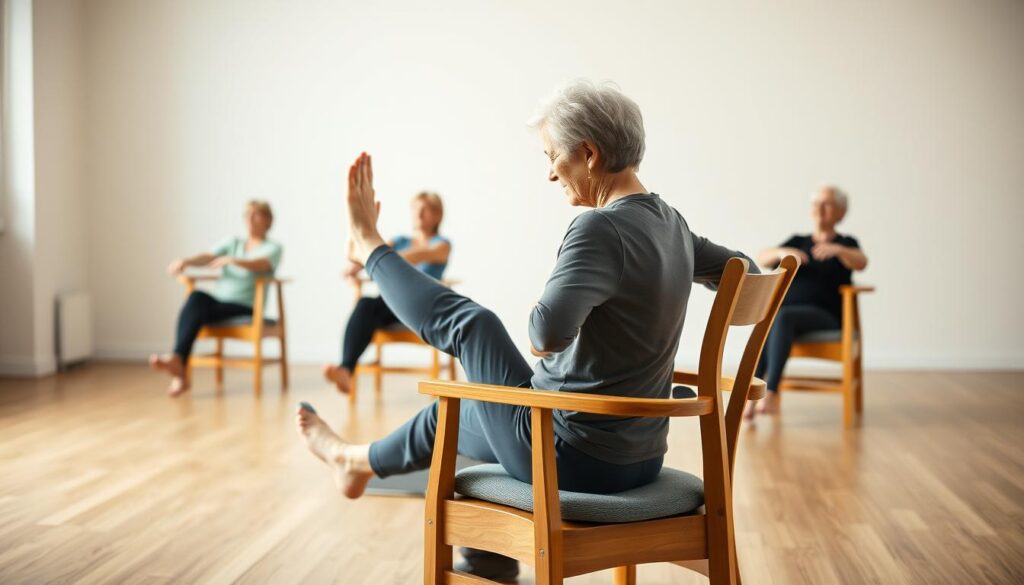
Let’s turn that trusty kitchen staple into your new workout buddy. I’ve timed these routines to fit between microwave beeps—because life’s too short for complicated setups. Grab your timer (phone clocks work great) and let’s wake up those muscles without waking the neighbors.
Shoulder Rolls: The Secret Handshake for Stiff Joints
Start by shrugging like you’re whispering “I dunno” to your grandkids. Roll shoulders back in slow circles—imagine tracing quarters with your collarbones. Do five forward, five back. Feels silly? Good. Laughter’s part of the warm-up.
Now reach arms overhead like you’re trying to high-five a cloud. Hold for three breaths. One person calls this her “instant posture reset.” Pro tip: exhale longer than you inhale to melt tension.
Legwork That Builds Tree-Trunk Stability
Scoot forward until your back isn’t touching the seat. Lift one knee toward the ceiling—slow as syrup pouring—then lower it halfway. Ten reps per leg. Too easy? Add ankle weights or soup cans.
Next: press through your heels like you’re squishing grapes. Hold five seconds. My Tuesday class calls these “invisible resistance” moves. You’ll feel it tomorrow when stairs feel less like Mount Everest.
Set your timer for 15 minutes—that’s three commercial breaks or half a true crime episode. Mix these movements like a playlist. Forgot counts? No sweat. Just keep flowing until the buzzer sings.
Chair Pilates for Seniors: A Safe and Adaptable Workout

Adaptability isn’t a compromise—it’s your superpower. You can transform stiff, achy mornings into fluid motion by treating their joints like VIP guests. The secret? Working with your body, not against it.
Modifications for Joint Concerns Like Arthritis or Osteoporosis
Smaller ranges of motion pack big punches. If reaching overhead feels like stretching taffy, try lifting arms to shoulder height instead. Place a folded towel under thighs during leg lifts to reduce hip pressure. These tweaks keep movements effective without grinding gears.
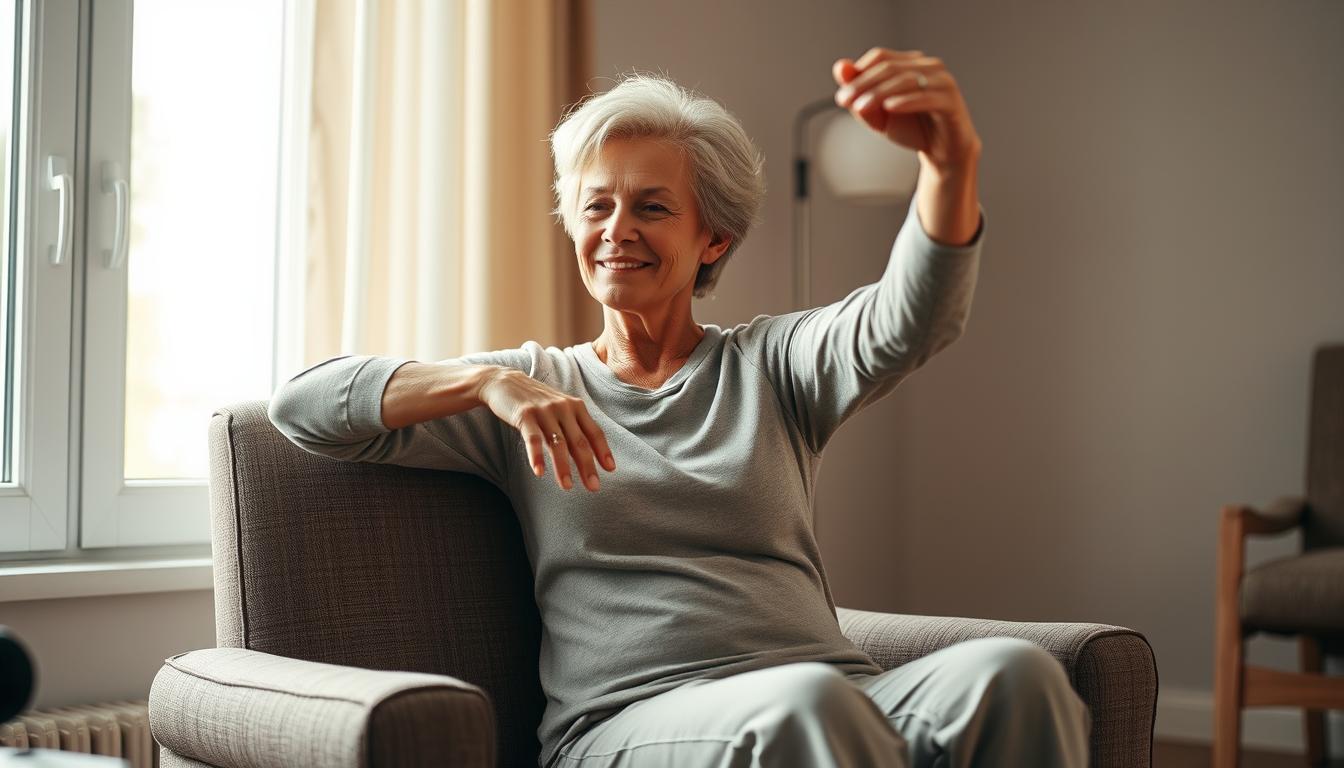
Rotations become gentler when you pivot slower than a sundial. For seated twists, focus on breathing into tight spots rather than forcing rotation. One regular calls this her “physical therapy stealth mode”—building strength while her joints think they’re on vacation.
Pain isn’t a badge of honor here. If something pinches, adjust immediately. Swap extended leg holds for pulsing motions. Use chair arms for extra support during leans. Your version of an exercise should feel challenging, not punishing.
Integrating Chair Pilates into Your Daily Routine
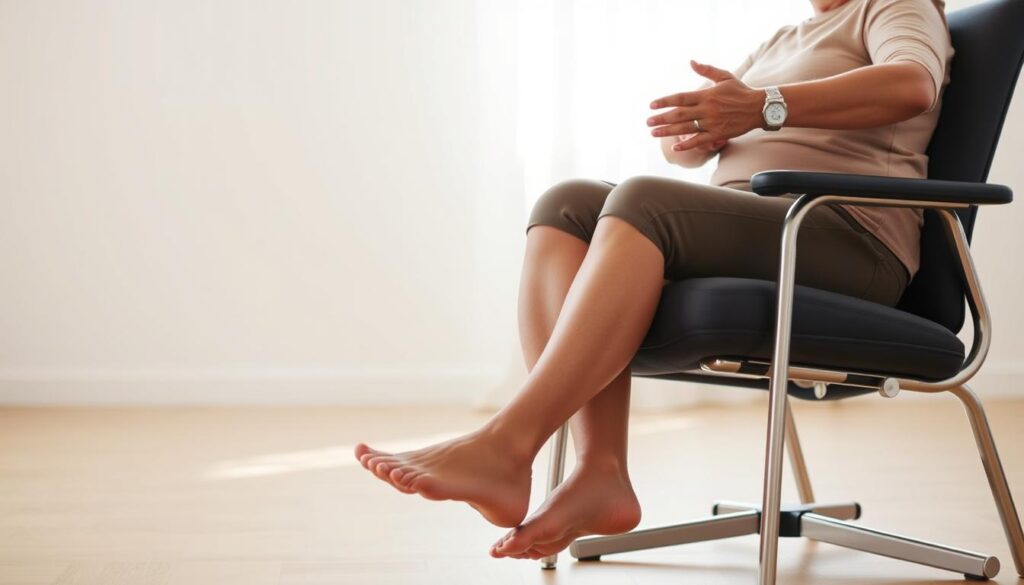
Your favorite coffee break just got a core-strengthening upgrade. I’ve got a friend who does seated marches while her tea steeps—three minutes of movement, zero schedule disruption. That’s the magic of weaving these exercises into existing routines.
Set phone reminders labeled “body breaks.” When the alarm chirps, do two minutes of shoulder rolls or ankle circles. You’ll rack up 30 minutes weekly without “finding time”—it finds you.
Your Body, Your Rules
Start small. Five minutes while waiting for toast? Perfect. You can do torso twists during baseball replays. The commercial breaks can be your personal trainer. The key is matching movements to your energy. Can’t lift legs high today? Half-range still counts.
Instructional videos show clever modifications: rolled towels for lumbar support, soup cans as light weights. One person props her tablet on the microwave to follow along while cooking oatmeal. Range motion improves faster when you’re consistent, not perfect.
Chair as Command Center
That sturdy seat isn’t just for meals anymore. Plant feet firmly, engage your core, and suddenly you’re building strength while sorting mail. I’ve seen retirees turn kitchen islands into ballet bars—creativity beats fancy equipment every time.
Wrapping Up Your Pilates Practice With Renewed Energy
What if your greatest strength was hiding in plain sight all along? Those quick seated sessions add up faster than loose change in a jar. One person told me her morning stiffness vanished like dew in sunlight—just by sticking to 8-minute video routines between crossword puzzles.
Every subtle twist and reach oils creaky hinges you didn’t know could glide. Reduced back pain becomes your new normal—suddenly bending for gardening tools feels like greeting an old friend. And that core stability? It’s the quiet hero helping you rise from seats like a sunflower chasing light.
Your progress isn’t measured in reps, but in life’s unscripted moments. Reaching high shelves without wobbling. Laughing through grandkid races instead of sitting out. Range of motion expands like your favorite sweater—gradually, comfortably, until one day you realize… it fits perfectly.
