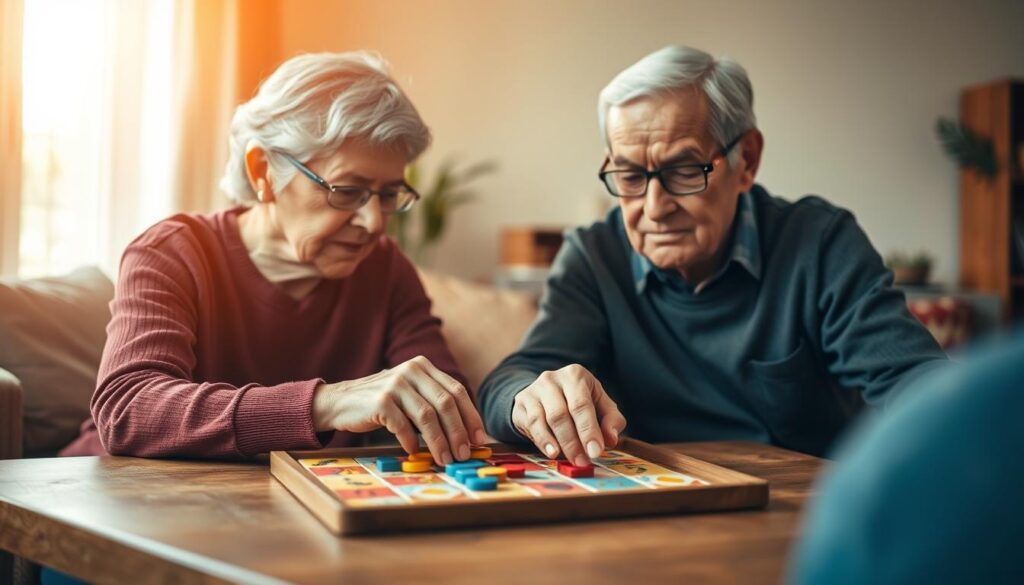
Brain training for seniors involves structured cognitive exercises that maintain and improve mental function as we age, with research showing that consistent practice can enhance memory, processing speed, and executive function by up to 30%.
Sustained cognitive health requires integrating mental exercises into daily routines as permanently as physical hygiene, viewing brain training as essential maintenance rather than temporary intervention.
The evidence overwhelmingly supports cognitive training for seniors. Processing speed training reduced dementia risk by 29% over a decade. Memory strategy training produced benefits lasting 10 years. Multi-domain interventions showed even stronger effects.
Most effective approaches combine:
Structured cognitive exercises across multiple domains (30 minutes daily)
Physical activity including aerobic and strength training (150 minutes weekly)
Social engagement through meaningful interaction (regular involvement)
Novel learning through new skills, languages, or knowledge (ongoing)
Healthy lifestyle including nutrition, sleep, and stress management (daily attention)
Start today regardless of your current age or cognitive status. The brain retains plasticity throughout life. An 80-year-old can still build new neural connections through appropriate challenge.
Small consistent efforts compound over years. Fifteen minutes daily totals 90+ hours annually—enough for substantial skill development and cognitive benefit.
Your brain possesses remarkable capacity for adaptation and growth. Age creates challenges but doesn't eliminate potential. With evidence-based training, supportive lifestyle factors, and sustained commitment, you can maintain cognitive vitality for years beyond what previous generations achieved.
Your brain continues forming new neural connections throughout life, a phenomenon called neuroplasticity. This biological reality means cognitive decline isn't inevitable. Research from the Advanced Cognitive Training for Independent and Vital Elderly (ACTIVE) study demonstrated that targeted mental exercises produced benefits lasting up to 10 years.
Normal aging affects processing speed and working memory. These changes differ significantly from pathological decline. Most adults experience mild slowing after age 60, but dementia is not a natural part of aging.
Scientists have identified specific interventions that work:
Structured cognitive training improves targeted abilities
Your cognitive reserve—the brain's resilience against damage—increases through mental stimulation. Think of it as a buffer. Higher reserve means better function despite age-related changes.
Understanding Cognitive Health in Seniors
Senior brain health depends on maintaining neural connections while building new pathways through consistent mental challenge and lifestyle factors that support neurological function.
How the Aging Brain Changes Over Time
The prefrontal cortex shrinks slightly with age. This region controls executive functions like planning and inhibition. White matter integrity decreases, slowing information transfer between brain regions.
What declines naturally:
Processing speed (most noticeable change)
Working memory capacity
Divided attention abilities
Task-switching efficiency
What typically remains stable:
Vocabulary and language skills
Procedural memory (how to do things)
Emotional regulation
Accumulated knowledge
Crystallized intelligence—your lifetime of acquired knowledge—often improves with age. Fluid intelligence, the ability to solve novel problems, does decline. Brain training targets fluid intelligence specifically.
The Science Behind Brain Training for Seniors
Meta-analyses reveal that cognitive training produces moderate improvements in trained abilities. Transfer effects—improvements in untrained tasks—remain controversial. Some studies show transfer; others don't.
The most robust evidence supports:
Training Type
Proven Benefits
Effect Size
Processing speed training
Faster reaction times, reduced accident risk
Moderate to large
Memory strategies
Better recall in daily activities
Moderate
Reasoning training
Improved problem-solving
Small to moderate
Multidomain programs
Broader cognitive gains
Moderate
Brain games marketed to consumers often lack scientific validation. The Federal Trade Commission has fined companies making unsupported claims. Effective training requires progressive difficulty, not just entertainment.
Realistic expectations matter. Training won't prevent Alzheimer's disease, though it may delay symptom onset. Benefits appear specific to practiced skills but can improve quality of life substantially.
Scientifically Proven Brain Training Exercises for Seniors
Effective cognitive exercises for older adults focus on memory enhancement, processing speed improvement, and executive function development through evidence-based techniques that create measurable improvements in daily functioning.
Memory Enhancement Exercises
Working Memory Training
Your working memory holds information temporarily while you manipulate it. Strengthen it through these methods:
N-back tasks: Remember items from several steps back in a sequence (start with 1-back, progress to 2-back or 3-back)
Digit span exercises: Recall increasingly long number sequences forward and backward
Mental arithmetic: Calculate tips, split bills, or perform other math without devices
Dual n-back training: Track two separate sequences simultaneously
Practice 15-20 minutes daily. Studies show working memory improvements transfer to attention and fluid reasoning.
Long-Term Memory Strengthening
The method of loci, or memory palace technique, works exceptionally well for seniors. Visualize placing information in familiar locations, then mentally walk through to retrieve it.
Spaced repetition schedule:
Review new information after 1 hour
Review again after 24 hours
Review at 3 days
Review at 1 week
Review at 1 month
This approach aligns with how memory consolidation actually works. For name-face associations, create vivid mental images connecting the name to distinctive facial features.
Processing Speed Activities
Fast information processing protects against cognitive decline more than almost any other ability. The ACTIVE study found that speed training reduced dementia risk by 29% over 10 years.
Reaction Time Exercises
Visual search tasks: Find specific items in complex images quickly
Rapid categorization: Sort items into groups under time pressure
Useful Field of View training: Identify objects in your peripheral vision while focusing centrally
Timed matching games: Pair cards or patterns with decreasing time limits
Start with comfortable speeds. Reduce your response window by 10% when you achieve 80% accuracy consistently.
Attention and Focus Training
Selective attention filtering irrelevant information while focusing on targets. Practice involves:
Stroop tasks: Name the ink color of color words (the word "red" printed in blue ink)
Flanker tasks: Identify a central stimulus while ignoring surrounding distractors
Sustained attention drills: Monitor for rare targets during extended periods
Dual-task training: Perform two activities simultaneously with equal accuracy
Divided attention exercises prove particularly valuable for real-world activities like driving or cooking while conversing.
Executive Function Development
Executive functions govern planning, organization, and flexible thinking—abilities that maintain independence in older adults.
Problem-Solving Brain Training
Strategic games build reasoning skills more effectively than random puzzles:
Activity
Cognitive Demand
Recommended Frequency
Chess or Go
Planning, pattern recognition
2-3 times weekly
Bridge or complex card games
Working memory, probability
2-3 times weekly
Sudoku (hard difficulty)
Logic, constraint satisfaction
Daily
Crossword puzzles
Vocabulary, retrieval
3-4 times weekly
The difficulty level matters more than the activity type. If you complete a puzzle easily, it provides minimal cognitive benefit.
Mental Flexibility Exercises
Cognitive flexibility—shifting between mental sets—predicts successful aging. Train it through:
Task-switching drills: Alternate between sorting by color and sorting by shape
Set-shifting exercises: Apply different rules to the same stimuli
Trail Making exercises: Connect alternating sequences (1-A-2-B-3-C)
These exercises feel frustrating initially. That discomfort signals your brain forming new connections.
Cognitive Training Through Physical Activities
Physical exercise enhances cognitive function in seniors by increasing blood flow to the brain, promoting neurogenesis in the hippocampus, and releasing growth factors that support neural health.
Aerobic exercise improves executive function and processing speed. Strength training enhances memory and attention. The combination produces superior results to either alone.
A landmark study found that 150 minutes of moderate exercise weekly improved cognitive performance across multiple domains. The effect sizes rivaled pharmaceutical interventions.
Exercise impacts the brain through:
Increased hippocampal volume (memory center)
Enhanced prefrontal cortex function (executive control)
Improved white matter integrity (processing speed)
Elevated BDNF levels (neuronal growth factor)
Dual-Task Training
Walking while performing mental tasks challenges balance systems and cognitive networks simultaneously. This integration mirrors real-world demands.
Effective dual-task combinations:
Walk and count backward by 7s from a high number
Walk while reciting alternating letters and numbers (A-1-B-2-C-3)
Walk while carrying a tray with objects
Walk while naming items from a category (cities, animals, foods)
Start in a safe environment. Progress to more challenging terrain as competence increases. Studies show dual-task training reduces fall risk while improving executive function—a rare intervention that addresses both physical and cognitive aging.
Dance and Rhythmic Movement
Dance combines physical exertion, social interaction, and cognitive challenge through learning complex movement sequences. Neuroimaging studies reveal that dancing activates multiple brain regions simultaneously.
Benefits exceed simple exercise:
Pattern learning strengthens procedural memory
Spatial navigation during partner dancing challenges orientation
Latin dance, ballroom, folk dancing, and line dancing all provide cognitive benefits. The social component adds another layer of mental stimulation.
Social and Creative Brain Training for Seniors
Social engagement and creative activities provide powerful cognitive stimulation for older adults through complex mental processing, emotional regulation, and novel skill acquisition that builds neural connections.
Language-Based Cognitive Exercises
Learning a New Language
Bilingualism delays dementia onset by approximately 4.5 years according to multiple studies. Learning a second language in later life still provides substantial cognitive benefits.
Language acquisition challenges multiple systems:
Working memory: Holding new vocabulary and grammar rules
Executive control: Suppressing your native language while speaking the new one
Attention: Focusing on foreign sounds and syntax
Long-term memory: Building vocabulary networks
Practical approach for senior learners:
Use spaced repetition apps for vocabulary (15 minutes daily)
Practice with native speakers through language exchange platforms
Watch media in the target language with subtitles
Focus on conversational fluency over perfect grammar
Consistency matters more than intensity. Twenty minutes daily outperforms two-hour weekly sessions.
Reading and Discussion Activities
Active reading requires analytical thinking, memory, and reasoning. Passive reading provides minimal cognitive benefit.
Active reading strategies:
Predict what happens next before turning the page
Question the author's arguments or character motivations
Summarize each chapter in your own words
Connect content to personal experiences or other knowledge
Book clubs force articulation of ideas, perspective-taking, and memory retrieval. Discussing literature activates different neural networks than reading alone.
Creative Arts as Mental Stimulation
Music Training and Appreciation
Learning an instrument after age 60 produces measurable brain changes. The motor cortex, auditory cortex, and corpus callosum all show enhanced development.
Piano and string instruments provide maximum cognitive challenge due to bimanual coordination requirements. However, any instrument offers benefits.
Music-based cognitive training:
Activity
Cognitive Benefits
Time Investment
Learning piano
Bimanual coordination, reading, memory
30 min/day
Singing in choir
Breathing control, memory, social connection
2 hours/week
Music appreciation courses
Analytical listening, pattern recognition
1-2 hours/week
Rhythm exercises
Timing, attention, motor control
15 min/day
You don't need to become proficient. The learning process itself drives neuroplasticity.
Visual Arts and Crafts
Creating art activates visual-spatial processing, fine motor control, and creative problem-solving. The meditative aspects reduce stress, which supports cognitive health indirectly.
Complex crafts requiring pattern following, counting, and planning provide structured cognitive challenge:
Knitting or crochet: Pattern reading, counting, motor sequencing
Quilting: Geometric reasoning, planning, color theory
Painting: Visual-spatial skills, attention to detail, motor control
Choose activities requiring focus and skill progression. The goal isn't relaxation—it's challenge.
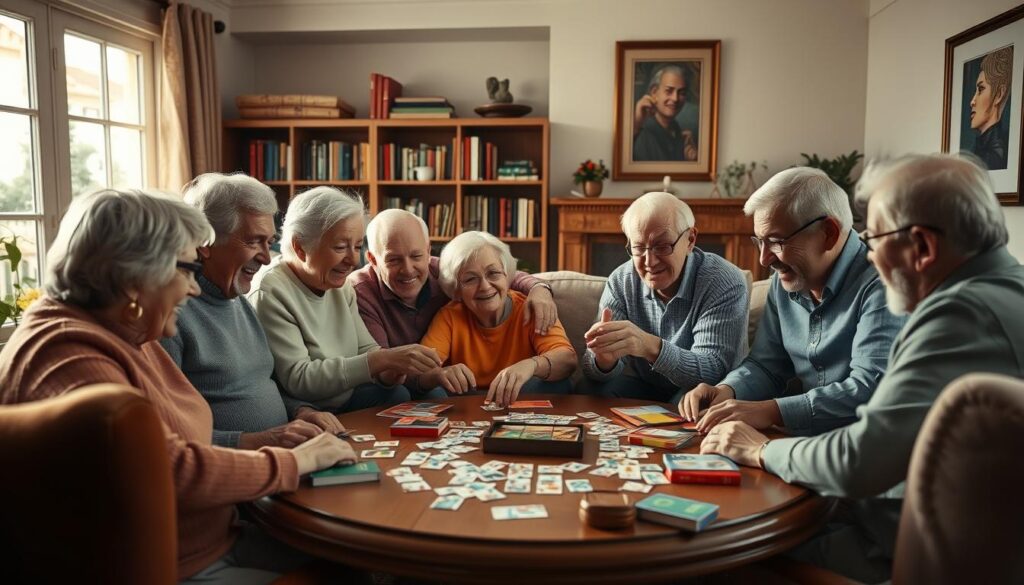
Social Engagement as Brain Training
Social interaction taxes cognitive systems heavily. You must read facial expressions, interpret tone, recall personal information, and formulate appropriate responses in real-time.
Longitudinal studies consistently show that socially integrated seniors maintain cognitive function better than isolated individuals. The effect remains significant even after controlling for education, health, and baseline cognition.
Cognitively demanding social activities:
Teaching or tutoring: Organizing knowledge, simplifying concepts, answering questions
Volunteering: Novel environments, learning new systems, social interaction
Collaborative projects: Coordinating with others, shared problem-solving
Surface-level social contact provides minimal benefit. Deep conversation and collaborative work produce cognitive gains.
Technology-Based Brain Training Options for Seniors
Digital cognitive training programs offer convenient, adaptive exercises that adjust difficulty based on performance, with some platforms showing evidence of real-world cognitive improvements in older adults.
Evidence-Based Brain Training Apps and Programs
Not all brain training apps deliver on promises. Look for platforms with peer-reviewed research demonstrating efficacy.
Programs with scientific validation:
BrainHQ (formerly Posit Science): Used in multiple clinical trials; shows improvements in processing speed and attention
CogniFit: Research-backed assessments and personalized training
Lumosity: Mixed evidence; some studies show benefits, others don't
Double Decision: Specific processing speed training with strong research support
Evaluation criteria:
Published studies in peer-reviewed journals
Progressive difficulty that adapts to your performance
Training variety across multiple cognitive domains
No exaggerated marketing claims
Free options exist, but premium subscriptions typically offer better progression systems and variety. Expect to spend $10-20 monthly for quality platforms.
Video Games for Cognitive Enhancement
Certain game genres challenge specific cognitive abilities more than traditional brain training apps.
Strategy games require planning multiple moves ahead, resource management, and adaptation to changing conditions. Real-time strategy games add processing speed demands.
Puzzle games like Portal or The Witness build spatial reasoning and problem-solving skills through increasingly complex challenges.
Action games improve visual attention and processing speed but require careful selection. Choose games with adjustable difficulty and minimal violent content if that concerns you.
The cognitive benefit comes from sustained challenge, not entertainment value. If you're not struggling periodically, you're not training effectively.
Online Learning Platforms
Structured courses provide the strongest cognitive stimulation because they require sustained attention, memory encoding, and knowledge integration.
Effective online learning approaches:
Coursera or edX: University-level courses with assignments and assessments
YouTube educational channels: Free content requiring active note-taking
Virtual museum tours: Combine visual processing with learning new information
TED talks with follow-up research: Listen, then investigate topics deeper
Taking notes by hand rather than typing enhances retention. Testing yourself on material produces better learning than repeated review.
Lifestyle Factors That Enhance Brain Training Results
Nutrition, sleep quality, and stress management significantly amplify cognitive training effectiveness by optimizing brain metabolism, memory consolidation, and neural plasticity in older adults.
Nutrition for Optimal Cognitive Function
Your brain consumes 20% of your body's energy despite representing only 2% of body weight. Nutritional deficiencies directly impair cognitive performance.
The MIND diet (Mediterranean-DASH Intervention for Neurodegenerative Delay) reduced Alzheimer's risk by 53% in adherent participants:
Daily recommendations:
Leafy greens (1 serving)
Other vegetables (1+ serving)
Berries (especially blueberries)
Nuts (1 ounce)
Olive oil (primary cooking fat)
Whole grains (3 servings)
Weekly recommendations:
Fish (1+ meal)
Poultry (2+ meals)
Beans (3+ meals)
Limit:
Red meat (less than 4 servings/week)
Butter (less than 1 tablespoon/day)
Cheese, fried food, sweets (minimal)
Critical nutrients for brain health:
Nutrient
Function
Food Sources
Omega-3 fatty acids
Neural membrane structure
Fatty fish, walnuts, flaxseed
B vitamins
Neurotransmitter synthesis
Leafy greens, legumes, eggs
Vitamin E
Antioxidant protection
Nuts, seeds, vegetable oils
Flavonoids
Vascular health, inflammation
Berries, tea, dark chocolate
Dehydration impairs cognitive performance significantly. Aim for 6-8 glasses of water daily. Thirst sensation decreases with age, so drink on schedule rather than when thirsty.
Sleep and Cognitive Training
Sleep consolidates memories from brain training sessions. Without adequate sleep, training effects diminish substantially.
The glymphatic system—which clears metabolic waste from the brain—operates primarily during deep sleep. Poor sleep allows toxic protein accumulation associated with cognitive decline.
Sleep recommendations for older adults:
7-9 hours nightly (not less despite common myths)
Consistent sleep and wake times
Dark, cool bedroom (65-68°F optimal)
No screens 1 hour before bed
Common sleep disruptors in seniors:
Medications (review with your doctor)
Sleep apnea (affects 30-80% of seniors)
Restless leg syndrome
Nocturia (frequent nighttime urination)
Address sleep problems before intensifying cognitive training. The return on investment exceeds almost any other intervention.
Stress Management and Mental Exercise
Chronic stress elevates cortisol, which damages the hippocampus and impairs memory formation. High stress levels can erase cognitive training benefits entirely.
Meditation and mindfulness reduce stress while providing direct cognitive benefits. Eight weeks of mindfulness training increases gray matter density in the hippocampus and prefrontal cortex.
Effective stress management techniques:
Mindfulness meditation: Focus on breath for 10-20 minutes daily
Progressive muscle relaxation: Systematically tense and release muscle groups
Yoga or tai chi: Combine movement, breathing, and meditation
Nature exposure: 20 minutes in green space reduces cortisol significantly
Stress management isn't optional for cognitive health. Treat it as seriously as memory exercises themselves.
Creating Your Personal Brain Training Program
An effective cognitive training program for seniors requires baseline assessment, systematic variety across cognitive domains, progressive difficulty increases, and consistent daily practice of 30-60 minutes.
Assessing Your Current Cognitive Baseline
Understanding your starting point allows meaningful progress tracking. Several free tools provide legitimate cognitive assessment.
Cogstate Brief Battery: Computerized assessment of processing speed and memory
NIH Toolbox: Comprehensive cognitive battery (requires professional administration)
For informal baseline tracking, measure:
How many items you recall from a 15-word list
Time to complete Trail Making Test B
Digit span (forward and backward)
Processing speed using online reaction time tests
Retest every 3-6 months. Expect gradual improvements in trained areas.
Designing a Balanced Brain Training Routine
Daily Schedule Framework
Time of Day
Activity Type
Duration
Example
Morning
Processing speed
10-15 min
Useful Field of View training
Mid-morning
Memory exercises
15-20 min
Spaced repetition vocabulary review
Afternoon
Physical + cognitive
30-40 min
Brisk walk while doing mental arithmetic
Evening
Creative or social
30-60 min
Language learning, musical instrument
Total daily investment: 45-75 minutes across multiple sessions.
Weekly Variety Structure
Rotate focus areas to prevent habituation:
Monday/Thursday: Memory and processing speed
Tuesday/Friday: Executive function and problem-solving
Wednesday/Saturday: Creative activities and social engagement
Sunday: New skill learning or complex project work
The brain adapts to repeated tasks quickly. Continuous novelty maintains training effectiveness.
Combining Multiple Brain Training Approaches
Single-domain training produces narrow improvements. Multi-domain programs generate broader benefits and better real-world transfer.
Integrated weekly program example:
Cognitive exercises (daily):
15 minutes brain training app
15 minutes memory work
15 minutes processing speed drills
Physical activity (5-6 days):
30 minutes aerobic exercise
20 minutes strength training (3 days)
15 minutes dual-task practice
Creative/social (3-4 days):
Language learning or musical instrument
Discussion group or teaching
Complex craft or art project
Novel learning (ongoing):
Online course or new skill
Reading challenging material actively
This combination addresses all cognitive domains while supporting overall health. Adjust based on your preferences and physical capabilities.
Common Mistakes to Avoid in Senior Brain Training
The most frequent errors in cognitive training programs include insufficient challenge levels, lack of variety, inconsistent practice, and failure to address sensory or health issues that undermine training effectiveness.
Ineffective Approaches
Staying in Your Comfort Zone
Comfortable activities feel good but don't build cognitive capacity. Neuroplasticity requires challenge beyond current abilities.
If you complete sudoku puzzles effortlessly, they're recreation—not training. Increase difficulty until you succeed only 70-80% of the time initially.
Over-Relying on Single Exercises
Crossword puzzle enthusiasts become better at crosswords. Transfer to other cognitive abilities remains minimal. The brain adapts specifically to practiced tasks.
Rotate activities across domains:
Memory (various types)
Processing speed
Executive function
Language and reasoning
Visual-spatial skills
Inconsistent Practice
Weekend warrior approaches fail. The brain requires regular stimulation to maintain new connections. Three hours on Sunday can't replace 20 minutes daily.
Habit formation matters more than intensity. Build cognitive training into existing routines like morning coffee or after dinner.
Unrealistic Expectations
Brain training won't restore 25-year-old cognitive performance. It can maintain current function, slow decline, and produce modest improvements in trained abilities.
Expect gains to emerge gradually over 8-12 weeks. Dramatic overnight improvements don't occur.
Overlooked Factors
Uncorrected Sensory Impairments
Hearing loss affects 50% of people over 65. Untreated hearing loss accelerates cognitive decline by forcing the brain to work harder to process degraded signals.
Vision problems similarly impair cognitive training. You can't benefit from visual exercises if you can't see the stimuli clearly.
Address sensory issues first:
Hearing aids for even mild hearing loss
Current eyeglass prescriptions
Cataract treatment if applicable
Screen brightness and contrast optimization
Insufficient Challenge Progression
Static difficulty provides temporary benefits that plateau quickly. Cognitive training programs must increase demands systematically.
When you achieve 80% accuracy consistently, increase difficulty by:
Reducing response time
Adding complexity
Introducing interference
Combining multiple tasks
Training in Complete Isolation
Social cognitive training outperforms solitary practice for many abilities. Human interaction requires real-time processing that computer programs can't replicate fully.
Balance digital training with face-to-face cognitive challenges through discussion, games, or collaborative activities.
Advanced Strategies for Cognitive Maintenance
Long-term cognitive health requires continuous exposure to novel, complex experiences that build cognitive reserve through multiple brain regions and diverse neural networks rather than repetitive practice of familiar tasks.
Continuous Learning and Novel Experiences
The brain craves novelty. New experiences activate dopamine systems that enhance learning and memory formation. Familiar activities, however mentally demanding, provide diminishing returns over time.
Strategies for sustained novelty:
Learn a new skill every 6-12 months (instrument, language, craft, technology)
Take courses outside your expertise area
Travel to unfamiliar places requiring navigation and adaptation
Attend lectures or presentations on topics you know nothing about
Try recipes from different cuisines requiring new techniques
Discomfort signals learning. If everything feels comfortable, you're not creating sufficient cognitive challenge.
Cultural experiences provide particularly rich stimulation. Museums, theaters, concerts, and cultural festivals combine sensory input, learning, and social interaction.
Mastery and Expertise Development
While novelty drives initial plasticity, sustained expertise development creates lasting neural changes. Deep skill acquisition builds extensive neural networks and cognitive reserve.
Long-term mastery projects (1-5 years):
Achieve conversational fluency in a foreign language
Learn to play a musical instrument at intermediate level
Master a complex game like chess or Go
Develop expertise in a craft requiring progressive skill
Write a memoir or family history (research, organization, writing)
The mastery process itself provides cognitive benefits. Overlearning—practicing beyond initial competence—strengthens neural pathways and improves retention.
Teaching others accelerates expertise development. Explaining concepts requires organizing knowledge, anticipating questions, and simplifying complexity. These processes deepen understanding more than passive review.
Volunteer to teach, tutor, or mentor in your areas of expertise. The cognitive demands benefit you as much as your students.
Measuring Progress and Long-Term Success
Tracking cognitive improvements requires both objective assessments measuring specific abilities and subjective monitoring of real-world functional changes in daily activities over months and years.
Tracking Cognitive Improvements
Quantitative measures:
Create a personal tracking spreadsheet with monthly assessments:
Metric
Baseline
3 Months
6 Months
12 Months
Word list recall (15 items)
Digit span forward
Digit span backward
Trail Making B time (seconds)
Reaction time (ms)
Processing speed score
Use identical tests each time for valid comparisons. Online cognitive testing platforms often provide automated tracking.
Qualitative indicators:
Real-world improvements matter more than test scores. Notice changes in:
Remembering names at social gatherings
Finding words during conversation
Following complex recipes without checking constantly
Managing multiple tasks simultaneously
Solving problems that previously felt overwhelming
Keep a journal noting these functional improvements. They motivate continued practice better than abstract test scores.
"Practice dual-task training 15 minutes daily for 8 weeks"
"Complete one novel in Spanish by June"
"Memorize 500 new vocabulary words this quarter"
"Attend discussion group twice monthly"
Break long-term goals into weekly targets. Check off daily completions. Small wins maintain momentum.
Finding Enjoyable Activities
Sustainable cognitive training matches your interests. If you hate sudoku, don't force it. Find alternative reasoning exercises you enjoy.
Identify your preferences:
Competitive (games with others) vs. solitary practice
Digital vs. physical activities
Creative vs. analytical challenges
Social vs. independent learning
Design your program around activities you'll actually do consistently rather than what seems most impressive.
Building Support Networks
Accountability dramatically increases adherence. Share your cognitive training goals with family or friends. Better yet, train together.
Options for social support:
Join or form a brain training group meeting weekly
Find an accountability partner who shares cognitive health goals
Participate in online communities focused on cognitive fitness
Enroll in classes with consistent attendance
Social obligation helps during periods of low motivation. We're more likely to maintain commitments to others than to ourselves.
When to Seek Professional Guidance
Consult healthcare professionals when you experience memory lapses that interfere with daily activities, confusion about familiar tasks, personality changes, or cognitive decline that exceeds normal aging patterns.
Warning Signs of Cognitive Decline
Distinguish normal age-related changes from pathological decline:
Normal aging:
Occasional word-finding difficulty
Misplacing items sometimes
Forgetting why you entered a room occasionally
Taking longer to learn new information
Occasional missed appointments
Concerning symptoms:
Forgetting recent conversations entirely
Getting lost in familiar places
Difficulty managing finances or medications
Personality changes or poor judgment
Repeating questions within minutes
Confusion about time or place
The frequency and impact matter. Everyone forgets occasionally. Consistent patterns that disrupt daily function require evaluation.
When to seek assessment:
Multiple concerning symptoms
Progressive worsening over 6-12 months
Family members express concern
Difficulty managing previously routine tasks
You feel worried about your memory
Early intervention provides the most treatment options. Don't wait for severe symptoms.
Working with Healthcare Professionals
Cognitive Screening
Primary care physicians can perform brief cognitive assessments. Positive screens lead to more comprehensive evaluation.
Neuropsychological testing provides detailed cognitive profiles across all domains. These multi-hour assessments identify specific strengths and weaknesses.
Testing reveals:
Which cognitive abilities remain intact
Which areas show decline
Whether decline exceeds age expectations
Patterns suggesting specific conditions
Results guide targeted interventions and establish baselines for monitoring progression.
Cognitive Rehabilitation
Occupational therapists specialize in compensatory strategies for cognitive difficulties. They teach:
Memory aids and organization systems
Attention and concentration techniques
Problem-solving approaches
Adaptive strategies for specific deficits
Cognitive rehabilitation complements brain training by addressing real-world functional challenges directly.
Medical Management
Some cognitive changes result from treatable medical conditions:
Vitamin B12 deficiency
Thyroid dysfunction
Depression or anxiety
Sleep apnea
Medication side effects
Comprehensive medical evaluation rules out reversible causes before assuming permanent decline.