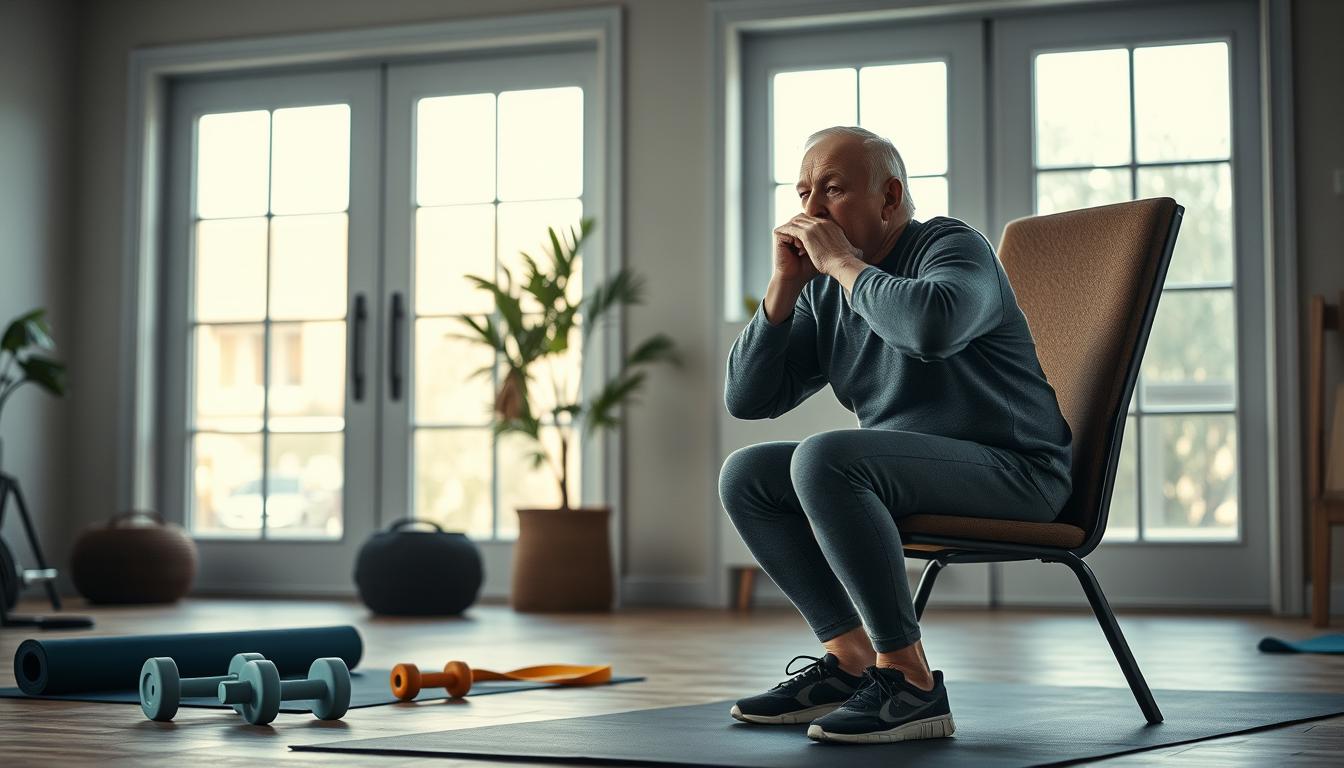
Want to tighten your midsection without wrecking your back? You’re not chasing a six-pack – you’re after a stronger, more functional core that makes everyday life easier. Let me show you how simple tweaks to classic moves can deliver big results, no fuss required.
Think of your core as the body’s built-in seatbelt. A study from Johns Hopkins Medicine found that strong core muscles reduce back pain by 30% in adults over 60. That’s why I’m obsessed with exercises where your feet stay flat on the floor – like seated marches or modified planks. You’ll feel the burn where it counts, not in your joints.
Here’s my golden rule: time beats counting reps. Try holding a bridge position for 15 seconds while breathing steady. If you can chat with your neighbor during the move, you’re doing it right! These “stealth workouts” fit perfectly between crossword puzzles and morning coffee.
Pro tip from my physical therapist friend: “Your lower abs aren’t shy – they’re just waiting for the right invitation.” That’s why I love leg slides (feet flat, knees bent) – they’re like a secret handshake with your deepest core muscles. Ready to stand taller and bend easier? Let’s turn that belly into a powerhouse, not a pain magnet.
Cracking the Core Code: Why Your Midsection Matters
Ever wonder why bending feels tougher as the years stack up? Here’s the scoop: your core isn’t just about looks—it’s your body’s command center. Think of it like the steel frame in a skyscraper. Without it, everything wobbles. My neighbor Linda learned this the hard way after her hip surgery. “I could walk,” she told me, “but turning to grab groceries? Forget it!”
The Undercover Heroes You’re Ignoring
Most people focus on the “six-pack” muscles up front. Big mistake. The real magic happens lower down—those sneaky muscles hugging your pelvis. They’re why you can step off curbs without face-planting. Fitness pro Bethanie Bayha puts it perfectly: “Your lower abs work overtime when you’re not looking. Treat them right, and they’ll return the favor.”
Here’s the kicker: You don’t need fancy gear. Try this next time you sit down—press your elbows into the chair arms while lifting one knee an inch. Feel that subtle tension? That’s your hidden core crew clocking in.
Mobility’s Secret Sauce
Strong core muscles don’t just prevent spills—they upgrade how you move. Picture reaching for a top shelf. If your trunk’s shaky, your shoulders do all the work. But when your midsection’s engaged? Suddenly you’re reaching higher, smoother, safer. It’s why golfers swear by rotational exercises to keep their swing powerful.
Effective Abdominal Workouts for Seniors: Targeting Core Muscles
Timing is everything when building a resilient midsection. Forget counting reps—your muscles respond better to smart duration. You can transform your stability by simply holding moves longer. Let’s talk strategy.
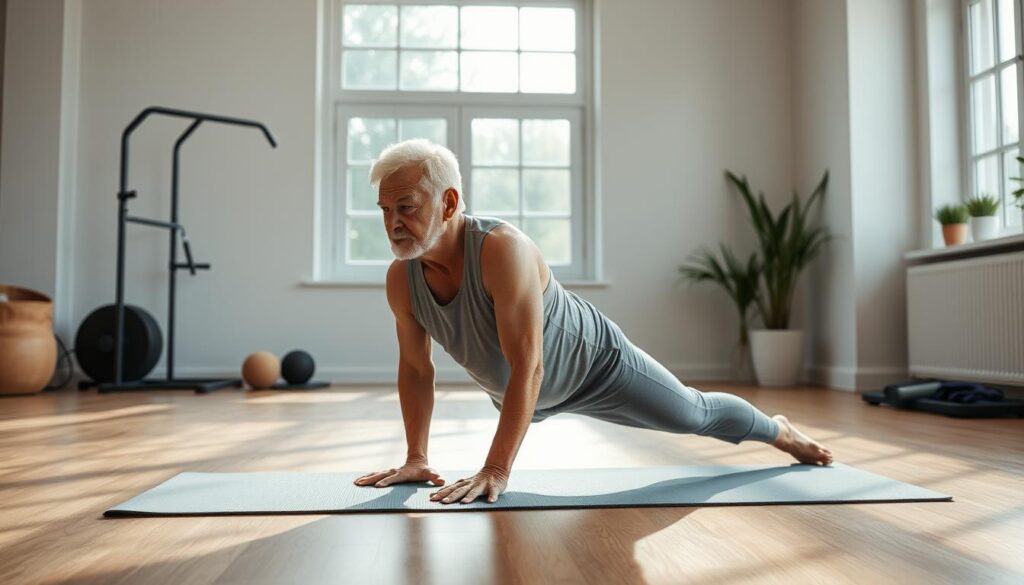
Start with knees bent, feet flat on the floor—this protects your back. Try a modified plank: elbows under shoulders, hips lifted. Now tuck your pelvis like you’re zipping up tight jeans. Hold 20 seconds. Breathe normally. Feels different, right?
Here’s why it works: Time under tension wakes up sleepy muscles. Golfers use similar golf fitness strategies to maintain rotational power. Your version? Seated marches with 3-second pauses. Lift one knee, count “one-Mississippi,” lower. Repeat 8x per side.
Move
Duration
Focus
Pro Tip
Pelvic Tilt
30 sec
Lower Core
Press low back into floor
Heel Slides
45 sec
Hips
Keep shoulders relaxed
Side Lean
20 sec/side
Obliques
Stack knees bent at 90°
Chair-Based and Floor Modalities: Variations in Movement
Your kitchen chair isn’t just for sitting—it’s a secret weapon for core strength. You can transform your stability using nothing fancier than a dining room seat. The trick? Treating everyday furniture as exercise equipment that works with your body, not against it.
Chair planks: tightening the entire trunk without fuss
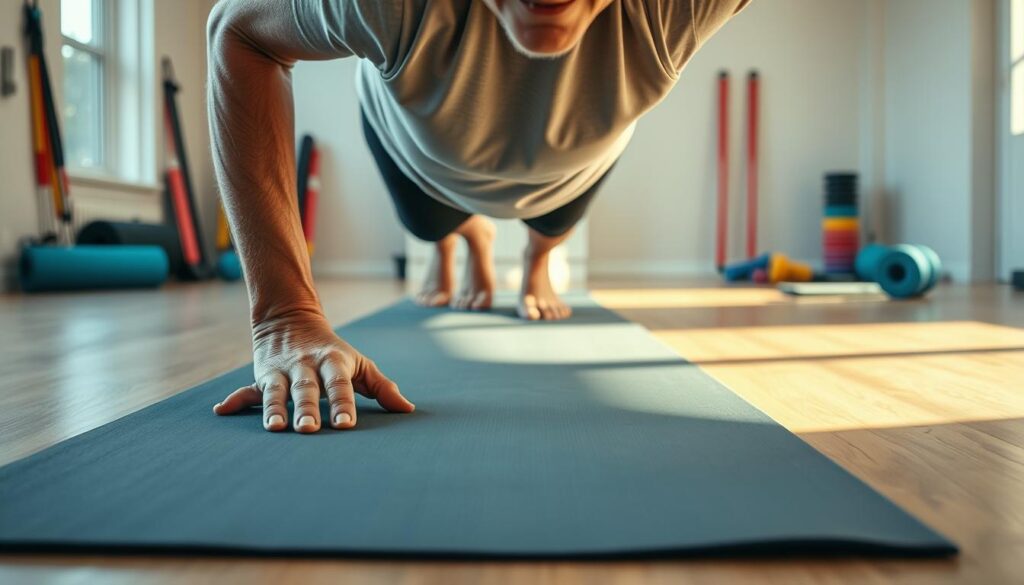
Grab a sturdy chair (no wheeled office chairs!). Place both hands on the seat, feet flat about hip-width behind you. Now push through your palms until your body forms a straight line from heels to shoulders. Hold 10 seconds while whispering “I’ve got this” through clenched teeth. This fires up your transverse abdominals—the body’s natural corset.
Seated knee lifts for stabilized balance
Sit tall like you’re balancing a book on your head. Grip the chair’s sides lightly. Lift one knee two inches—pause—then lower. Alternate legs like you’re marching in slow motion. Pro tip: Press your feet into the floor between lifts to engage hidden lower-core muscles. Do eight per side while watching Jeopardy—it’s a no-brainer!
Oblique side bends to fortify your edges
Rest fingertips behind your ears, elbows wide. Now tilt your upper body right like you’re reaching for the salt shaker. Return to center, then repeat left. Keep those feet flat and knees bent at 90 degrees. These gentle rocks strengthen the obliques that help you twist to check blind spots while driving.
Maintaining Proper Form: Sidestepping Back Strain
The secret to pain-free core work? It’s all in the setup. I’ve seen too many friends sabotage their progress by rushing into moves without nailing their stance first. Let’s fix what happens before the first rep—your form’s make-or-break moment.
Fine-tuning starting positions for safe execution
Start every exercise like you’re posing for a posture photo. Feet hip-width apart? Check. Shoulders stacked over hips? Double-check. Research shows proper alignment reduces spinal pressure by 42% during core moves. Here’s my go-to checklist:
Move
Setup Tip
Time Progression
Form Cue
Modified Plank
Knees bent, elbows under shoulders
15s → 30s
Belly button to spine
Seated March
Feet flat, grip chair sides
3s hold per lift
Shoulders away from ears
Side Lean
Stack knees at 90°, fingertips behind ears
20s per side
Ribs closed like a book
Step-by-Step Guide to Crafting a Custom Core Routine
Building a core routine is like tailoring a suit—it should fit your body’s quirks perfectly. Start with this simple truth: Your kitchen timer holds more power than any gym membership. Here’s how to design a plan that grows with you.
Grab a chair and sit tall. Lift your right knee an inch—hold for 5 seconds while whispering your grocery list. Feel your lower back pressing into the seat? That’s your body giving real-time feedback. Increase duration by 3-second increments weekly. Trust me, racing against the clock beats counting reps any day.
Exercise
Starting Position
Time Adjustment
Form Focus
Seated Knee Lifts
Feet flat, bent knees
5s → 12s
Belly button to spine
Modified Plank
Elbows under shoulders
15s → 30s
Arms at 90° angle
Chair-Assisted Side Bends
Hands on seat
10s/side → 20s
Feet planted like tree roots
Your Body’s Edit Button
Notice a twinge in your lower back during leg slides? Bend your knees wider—problem solved. Can’t hold a plank? Switch to chair-assisted leans. Your arms become natural support beams. Here’s my trick: Keep eyes locked on your belly button during moves. It’s like a built-in alignment checker!
Chronic pain warriors—listen up. If standard exercises feel rough, adjust your bent feet position. Turn toes out slightly to reduce hip strain. Progress isn’t about pushing through pain—it’s about smart pivots.