Want to shave a decade off your appearance and finally lift that grocery bag without grunting? The secret’s in your shoulders, not a magic potion. I’ve seen people in their 70s out-lift millennials at the gym—and it’s not because they’re secretly superheroes. They just know how to work smarter, not harder.
Let’s cut to the chase: Functional training isn’t about bulking up. It’s about keeping your independence intact. Think pushing yourself out of a chair like it’s a yoga pose, not a wrestling match. Jason Machowsky, a rehab specialist I swear by, calls this “movement insurance” – and frankly, it’s better than any retirement plan.
This routine? It’s been road-tested by people who’ve survived disco and dial-up internet. We’re talking resistance bands that double as closet organizers, soup cans as dumbbells, and stretches you can do during commercial breaks. No fancy equipment. No gym memberships. Just 15 minutes a day that could mean the difference between asking for help and saying “I’ve got this.”
Muscle tone works like a well-loved leather jacket. The more you use it, the better it looks. So whether you’re aiming to lift a grandkid or finally reach that jar on the top shelf…
Understanding the Impact of Upper Body Strength in Daily Living
Ever wonder why carrying groceries feels like a workout? Those simple motions—pouring milk, opening mail, even brushing your hair—are stealth tests of your elbows and arms. Specialists at TRIA Orthopaedic call this “life’s invisible gym,” where every push, pull, and reach counts.
The Hidden Mechanics of Daily Life
You can turn stubborn jar lids into no-sweat tasks by strengthening their hands. It’s not about bulging biceps—it’s about creating movement insurance. That lower back stability when lifting? That’s your body’s built-in forklift system.
Real-World Wins You’ll Notice Fast
Here’s what better workout habits deliver:
Pushing heavy doors becomes smoother (thank you, elbows)
Reaching for top-shelf spices feels natural (hello, shoulders)
Getting up from the couch turns effortless (lower back MVP)
New York’s Hospital for Special Surgery found that older adults who train these real-life moves report 43% fewer “I need help” moments. Your arms aren’t just limbs—they’re trusty tools that deserve regular tune-ups.
Muscle Decline and Sarcopenia: What It Means for You
That sweater you’ve had since ‘92 isn’t the only thing thinning out—your muscles are too. By 80, research shows we can lose half our muscle mass if we don’t fight back. Think of sarcopenia like termites gnawing at your body’s foundation. But here’s the twist: you’re the exterminator.
Your muscles aren’t just shrinking—they’re getting lazy. The Journal of Aging and Physical Activity found inactive adults lose 3-5% of muscle per decade after 30. It’s like a retirement account draining faster than you can refill it. But here’s your deposit slip:
Age
Muscle Loss Risk
Training Benefit
60+
1.5% annual decline
30% lower fall risk
70+
50% total loss possible
22% stronger grip
80+
Limited mobility
41% faster recovery
Notice how bend elbows properly during exercises isn’t just nitpicking? It’s survival math. Push a door wrong at 75, and your shoulder pays the bill. You can turn casserole dish lifts into smooth motions by focusing on elbow angles.
Your back’s the silent hero here. Weak muscles force it to overcompensate—like a ladder missing rungs. Start with 5-minute resistance band sessions. One person called it “physical therapy disguised as folding laundry.”
Upper Body Strength Exercises for Seniors
Who says push-ups are just for boot camp fanatics? I’ve turned more kitchen counters into gym equipment than I can count. TRIA Orthopaedic’s research proves it: Elevating your hands by 12 inches reduces joint stress by 38% while still firing up your chest and core. Let’s get creative with what’s already in your house.
Wall Push-ups That Won’t Break You
Stand three feet from any wall. Place palms facing outward at shoulder height—like you’re about to high-five a giant. Slowly lower until your nose nearly touches the surface, then push back. One person calls this “the polite way to tell gravity to back off.”
Too easy? Grab your trusty kitchen chair. Hands on the seat, feet behind you. Now slowly lower halfway down—this angle hits different parts of your chest without wrist drama. Do 8 reps and suddenly, reaching across the dinner table feels smoother.
Dumbbell Hacks for Happy Joints
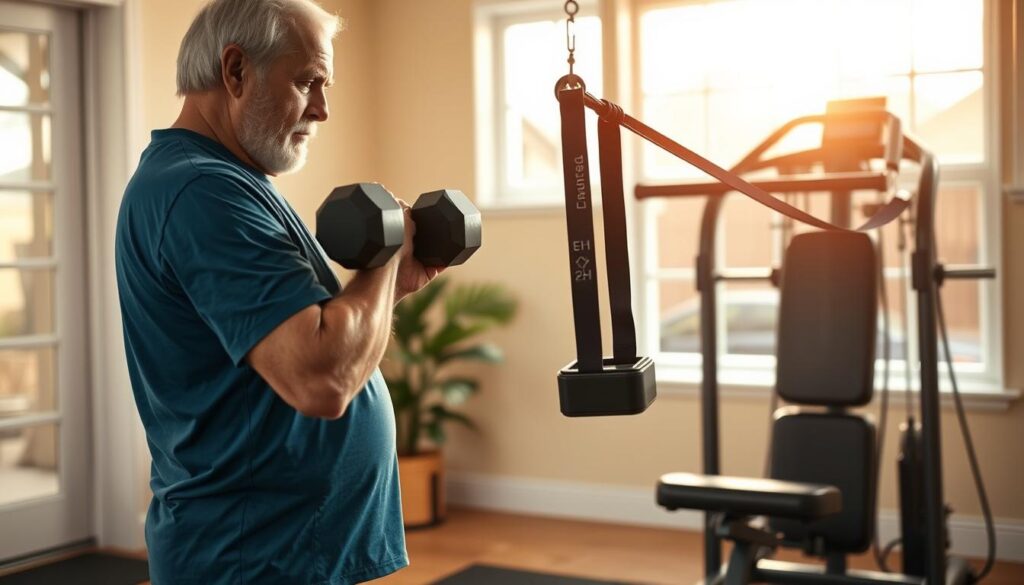
Those canned goods in your pantry? Meet your new dumbbells. Sit upright in your chair, weights at your sides with palms facing inward. Lift them to shoulder height like you’re offering tribute to the laundry gods—this protects rotator cuffs better than standard grips.
Shift your weight slightly to one side during lifts. It’s like giving overworked muscles a coffee break while others pick up slack. Bonus: You’ll catch yourself stabilizing without thinking—that’s balance training in disguise.
Seated Upper Body Workout Routines
Your favorite armchair just became your gym. Seated routines let you strengthen muscles while respecting creaky knees—no standing required. I’ve coached people who improved their posture during Jeopardy! commercial breaks. Let’s turn “sitting time” into strength-building moments.
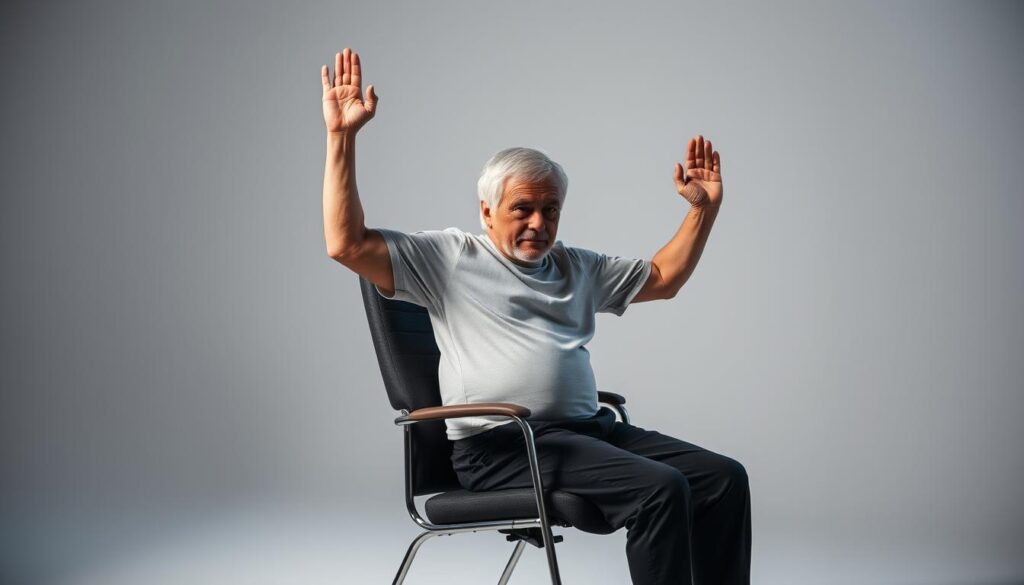
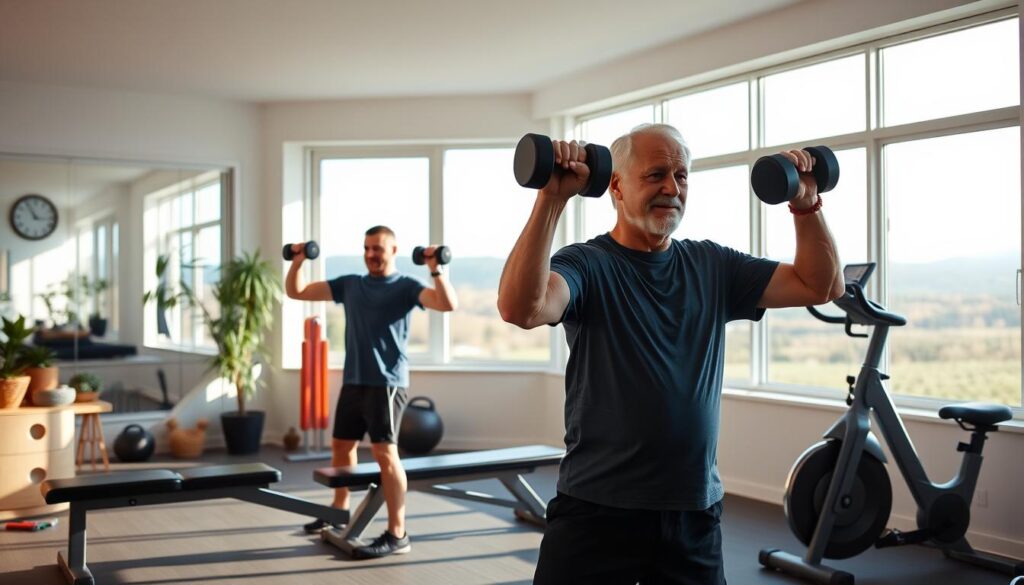
Sit tall with feet hip-width apart, holding weights at ear level. Push upward until arms straight—like you’re offering a toast. Lower slowly; that’s one rep. Mayo Clinic studies show this motion boosts shoulder mobility 27% faster than standing presses.
Seated Bent-Over Row Adjustments
Lean forward slightly, weights dangling. Pull elbows back like you’re starting a lawnmower. Keep that starting position steady—no rocking! One person nailed this by imagining she was rowing a canoe through molasses. Works wonders for upper back tension.
Lateral and Front Raise Variations
Palms facing thighs, lift weights to the sides (lateral) or front. Alternate sets to keep muscles guessing. Pretend you’re balancing teacups on your wrists. This dumbbell hand technique prevents elbow strain better than traditional grips.
Exercise
Key Focus
Reps
Bonus
Shoulder Press
Arms straight overhead
8-10
Improves reach
Bent-Over Row
Controlled elbow pull
10-12
Reduces back strain
Lateral Raises
Dumbbell hand position
12-15
Boosts balance
Customizing Resistance Training for Enhanced Balance
That gallon of milk in your fridge? It’s moonlighting as personal trainer. Resistance work isn’t about brute force—it’s about turning movement into a tightrope walker’s precision. You can turn laundry detergent bottles into balance tools while watching Wheel of Fortune. The trick? Treating equipment like dance partners, not adversaries.
Choosing the Right Equipment for Safety
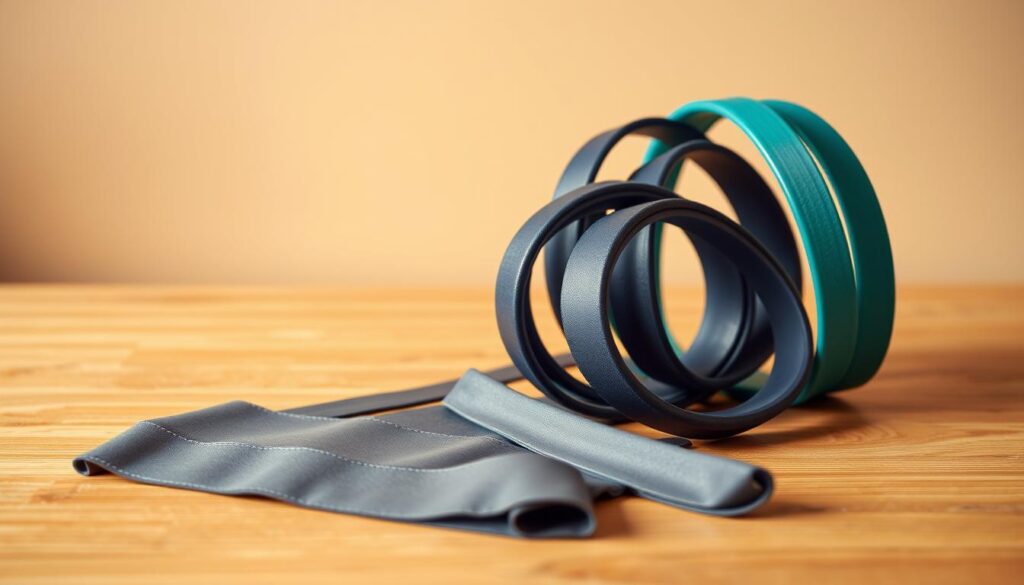
Your weights should challenge you like a crossword puzzle—solvable but engaging. Start lighter than you think: research shows 2-3 lb increments reduce pain risk by 41% compared to jumping sizes. Here’s your cheat sheet:
Equipment
Weight Range
Best For
Safety Hack
Resistance Bands
Light-Medium
Shoulder stability
Anchor under feet
Water Bottles
1-5 lbs
Lateral raises
Grip like puppy
Soup Cans
10-14 oz
Rotational moves
Palms facing in
Integrating Full Body Movements Safely
Your dining chair isn’t just for sitting—it’s a launchpad for full-body power. Physical therapists call this “movement integration”: working multiple muscle groups while keeping joints happy. Let’s turn everyday actions into strength-building moments without risking creaky knees or cranky shoulders.
Chair-Assisted Squats That Work
Stand facing your chair, hands lightly resting on the seat. Lower slowly like you’re about to sit on hot soup—pause an inch above the surface. Push through your heels to rise. One person calls this “the reverse magic trick—disappearing the chair with control.”
Keep shoulders relaxed and weight centered. If wobbling occurs, press your right leg slightly firmer into the floor. This isn’t cheating—it’s smart stability training. Verywell Fit recommends 8-10 reps to build confidence in standing from low couches.
Tailored Push-up Alternatives for Joint Protection
Place hands on a sturdy countertop, feet staggered with left leg forward. Lower halfway—no need to touch your nose to granite. Push back up while imagining you’re lifting left hip toward the ceiling. This protects wrists better than traditional floor push-ups.
Finish each rep by gently tucking elbows behind head. It’s like giving your rotator cuffs a mini massage.
Movement
Key Focus
Pro Tip
Chair Squat
Shoulder stability
Exhale on ascent
Counter Push-up
Even weight distribution
Engage core
Elbow Tuck
Behind head alignment
Slow motion
Staying Accountable With a Consistent Routine
Your morning coffee ritual just got a fitness upgrade. Consistency isn’t about perfection—it’s showing up in socks when you can’t find shoes. I’ve seen people stick to their body workout plans using cereal box checkmarks. Turns out, tiny wins add up faster than you’d think.
Setting Realistic Goals Without Overthinking
Start smaller than you think. Can’t do 10 reps? Try three—then add one weekly. Here’s what sticks:
Pair exercises with daily habits (brush teeth → stretch leg muscles)
Celebrate non-scale wins (reaching top cabinets counts!)
Rotate focus areas weekly (left side gets love too)
Tracking Progress Without the Hassle
Ditch the fancy apps. A wall calendar and red pen work wonders. Circle days you moved—even if it’s leg lifts during commercials. Studies show visual cues boost adherence by 33%.